
What should you know about immunotherapy in small cell lung cancer?
Short answer
Immunotherapy in small cell lung cancer helps the immune system recognise cancer and is planned around the disease and other treatments.
This answers one question. It is not a diagnosis and does not replace an assessment by a licensed doctor.
At a glance
- Treatment type
- A medicine that modifies immune signalling
- May be combined with
- Chemotherapy or radiotherapy
- Monitoring
- Symptoms, blood tests and scans
How it fits into care
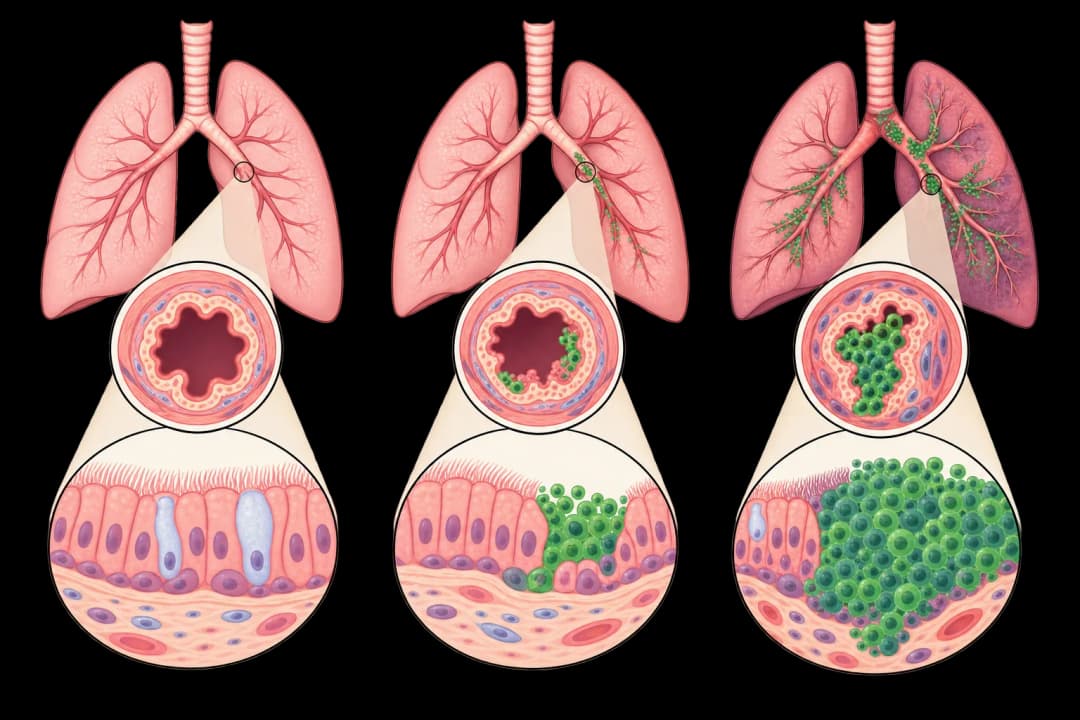
Small cell lung cancer can grow and spread quickly, so treatment planning usually considers the extent of disease, symptoms, general health and previous therapy. Immunotherapy medicines act on immune checkpoints, signals that can limit immune-cell activity. By blocking a checkpoint, treatment may help immune cells respond to cancer cells. It does not work in the same way as chemotherapy, which directly damages rapidly dividing cells.
An oncology team may discuss immunotherapy alongside chemotherapy, and radiotherapy may be used for a specific area or symptom. Whole brain radiotherapy can be considered when cancer has affected the brain. The appropriate combination and sequence depend on scan findings, treatment history and how your body is coping.
Preparing for treatment
Before treatment, share your full medicine list, autoimmune conditions, previous organ problems and any history of transplant with the oncology team. Ask how infusions are given, which blood tests are needed and how symptoms should be reported. Keep a daily note of breathing, cough, bowel changes, skin changes, energy, appetite and temperature. This can help the team distinguish a treatment effect from an infection or cancer symptom.
Attend planned scans and appointments, even when you feel stable. Do not start supplements or delay prescribed treatment without discussing it with your clinicians.
When to seek urgent care
Call your oncology service promptly for new or worsening breathlessness, chest pain, persistent diarrhoea, severe abdominal pain, yellowing of the eyes, widespread rash, severe weakness, confusion or reduced urine. Seek emergency care for sudden breathing difficulty, fainting, severe chest pain or inability to stay awake. Mention the immunotherapy dose and the date it was given.
Questions for your doctor
What is the aim of immunotherapy in my treatment plan? Will it be given with chemotherapy or radiotherapy? Which side effects require a same-day call? How will scans and blood tests guide the next treatment decision? Who should I contact outside clinic hours?
Questions people ask
Is immunotherapy the same as chemotherapy?
No. Immunotherapy changes immune signalling, while chemotherapy uses medicines that damage rapidly dividing cells. They may be planned together.
Can side effects start after an infusion?
Yes. Some immune-related effects appear during treatment or later, so report new symptoms even if the last infusion was not recent.
Related
Related reading
Keep reading
Cancer care in the UAE
Hospitals & Medical Centers in Abu Dhabi
Most UAE cancer care is delivered inside hospital services rather than by standalone oncology clinics, so these are licensed hospitals & medical centers listed in Abu Dhabi. Confirm the specific cancer service exists before you travel, and know that asking for a second opinion is routine.
Ahalia Hospital Musaffah Building - Musaffah - Musaffah Industrial - Abu Dhabi - United Arab Emirates
Accepts: Daman, Thiqa, AXA, Cigna +26 more
Al Ruwais Industrial City - Abu Dhabi - United Arab Emirates
Accepts: Daman, Thiqa, AXA, Cigna +30 more
Abu Dhabi, Abu Dhabi
Accepts: Daman, Thiqa, AXA, Cigna +30 more
Second opinions are routine in cancer care and asking for one does not affect your treatment. How to arrange a second opinion in the UAE.
Ordered by verification status and how complete each clinic's public record is, then alphabetically. This is a directory listing, not a ranking — Zavis does not rate or recommend providers.
A factual listing drawn from the DHA, DOH and MOHAP licence registers. It is not a referral, an endorsement, or advice that any of these providers is right for you.
Medical disclaimer. This page is general health information, not medical advice, and it cannot diagnose you. Always consult a licensed healthcare provider about your own symptoms and treatment. In an emergency in the UAE, call 998 for an ambulance.