
What should you know about idiopathic urticaria treatment?
Short answer
Idiopathic urticaria is treated by controlling hives and itch, reviewing possible triggers, and checking urgently for swelling that affects breathing or swallowing.
This answers one question. It is not a diagnosis and does not replace an assessment by a licensed doctor.
At a glance
- Main symptom
- Itchy, raised welts that may come and go
- Treatment focus
- Symptom control and review of possible triggers
- Emergency sign
- Mouth or throat swelling with breathing or swallowing trouble
Understanding unexplained hives
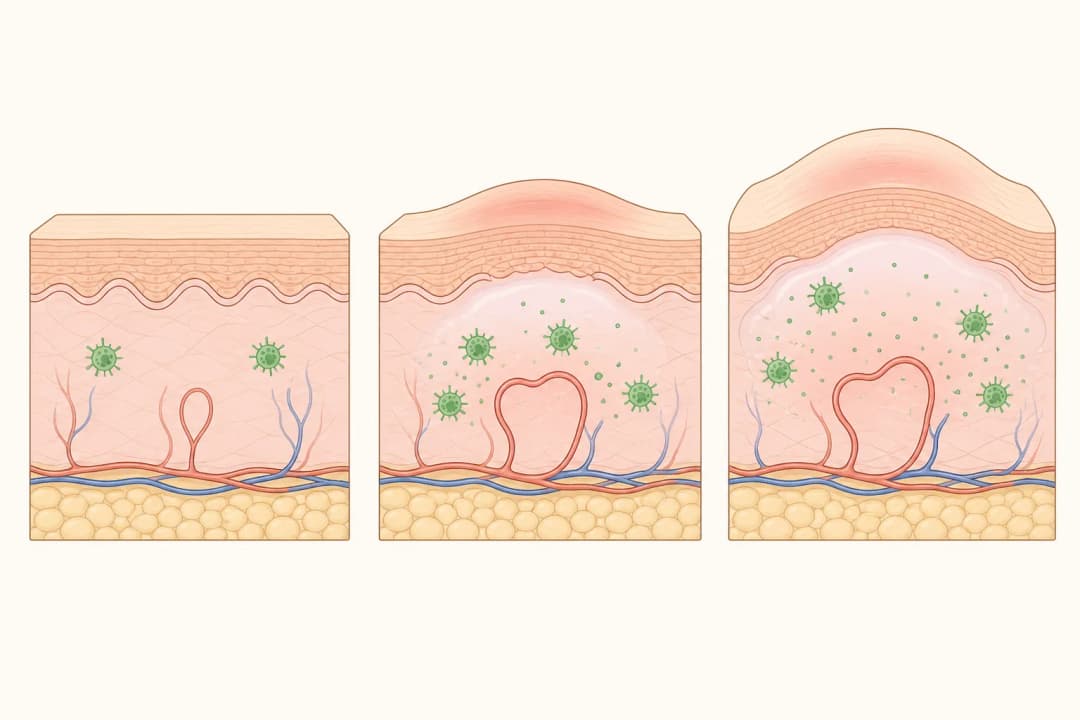
Hives are raised, itchy welts caused by temporary release of inflammatory chemicals in the skin. Individual welts often fade while new ones appear elsewhere. When no reliable trigger is found, clinicians may call the condition idiopathic urticaria. A history helps distinguish hives from a persistent rash: note when each welt appears, how long it lasts, recent infections, heat, pressure, exercise, medicines, foods, and emotional stress. [Itchy Skin](/symptoms/itchy-skin/), [Skin Rash](/symptoms/skin-rash/), and [Skin Swelling](/symptoms/skin-swelling/) can accompany many conditions, so the pattern matters.
How treatment is approached
Keep a brief symptom diary with photographs, timing, exposures, and medicines. Wear loose clothing, use cool compresses, and avoid rubbing or known personal triggers. A clinician commonly discusses a non-sedating [Antihistamine Treatment](/treatments/medical-dermatology/oral-antihistamine-therapy/) plan, with the dose and duration tailored to you. Do not combine products or increase a dose without medical guidance. A short course of [Oral Corticosteroid Treatment](/treatments/medical-dermatology/oral-corticosteroid-therapy/) may sometimes be considered for a severe flare, but it is not a routine long-term solution. Persistent symptoms warrant reassessment of the diagnosis and treatment plan.
When to seek urgent care
Call emergency services immediately for swelling of the tongue, lips, mouth, or throat; trouble breathing; wheezing; faintness; confusion; or difficulty swallowing. These features can indicate [Angioedema](/conditions/angioedema/) or a serious allergic reaction. Seek prompt medical care for hives with fever, significant illness, bruising, or painful lesions, or when a single mark stays in the same place unusually long.
Questions for your doctor
Ask which antihistamine schedule fits your symptoms, whether a medicine or physical trigger is plausible, how drowsiness may affect driving, what to do during a flare, and which swelling signs require emergency action.
Find care
General Clinics & Polyclinics in Abu Dhabi
That answer is general. If you want it applied to your own case, these are licensed general clinics & polyclinics listed in Abu Dhabi.
27 Ar Ruwwad St - Shakhbout City - MSH4 - Abu Dhabi - United Arab Emirates
Accepts: Daman, Thiqa, Cigna, MetLife +20 more
Al Ruwais, Al Dhafrah
Accepts: Daman, Thiqa, AXA, Cigna +16 more
Al Bahyah - Al Bahyah Old - Abu Dhabi - United Arab Emirates
Accepts: Daman, Thiqa, Cigna, Allianz Care +18 more
Abu Dhabi
Accepts: Daman, Thiqa, AXA, Cigna +27 more
Ordered by verification status and how complete each clinic's public record is, then alphabetically. This is a directory listing, not a ranking — Zavis does not rate or recommend providers.
A factual listing drawn from the DHA, DOH and MOHAP licence registers. It is not a referral, an endorsement, or advice that any of these providers is right for you.
Questions people ask
Can idiopathic urticaria have no obvious trigger?
Yes. Hives can recur even when a specific food, medicine, infection, or physical trigger cannot be identified.
Can I stop treatment when hives improve?
Follow the plan given by your clinician. They can explain whether to continue, taper, or adjust treatment based on recurrence and side effects.
Related
Related reading
Keep reading
Medical disclaimer. This page is general health information, not medical advice, and it cannot diagnose you. Always consult a licensed healthcare provider about your own symptoms and treatment. In an emergency in the UAE, call 998 for an ambulance.