
What should you know about hypokalemia and rhabdomyolysis?
Short answer
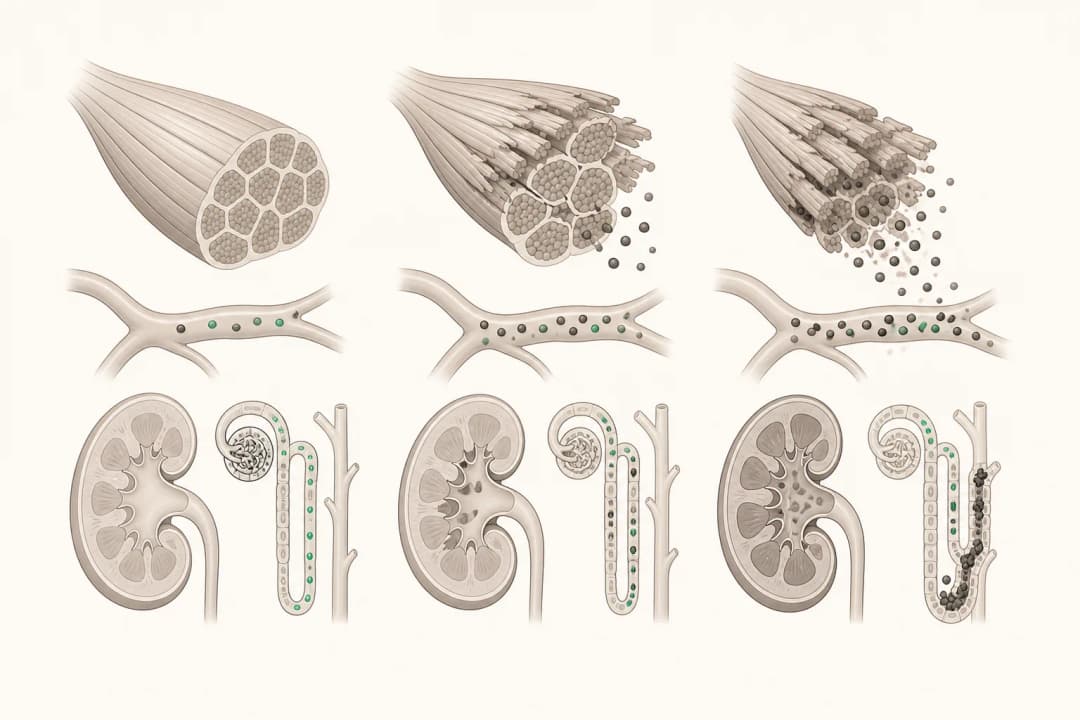
Hypokalemia means low potassium, and severe or prolonged low potassium can contribute to muscle weakness or injury; rhabdomyolysis is a serious breakdown of muscle that needs medical assessment.
This answers one question. It is not a diagnosis and does not replace an assessment by a licensed doctor.
At a glance
- Hypokalemia
- A lower-than-normal potassium level
- Rhabdomyolysis
- Muscle breakdown that can affect the kidneys and electrolytes
Understanding the problem
Potassium helps muscle and nerve cells work normally. Low levels may cause cramps, weakness, constipation, or changes in heart rhythm. Rhabdomyolysis occurs when damaged muscle releases substances into the bloodstream, often after intense exertion, a crush injury, prolonged immobility, heat illness, seizures, infection, or a medicine-related effect. Low potassium can be one contributor, but it is not the only possible cause. Muscle soreness after exercise can be ordinary recovery, yet unusually severe pain, weakness, swelling, or dark urine requires more attention.
What to do next
Stop strenuous exercise and seek medical advice if severe soreness or weakness is developing. Clinicians may check potassium and other electrolytes, kidney function, muscle enzymes, urine, medicines, and the reason potassium became low. Do not self-treat with potassium tablets or large amounts of electrolyte drinks; the right replacement depends on the level, symptoms, kidney function, and heart rhythm. Keep a record of vomiting, diarrhoea, sweating, new medicines, supplements, and recent exertion. Read about [Muscle Soreness After Exercise](/symptoms/muscle-soreness-after-exercise/).
When to seek urgent care
Get urgent medical help for severe or worsening muscle weakness, inability to move normally, marked muscle swelling, dark or tea-coloured urine, very little urine, fainting, chest discomfort, or a fast or irregular heartbeat. These features can signal significant muscle injury, electrolyte disturbance, or kidney stress and should not be monitored at home.
Questions for your doctor
Ask what caused the potassium change, whether your heart rhythm and kidney function need monitoring, and which medicines or supplements should be paused. Ask when gentle activity can resume and which symptoms should prompt immediate reassessment.
Find care
General Clinics & Polyclinics in Abu Dhabi
That answer is general. If you want it applied to your own case, these are licensed general clinics & polyclinics listed in Abu Dhabi.
27 Ar Ruwwad St - Shakhbout City - MSH4 - Abu Dhabi - United Arab Emirates
Accepts: Daman, Thiqa, Cigna, MetLife +20 more
Al Ruwais, Al Dhafrah
Accepts: Daman, Thiqa, AXA, Cigna +16 more
Al Bahyah - Al Bahyah Old - Abu Dhabi - United Arab Emirates
Accepts: Daman, Thiqa, Cigna, Allianz Care +18 more
Abu Dhabi
Accepts: Daman, Thiqa, AXA, Cigna +27 more
Ordered by verification status and how complete each clinic's public record is, then alphabetically. This is a directory listing, not a ranking — Zavis does not rate or recommend providers.
A factual listing drawn from the DHA, DOH and MOHAP licence registers. It is not a referral, an endorsement, or advice that any of these providers is right for you.
Questions people ask
Does every low potassium result cause rhabdomyolysis?
No. Rhabdomyolysis has many causes, and the risk depends on the degree and duration of the potassium problem as well as other triggers.
Is dark urine after exercise always dehydration?
No. Dark urine with severe muscle pain or weakness can be a warning sign of muscle breakdown and needs prompt assessment.
Related
Related reading
Keep reading
Medical disclaimer. This page is general health information, not medical advice, and it cannot diagnose you. Always consult a licensed healthcare provider about your own symptoms and treatment. In an emergency in the UAE, call 998 for an ambulance.