
How quickly does diabetes medication management relieve excessive thirst?
Short answer
Diabetes medication management may reduce excessive thirst within hours to several days as blood glucose improves, although the exact timing varies.
This answers one question. It is not a diagnosis and does not replace an assessment by a licensed doctor.
At a glance
- Typical pattern
- Thirst often improves as high glucose and fluid loss settle
- Safety point
- Never stop insulin without clinical advice
Why thirst happens
When glucose stays high, the kidneys may pass more glucose and water into urine. This fluid loss can leave you thirsty and may occur with a dry mouth or frequent urination. Treatment works by bringing glucose toward the range set for you; thirst should gradually lessen if high glucose is the main driver. Ongoing thirst can also reflect dehydration, infection, or another problem, so it should not be attributed to diabetes automatically.
Practical next steps
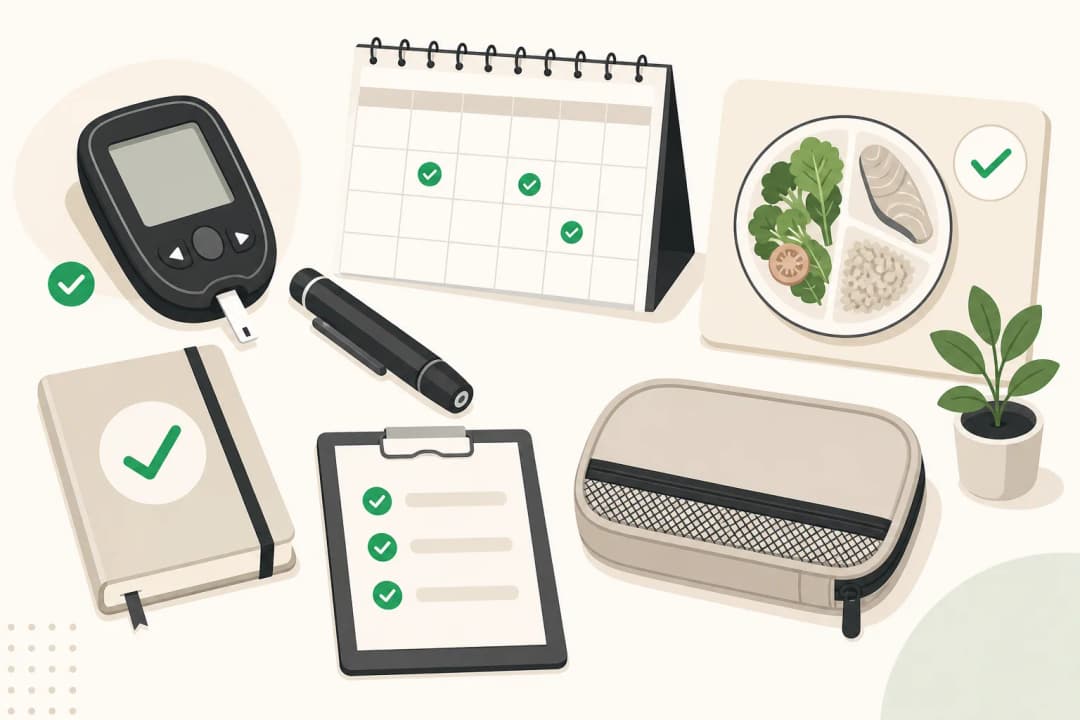
Use medicines, glucose checks, meals, and fluids according to your plan. Keep a note of thirst, urination, glucose readings, missed doses, and any new medicine. Do not stop insulin or alter doses based only on thirst. If symptoms are not easing after the timeframe your clinician gave you, contact the diabetes team for advice and a treatment review.
When to get urgent help
Get urgent medical help for vomiting, stomach pain, deep or rapid breathing, confusion, unusual drowsiness, inability to keep fluids down, or severe weakness. These symptoms with high glucose can signal a dangerous metabolic problem. Prompt assessment is also needed if thirst is accompanied by signs of significant dehydration such as very little urine or dizziness on standing.
Useful questions
Ask what improvement to expect from your specific medicine, when to check glucose, and what readings or symptoms should trigger a call. Confirm how to manage doses during illness and whether your fluid intake needs special limits.
Find care
General Clinics & Polyclinics in Abu Dhabi
That answer is general. If you want it applied to your own case, these are licensed general clinics & polyclinics listed in Abu Dhabi.
27 Ar Ruwwad St - Shakhbout City - MSH4 - Abu Dhabi - United Arab Emirates
Accepts: Daman, Thiqa, Cigna, MetLife +20 more
Al Ruwais, Al Dhafrah
Accepts: Daman, Thiqa, AXA, Cigna +16 more
Al Bahyah - Al Bahyah Old - Abu Dhabi - United Arab Emirates
Accepts: Daman, Thiqa, Cigna, Allianz Care +18 more
Abu Dhabi
Accepts: Daman, Thiqa, AXA, Cigna +27 more
Ordered by verification status and how complete each clinic's public record is, then alphabetically. This is a directory listing, not a ranking — Zavis does not rate or recommend providers.
A factual listing drawn from the DHA, DOH and MOHAP licence registers. It is not a referral, an endorsement, or advice that any of these providers is right for you.
Questions people ask
Does drinking more water fix the cause?
Water can replace lost fluid, but it does not correct high glucose. Treatment and glucose monitoring remain important.
What if thirst continues after glucose improves?
Arrange a review because dehydration, medicines, infection, or another condition may be contributing.
Related
Related reading
Keep reading
Medical disclaimer. This page is general health information, not medical advice, and it cannot diagnose you. Always consult a licensed healthcare provider about your own symptoms and treatment. In an emergency in the UAE, call 998 for an ambulance.