
How long does targeted therapy take to work for myeloproliferative neoplasms?
Short answer
Targeted therapy for myeloproliferative neoplasms may begin changing blood counts or symptoms during the early treatment period, but response needs repeated monitoring.
This answers one question. It is not a diagnosis and does not replace an assessment by a licensed doctor.
At a glance
- Response markers
- Blood counts, symptoms and examination findings are reviewed together.
- Treatment goals
- The goal depends on the specific type of neoplasm and your health needs.
Why the answer differs
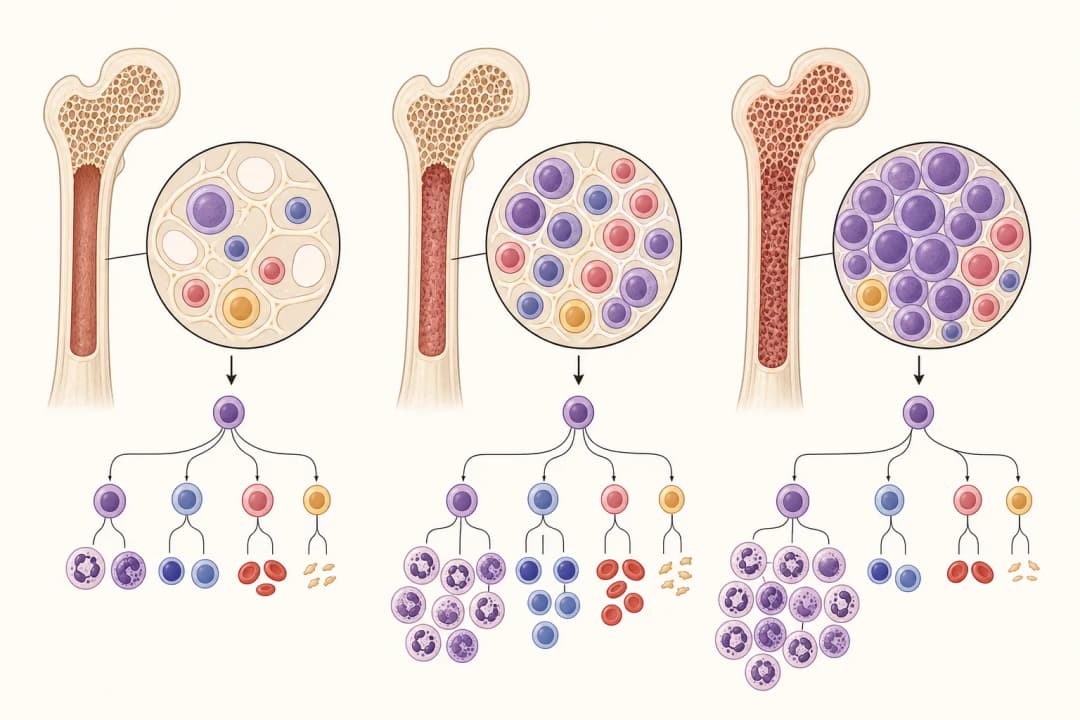
Myeloproliferative neoplasms include several blood cancers with different patterns of blood-cell production and different treatment goals. A targeted medicine may be chosen to control high cell counts, reduce symptoms, limit spleen-related problems or lower the risk from uncontrolled disease.
The medicine, the specific neoplasm, prior treatment, blood counts, symptoms and general health all influence timing. Your clinician may compare full blood counts, physical findings, spleen size and symptoms such as headache, itching, night sweating or fatigue. One early result is interpreted alongside the trend and any side effects.
Making follow-up useful
Take treatment as prescribed and attend scheduled blood tests. Keep a record of headaches, dizziness, itching, night sweating, fullness after meals, fatigue, bruising and changes in activity. Mention every new medicine or supplement to your haematology team.
Ask what target is being followed and when it will be reviewed. A medicine may need dose adjustment while blood counts settle, so do not stop or alter it without specific instructions.
When to seek care
Contact your haematology team promptly for new bleeding, fever, infection symptoms, worsening headaches, vision changes, chest discomfort, unusual weakness or rapidly increasing abdominal fullness. Seek urgent care for sudden weakness on one side, trouble speaking, severe chest pain, severe breathlessness or heavy bleeding.
Questions for your doctor
Which blood count or symptom is the main treatment target for my condition? When will it be checked? How will you assess spleen-related changes? Which result would prompt a dose change, additional treatment or a different approach?
Questions people ask
Can blood counts change before symptoms improve?
Yes. Laboratory results and symptoms can move at different speeds, which is why both are followed during treatment.
What should I do if a blood test is still abnormal?
Discuss the result with your haematologist; one test is interpreted with prior results, symptoms, treatment dose and side effects.
Keep reading
Cancer care in the UAE
Hospitals & Medical Centers in Abu Dhabi
Most UAE cancer care is delivered inside hospital services rather than by standalone oncology clinics, so these are licensed hospitals & medical centers listed in Abu Dhabi. Confirm the specific cancer service exists before you travel, and know that asking for a second opinion is routine.
Ahalia Hospital Musaffah Building - Musaffah - Musaffah Industrial - Abu Dhabi - United Arab Emirates
Accepts: Daman, Thiqa, AXA, Cigna +26 more
Al Ruwais Industrial City - Abu Dhabi - United Arab Emirates
Accepts: Daman, Thiqa, AXA, Cigna +30 more
Abu Dhabi, Abu Dhabi
Accepts: Daman, Thiqa, AXA, Cigna +30 more
Second opinions are routine in cancer care and asking for one does not affect your treatment. How to arrange a second opinion in the UAE.
Ordered by verification status and how complete each clinic's public record is, then alphabetically. This is a directory listing, not a ranking — Zavis does not rate or recommend providers.
A factual listing drawn from the DHA, DOH and MOHAP licence registers. It is not a referral, an endorsement, or advice that any of these providers is right for you.
Medical disclaimer. This page is general health information, not medical advice, and it cannot diagnose you. Always consult a licensed healthcare provider about your own symptoms and treatment. In an emergency in the UAE, call 998 for an ambulance.