
How long does surgical sperm retrieval take to work for male factor infertility?
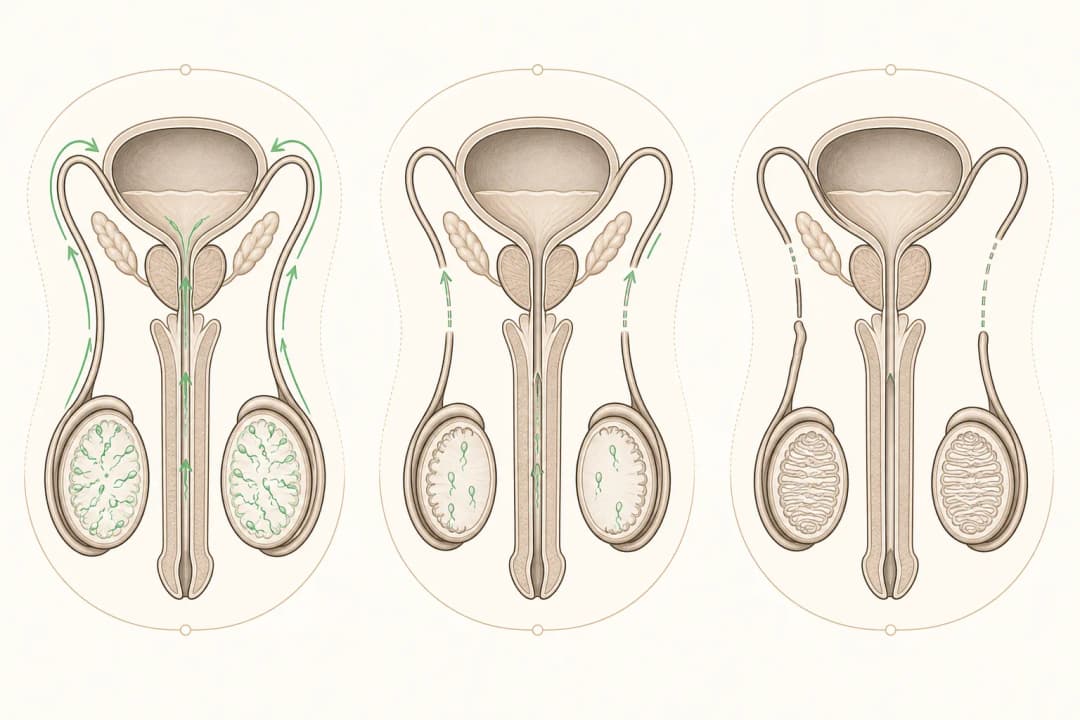
Short answer
Surgical sperm retrieval collects sperm during the procedure, but its use in fertility treatment depends on the laboratory result and the planned assisted reproduction cycle.
This answers one question. It is not a diagnosis and does not replace an assessment by a licensed doctor.
At a glance
- Collection
- Sperm is collected during the procedure and assessed by a laboratory.
- Treatment timing
- Use may be coordinated with egg collection or a later cycle.
Why timing varies
The sample is sent to a laboratory, where specialists look for usable sperm and prepare or freeze it according to the treatment plan. Retrieval does not improve sperm production over time; it is a way of obtaining sperm when ejaculation is not providing a suitable sample. Some people have sperm available immediately, while others may have few or no usable cells in the sample. The fertility team may coordinate retrieval with egg collection, or use stored sperm in a later cycle. The underlying cause, procedure chosen, and laboratory findings all influence what happens next.
Preparing for the next step
Follow the clinic's instructions about fasting, medicines, transport, and activity after the procedure. Attend the laboratory or fertility review so you understand whether sperm was found, whether it was frozen, and how it will be used. Ask how the retrieval result changes the plan for ICSI or another treatment. Report increasing swelling, pain, bleeding, fever, or difficulty passing urine. Your partner's cycle timing may affect whether the sample is used right away or stored.
When to seek medical help
Contact the surgical team promptly for worsening scrotal pain, marked swelling, persistent bleeding, fever, redness spreading around the wound, or difficulty urinating. Seek emergency care for severe pain, fainting, breathing difficulty, or sudden heavy bleeding. These symptoms are not a measure of whether sperm was retrieved; they are reasons to assess your recovery.
Questions for your doctor
Ask which retrieval method is planned, when the laboratory will report its findings, and whether sperm will be frozen. Clarify how many attempts may be considered, how the result affects ICSI, and what recovery restrictions apply.
Find care
General Clinics & Polyclinics in Abu Dhabi
That answer is general. If you want it applied to your own case, these are licensed general clinics & polyclinics listed in Abu Dhabi.
27 Ar Ruwwad St - Shakhbout City - MSH4 - Abu Dhabi - United Arab Emirates
Accepts: Daman, Thiqa, Cigna, MetLife +20 more
Al Ruwais, Al Dhafrah
Accepts: Daman, Thiqa, AXA, Cigna +16 more
Al Bahyah - Al Bahyah Old - Abu Dhabi - United Arab Emirates
Accepts: Daman, Thiqa, Cigna, Allianz Care +18 more
Abu Dhabi
Accepts: Daman, Thiqa, AXA, Cigna +27 more
Ordered by verification status and how complete each clinic's public record is, then alphabetically. This is a directory listing, not a ranking — Zavis does not rate or recommend providers.
A factual listing drawn from the DHA, DOH and MOHAP licence registers. It is not a referral, an endorsement, or advice that any of these providers is right for you.
Questions people ask
Does retrieval itself cause pregnancy?
No. Retrieved sperm must be used in an assisted reproduction treatment chosen by the fertility team.
What if no usable sperm is found?
Your clinician will explain the laboratory result and discuss options that fit the cause of infertility and your treatment goals.
Related
Related reading
Keep reading
Medical disclaimer. This page is general health information, not medical advice, and it cannot diagnose you. Always consult a licensed healthcare provider about your own symptoms and treatment. In an emergency in the UAE, call 998 for an ambulance.