
How Long Does Sports Physiotherapy Take to Work for a Groin Strain?
Short answer
Sports physiotherapy may make groin movement feel easier within early sessions, but dependable return to running and cutting requires progressive adductor strengthening over time.
This answers one question. It is not a diagnosis and does not replace an assessment by a licensed doctor.
At a glance
- First gains
- Movement may feel easier before full strength returns.
- Return marker
- Running and cutting should follow progressive strength and sport-specific checks.
Why groin strains need progression
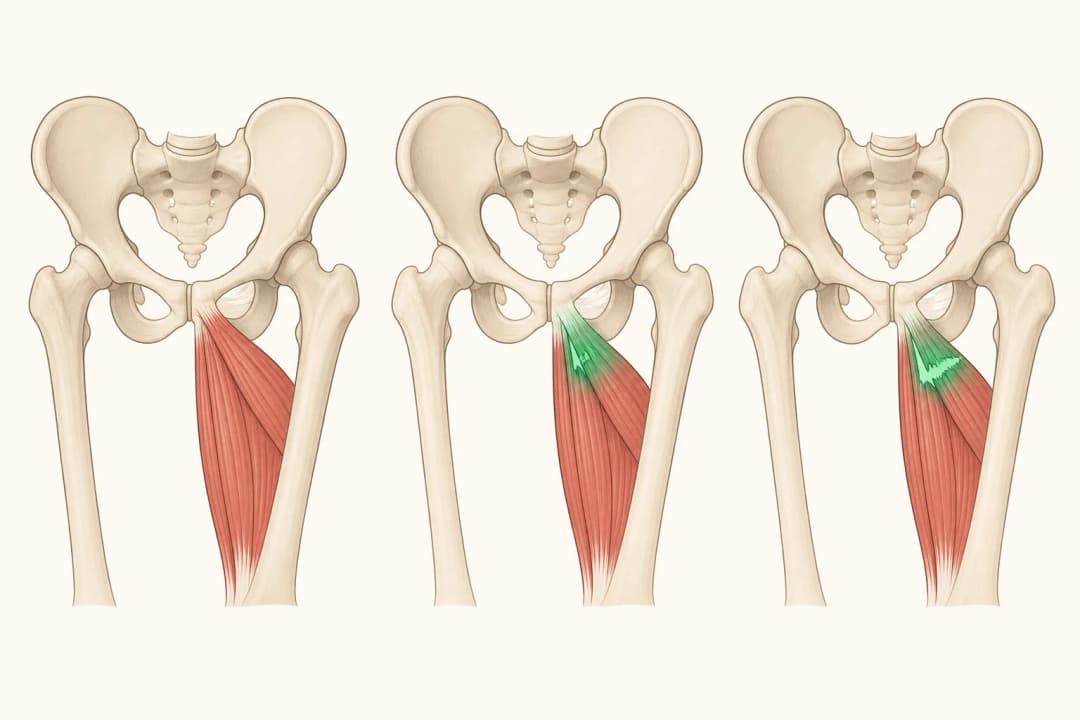
A groin strain commonly affects the adductor muscles on the inner thigh, which help bring the leg inward and stabilise the pelvis. Pain can settle before the muscle has regained enough capacity for sprinting, kicking, or lateral movement. Treatment may begin with comfortable range-of-motion work and gentle contractions, then advance to resisted strengthening, running drills, and direction changes. The starting point depends on pain, strength, the injury mechanism, and whether hip or abdominal symptoms are also present.
Support the rehabilitation plan
Avoid sudden stretching or maximal kicking while symptoms are irritable. Complete the prescribed adductor and hip exercises consistently, keeping discomfort within the limits given by your physiotherapist. Progress only when walking, stairs, and the current exercise level remain settled later that day and the next morning. Return to sport through planned drills rather than a single full-intensity session, and report any renewed limp or sharp pain.
When to seek another assessment
Seek prompt care for severe pain after a forceful event, inability to walk, major bruising or swelling, a palpable gap, numbness, or pain in the groin with abdominal or testicular symptoms. Arrange reassessment if pain persists at rest, repeatedly returns during simple activity, or fails to improve with the rehabilitation plan.
Questions to bring
Ask which adductor exercises are suitable now, how much discomfort is acceptable, and what running or kicking tests should come next. Clarify whether the pain pattern suggests a muscle strain or another hip, pelvis, or abdominal problem, and how to adjust training while capacity returns.
Find care
General Clinics & Polyclinics in Abu Dhabi
That answer is general. If you want it applied to your own case, these are licensed general clinics & polyclinics listed in Abu Dhabi.
27 Ar Ruwwad St - Shakhbout City - MSH4 - Abu Dhabi - United Arab Emirates
Accepts: Daman, Thiqa, Cigna, MetLife +20 more
Al Ruwais, Al Dhafrah
Accepts: Daman, Thiqa, AXA, Cigna +16 more
Al Bahyah - Al Bahyah Old - Abu Dhabi - United Arab Emirates
Accepts: Daman, Thiqa, Cigna, Allianz Care +18 more
Abu Dhabi
Accepts: Daman, Thiqa, AXA, Cigna +27 more
Ordered by verification status and how complete each clinic's public record is, then alphabetically. This is a directory listing, not a ranking — Zavis does not rate or recommend providers.
A factual listing drawn from the DHA, DOH and MOHAP licence registers. It is not a referral, an endorsement, or advice that any of these providers is right for you.
Questions people ask
Can physiotherapy speed up a groin strain recovery?
A tailored programme can restore movement and loading capacity, while the pace still depends on tissue irritability and the demands of your activity.
Should I stretch a painful groin?
Forceful stretching can aggravate an irritable strain; use the range and exercise dose recommended after assessment.
Related
Related reading
Keep reading
Medical disclaimer. This page is general health information, not medical advice, and it cannot diagnose you. Always consult a licensed healthcare provider about your own symptoms and treatment. In an emergency in the UAE, call 998 for an ambulance.