
How long does return-to-sport programme take to work for groin strain?
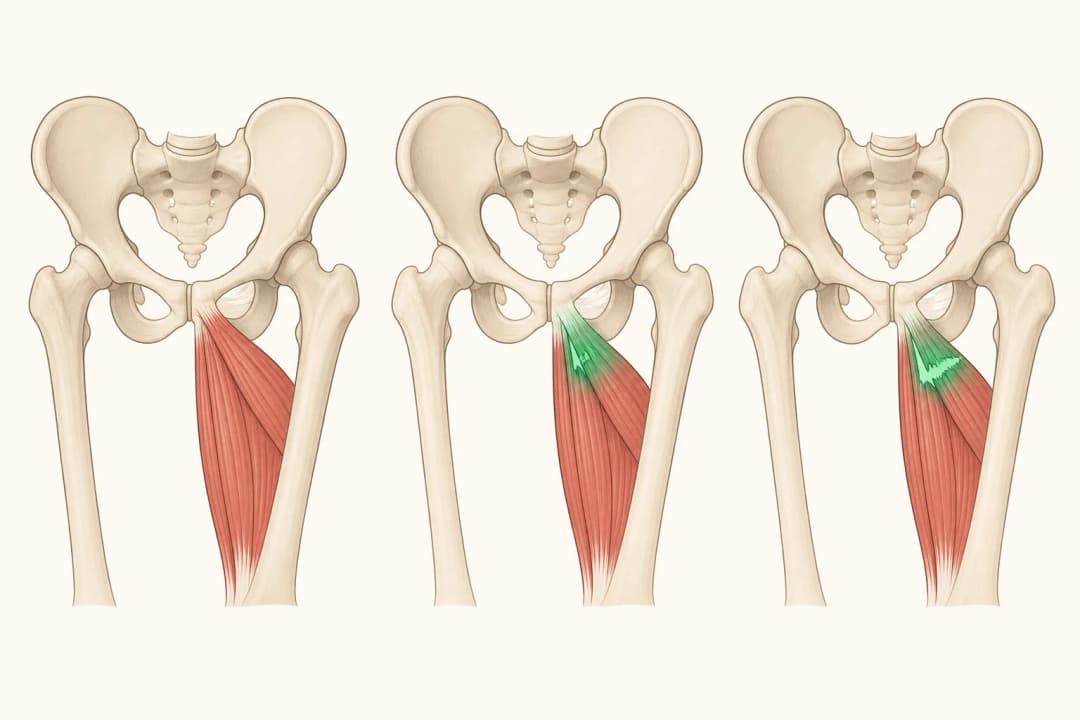
Short answer
A return-to-sport programme for a groin strain may take several weeks or longer, depending on pain, strength, sprinting demands and response to increasing load.
This answers one question. It is not a diagnosis and does not replace an assessment by a licensed doctor.
At a glance
- Progress marker
- The groin should tolerate each new load without a delayed flare.
- Sport demands
- Sprinting, cutting and kicking often need separate practice.
Why groin rehabilitation is staged
The programme usually starts with comfortable movement and controlled strengthening of the inner-thigh and hip muscles. It can then add running, acceleration, lateral movement, kicking and sport drills. The groin needs to tolerate both the exercise itself and the hours afterward without a rising pain pattern or renewed stiffness.
A mild strain may progress sooner than a larger muscle or tendon injury. Repeated pain with sprinting, cutting or kicking can mean the current stage is too demanding or that another source of groin pain needs assessment.
Making progress without a setback
Follow the exercise plan and warm up before training. Build load gradually, changing only one major demand at a time. Use pain during exercise, movement quality and next-day response as feedback rather than forcing a target date. Do not return to full-speed sprinting or powerful kicking until your clinician has checked the required strength and control.
Keep doing the prescribed hip and trunk exercises after symptoms improve. They help prepare the groin for repeated sporting loads and expose weakness that may not show during walking.
When to stop and get checked
Arrange review if pain is worsening, bruising or swelling is increasing, walking becomes difficult, or symptoms keep returning each time running resumes. Seek prompt assessment after a sudden pop with marked weakness, inability to bear weight, or severe pain.
Questions to ask
Ask which activities are currently allowed, what strength or running milestones come next, and how to respond to next-day soreness. Discuss whether your injury involves muscle, tendon or another hip or pelvic structure.
Find care
General Clinics & Polyclinics in Abu Dhabi
That answer is general. If you want it applied to your own case, these are licensed general clinics & polyclinics listed in Abu Dhabi.
27 Ar Ruwwad St - Shakhbout City - MSH4 - Abu Dhabi - United Arab Emirates
Accepts: Daman, Thiqa, Cigna, MetLife +20 more
Al Ruwais, Al Dhafrah
Accepts: Daman, Thiqa, AXA, Cigna +16 more
Al Bahyah - Al Bahyah Old - Abu Dhabi - United Arab Emirates
Accepts: Daman, Thiqa, Cigna, Allianz Care +18 more
Abu Dhabi
Accepts: Daman, Thiqa, AXA, Cigna +27 more
Ordered by verification status and how complete each clinic's public record is, then alphabetically. This is a directory listing, not a ranking — Zavis does not rate or recommend providers.
A factual listing drawn from the DHA, DOH and MOHAP licence registers. It is not a referral, an endorsement, or advice that any of these providers is right for you.
Questions people ask
Is walking without pain enough to return to sport?
No. Sport can place much higher demands on the groin through sprinting, cutting, kicking and repeated acceleration.
What if pain returns after training?
Reduce the recent increase, allow symptoms to settle, and discuss the pattern with your physiotherapist or clinician.
Keep reading
Medical disclaimer. This page is general health information, not medical advice, and it cannot diagnose you. Always consult a licensed healthcare provider about your own symptoms and treatment. In an emergency in the UAE, call 998 for an ambulance.