
How long does radiotherapy take to work for inflammatory breast cancer?
Short answer
Radiotherapy for inflammatory breast cancer has a gradual effect, with response assessed through examinations and planned imaging after treatment and during follow-up.
This answers one question. It is not a diagnosis and does not replace an assessment by a licensed doctor.
At a glance
- Effect
- Builds gradually and may continue after treatment ends
- Skin changes
- Redness, warmth, swelling, and soreness can occur during treatment
How the timing is understood
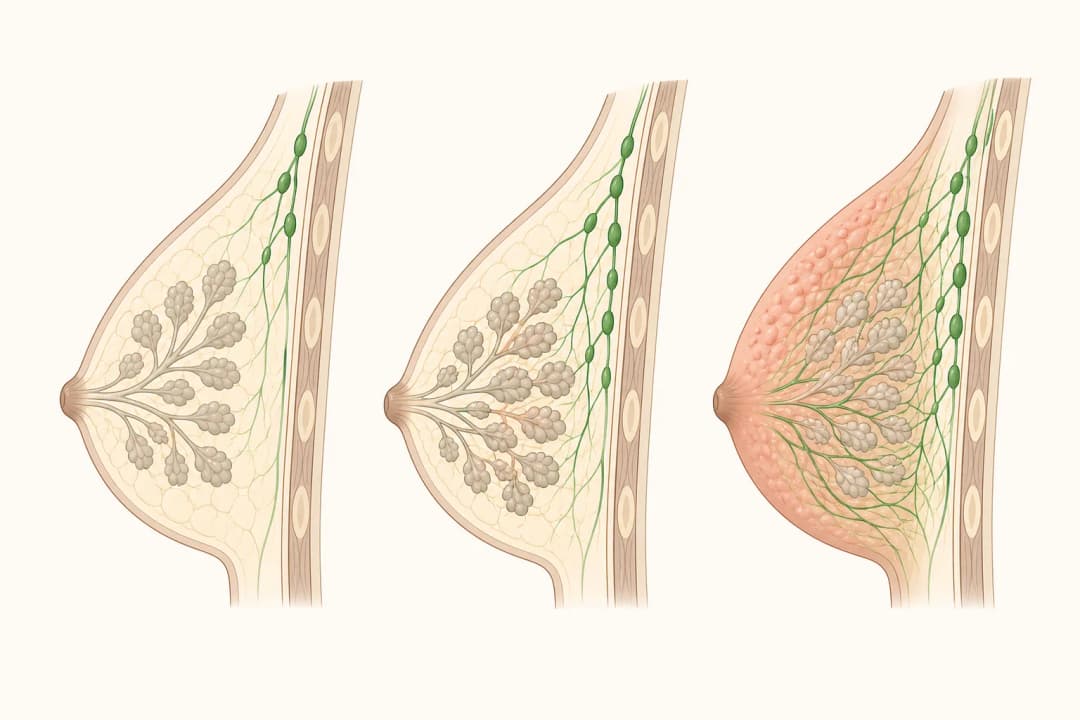
Radiotherapy treats cells in the planned breast and nearby areas. The biological effect continues as damaged cells are cleared, so redness, warmth, swelling, or discomfort may persist or temporarily increase during the course and shortly afterward. Those skin changes are treatment effects and do not by themselves measure the cancer response. Your breast team considers examination findings together with imaging and the other treatments in your plan. Inflammatory breast cancer is commonly managed as part of a sequence that can include medicine, surgery, and radiotherapy, so the purpose and timing of each review should be explained individually.
Practical steps during treatment
Attend each session and use only the skin products recommended by your radiation team. Keep the treated area clean and dry, avoid friction and unapproved heat or cold, and wear comfortable clothing. Tell the team if skin becomes broken, weepy, blistered, very painful, or difficult to protect. Take prescribed pain relief as directed and maintain nourishing food and fluids. Continue any breast, arm, or shoulder exercises only as advised. Keep a list of questions about the next scan, surgery timing, medicines, and how the breast will be examined.
When to seek urgent advice
Contact your team promptly for rapidly spreading redness, worsening swelling, open or draining skin, severe pain, fever, or a sudden change in the treated breast or arm. Seek emergency help for severe breathlessness, chest pain, fainting, or signs of a serious allergic reaction. Do not wait for the next appointment if you cannot manage pain, hydration, or wound care safely.
Questions for your doctor
Ask what improvement your team will look for, when the breast will be examined, and which imaging study will be used. Ask how radiotherapy fits with surgery and medicine, how to care for changing skin, and which symptoms require a same-day call.
Questions people ask
Does more redness mean radiotherapy is working better?
No. Redness and irritation can be treatment effects, but they do not measure response on their own.
When will my team know whether treatment helped?
The team uses planned examinations and imaging, interpreted alongside your other treatments and symptoms.
Related
Related reading
Keep reading
Cancer care in the UAE
Hospitals & Medical Centers in Abu Dhabi
Most UAE cancer care is delivered inside hospital services rather than by standalone oncology clinics, so these are licensed hospitals & medical centers listed in Abu Dhabi. Confirm the specific cancer service exists before you travel, and know that asking for a second opinion is routine.
Ahalia Hospital Musaffah Building - Musaffah - Musaffah Industrial - Abu Dhabi - United Arab Emirates
Accepts: Daman, Thiqa, AXA, Cigna +26 more
Al Ruwais Industrial City - Abu Dhabi - United Arab Emirates
Accepts: Daman, Thiqa, AXA, Cigna +30 more
Abu Dhabi, Abu Dhabi
Accepts: Daman, Thiqa, AXA, Cigna +30 more
Second opinions are routine in cancer care and asking for one does not affect your treatment. How to arrange a second opinion in the UAE.
Ordered by verification status and how complete each clinic's public record is, then alphabetically. This is a directory listing, not a ranking — Zavis does not rate or recommend providers.
A factual listing drawn from the DHA, DOH and MOHAP licence registers. It is not a referral, an endorsement, or advice that any of these providers is right for you.
Medical disclaimer. This page is general health information, not medical advice, and it cannot diagnose you. Always consult a licensed healthcare provider about your own symptoms and treatment. In an emergency in the UAE, call 998 for an ambulance.