
How long does physiotherapy take to work for rotator cuff tendinitis?
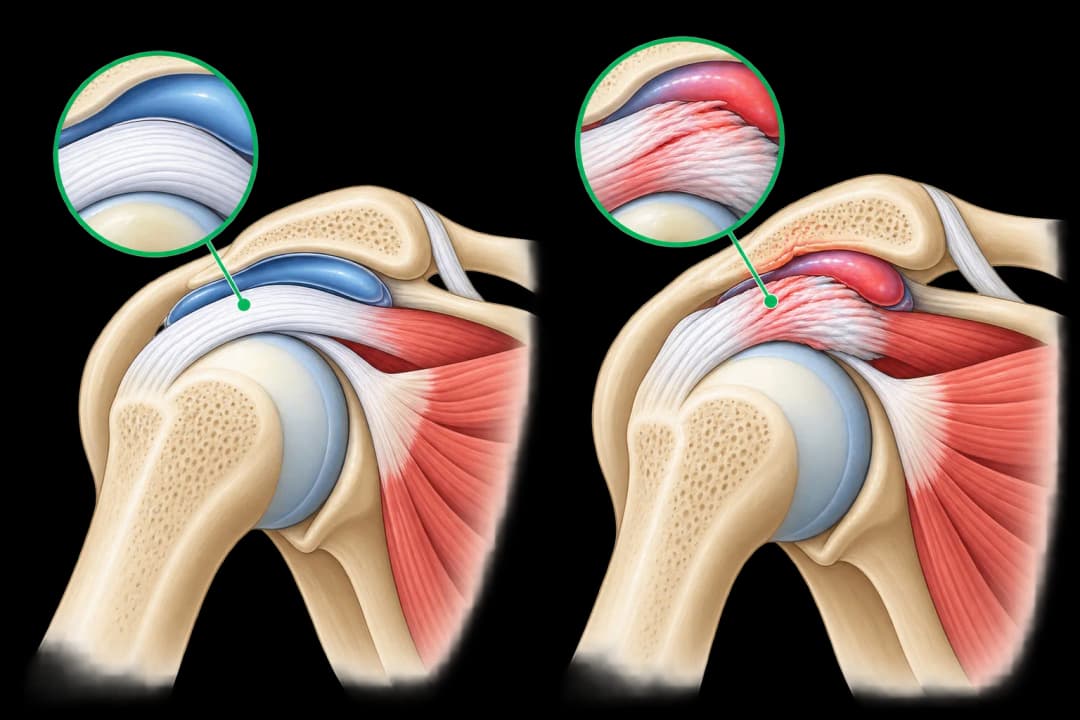
Short answer
Physiotherapy for rotator cuff tendinitis may begin easing movement over several sessions, while restoring shoulder strength and activity tolerance commonly takes longer and requires gradual loading.
This answers one question. It is not a diagnosis and does not replace an assessment by a licensed doctor.
At a glance
- Early change
- More comfortable movement may come before full strength
- Key principle
- Build shoulder load gradually
Why improvement takes time
Rotator cuff tendinitis, also called tendinopathy, can cause pain when reaching, lifting or lying on the shoulder. Tendons respond to a suitable training load, but too much too soon can irritate symptoms. Early treatment may address posture, shoulder-blade movement and comfortable range. Later sessions usually build the rotator cuff and surrounding muscles so the shoulder can tolerate work, sport and overhead tasks. Sleep, repeated daily movements and the duration of symptoms can influence the pace.
Steps that support recovery
Temporarily reduce the movements that clearly provoke pain, but keep safe shoulder motion rather than holding the arm still. Complete the prescribed exercises consistently and increase resistance only when the current level is tolerated. Adjust reaching height, carrying technique or workstation position if these repeatedly flare symptoms. Tell your therapist about night pain, painful clicking, neck symptoms or weakness so the plan can be checked and other causes considered.
When to seek care
Arrange review for sudden loss of shoulder strength, inability to raise the arm after an injury, marked swelling or a new deformity. Seek urgent care for severe chest pain, breathing difficulty or neurological symptoms. If pain is progressively worsening, regularly wakes you despite adjustments, or does not respond to a planned programme, contact your clinician for reassessment.
Questions to ask
Which movements should I modify first? How much discomfort is acceptable during strengthening? When should I progress resistance or overhead work? Could neck or nerve irritation be contributing to my symptoms?
Find care
General Clinics & Polyclinics in Abu Dhabi
That answer is general. If you want it applied to your own case, these are licensed general clinics & polyclinics listed in Abu Dhabi.
27 Ar Ruwwad St - Shakhbout City - MSH4 - Abu Dhabi - United Arab Emirates
Accepts: Daman, Thiqa, Cigna, MetLife +20 more
Al Ruwais, Al Dhafrah
Accepts: Daman, Thiqa, AXA, Cigna +16 more
Al Bahyah - Al Bahyah Old - Abu Dhabi - United Arab Emirates
Accepts: Daman, Thiqa, Cigna, Allianz Care +18 more
Abu Dhabi
Accepts: Daman, Thiqa, AXA, Cigna +27 more
Ordered by verification status and how complete each clinic's public record is, then alphabetically. This is a directory listing, not a ranking — Zavis does not rate or recommend providers.
A factual listing drawn from the DHA, DOH and MOHAP licence registers. It is not a referral, an endorsement, or advice that any of these providers is right for you.
Questions people ask
Should I stop all overhead activity?
Often the aggravating load is modified rather than removed completely; your therapist can set a safe range and progression.
What if my shoulder hurts after exercises?
Report pain that is sharp, escalating or long-lasting; the exercise dose or technique may need adjustment.
Related
Related reading
Keep reading
Medical disclaimer. This page is general health information, not medical advice, and it cannot diagnose you. Always consult a licensed healthcare provider about your own symptoms and treatment. In an emergency in the UAE, call 998 for an ambulance.