
How long does palliative care take to work for metastatic cancer?
Short answer
Palliative care for metastatic cancer can start helping with symptom control and support at the first assessment, while noticeable relief varies by person and treatment.
This answers one question. It is not a diagnosis and does not replace an assessment by a licensed doctor.
At a glance
- Starting point
- Care begins with your symptoms, priorities, and practical needs
- Expected timing
- Some support is immediate; physical symptom relief may take longer
- Continuity
- The plan can be revised as your condition and goals change
The short answer
Palliative care for metastatic cancer can start helping with symptom control and support at the first assessment, while noticeable relief varies by person and treatment. The team may help with pain, breathing problems, nausea, tiredness, sleep, appetite, or emotional strain. A plan is reviewed as symptoms change, rather than measured against one universal timetable.
What palliative care does
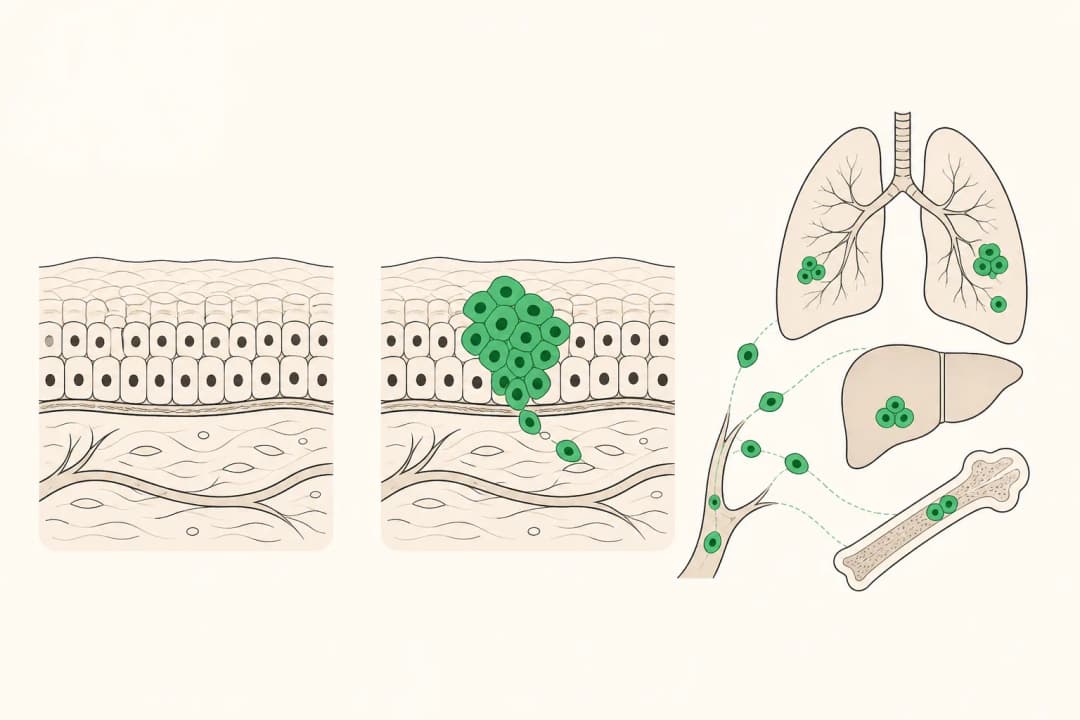
Metastatic cancer means cancer has spread from where it began to another part of the body. This can create symptoms from the cancer itself, its location, or its treatment. Palliative care looks at the whole picture and may involve medicines, procedures, rehabilitation, nutrition advice, counselling, and help with daily planning. A medicine may need adjustment after its effect and side effects are assessed. A procedure may help a physical source of discomfort, while conversations and practical support can help from the first contact.
Making the plan useful
Choose the symptom that limits you most and describe its effect on ordinary tasks. Record what happens before and after medicines, meals, movement, or rest. Share concerns about drowsiness, constipation, nausea, or confusion rather than stopping a medicine without advice. Tell the team about your priorities and who helps you at home. Ask for written instructions about medicines, contacts, and the next review.
When to seek urgent care
Call emergency services for severe breathing difficulty, blue or grey lips, a seizure, sudden confusion, collapse, or severe chest pain. Contact your oncology or palliative care service promptly for a new fever, uncontrolled pain, persistent vomiting, sudden weakness, or a rapid change in alertness. Early contact allows the team to decide whether you need urgent examination or a change in the care plan.
Questions for your doctor
Which symptoms can palliative care address today? What improvement should we look for first? When will the plan be reviewed? Could another condition or treatment be contributing? Who should I contact if the plan is not enough?
Questions people ask
Does palliative care mean that cancer treatment has ended?
No. Palliative care can be provided while cancer-directed treatment continues and can help manage symptoms during that treatment.
What if the first plan does not help enough?
Tell the team which symptoms remain and what side effects occurred; they can reassess causes and adjust the plan or involve another specialist.
Keep reading
Cancer care in the UAE
Hospitals & Medical Centers in Abu Dhabi
Most UAE cancer care is delivered inside hospital services rather than by standalone oncology clinics, so these are licensed hospitals & medical centers listed in Abu Dhabi. Confirm the specific cancer service exists before you travel, and know that asking for a second opinion is routine.
Ahalia Hospital Musaffah Building - Musaffah - Musaffah Industrial - Abu Dhabi - United Arab Emirates
Accepts: Daman, Thiqa, AXA, Cigna +26 more
Al Ruwais Industrial City - Abu Dhabi - United Arab Emirates
Accepts: Daman, Thiqa, AXA, Cigna +30 more
Abu Dhabi, Abu Dhabi
Accepts: Daman, Thiqa, AXA, Cigna +30 more
Second opinions are routine in cancer care and asking for one does not affect your treatment. How to arrange a second opinion in the UAE.
Ordered by verification status and how complete each clinic's public record is, then alphabetically. This is a directory listing, not a ranking — Zavis does not rate or recommend providers.
A factual listing drawn from the DHA, DOH and MOHAP licence registers. It is not a referral, an endorsement, or advice that any of these providers is right for you.
Medical disclaimer. This page is general health information, not medical advice, and it cannot diagnose you. Always consult a licensed healthcare provider about your own symptoms and treatment. In an emergency in the UAE, call 998 for an ambulance.