
How long does emollient therapy take to work for nappy rash?
Short answer
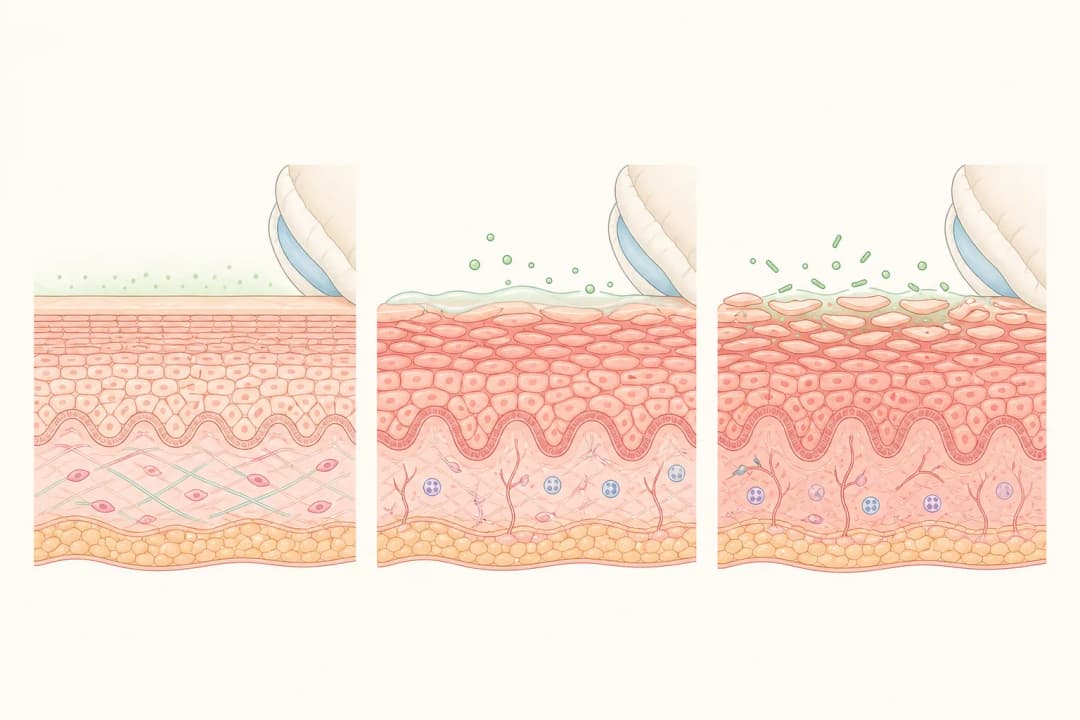
Emollient therapy may soothe nappy rash after applications, while visible improvement often develops over several days when the skin is kept clean, dry, and protected.
This answers one question. It is not a diagnosis and does not replace an assessment by a licensed doctor.
At a glance
- Early effect
- The skin may feel more comfortable after an application.
- Visible change
- Redness may take several days to settle.
- Key habit
- Keep the area gently clean, dry, and protected.
When should emollient therapy help?
Emollient therapy may soothe nappy rash after applications, while visible improvement often develops over several days when the skin is kept clean, dry, and protected. The exact timing depends on how inflamed the skin is, how often it is exposed to urine or stool, and whether another problem, such as a yeast infection or bacterial infection, is contributing.
What emollient therapy does
An emollient is a moisturising product that softens dry, irritated skin and helps reinforce its protective barrier. In the nappy area, this barrier can reduce direct contact between the skin and moisture, friction, urine, and stool. Less exposure gives the surface time to settle. A product may reduce tightness or stinging before the redness has fully faded, so early comfort is useful but does not by itself prove that the rash has cleared.
If the rash is spreading, sharply outlined, very sore, or not changing after a few days of careful skin care, emollient alone may not address the cause. A clinician can check whether a different treatment is needed.
How to give the skin a chance to heal
Change the nappy promptly after wetting or soiling. Clean the area gently with lukewarm water or a fragrance-free, alcohol-free product, then pat rather than rub. Apply the emollient as directed, including after cleaning and drying. Use a thin, even layer unless a healthcare professional has advised a different amount, and wash your hands before and after application.
Allow short periods without a nappy when practical, protect clothing and bedding from soiling, and avoid fragranced wipes, bubble bath, talcum powder, and vigorous scrubbing. Do not apply a prescribed steroid or antifungal cream unless it has been recommended for this child and this rash.
When to seek medical care
Arrange medical advice if the rash is worsening, fails to start improving after a few days, keeps returning, or causes marked pain. Seek prompt care for blisters, open or bleeding skin, pus, yellow crusting, rapidly spreading redness, or a fever. A baby who seems unusually sleepy, feeds poorly, or has fewer wet nappies also needs urgent assessment.
Bring the emollient or a photo of its label to the appointment if possible. Tell the clinician when the rash began, what has been applied, and whether the child has recently had diarrhoea, antibiotics, or a change in nappies or wipes.
Questions for your doctor or pharmacist
Ask which emollient is suitable for the nappy area, how often to use it, and whether the rash shows features of irritation, yeast, or infection. You can also ask how long to continue after the skin looks better and which ingredients should be avoided if the child has sensitive skin.
Find care
General Clinics & Polyclinics in Abu Dhabi
That answer is general. If you want it applied to your own case, these are licensed general clinics & polyclinics listed in Abu Dhabi.
27 Ar Ruwwad St - Shakhbout City - MSH4 - Abu Dhabi - United Arab Emirates
Accepts: Daman, Thiqa, Cigna, MetLife +20 more
Al Ruwais, Al Dhafrah
Accepts: Daman, Thiqa, AXA, Cigna +16 more
Al Bahyah - Al Bahyah Old - Abu Dhabi - United Arab Emirates
Accepts: Daman, Thiqa, Cigna, Allianz Care +18 more
Abu Dhabi
Accepts: Daman, Thiqa, AXA, Cigna +27 more
Ordered by verification status and how complete each clinic's public record is, then alphabetically. This is a directory listing, not a ranking — Zavis does not rate or recommend providers.
A factual listing drawn from the DHA, DOH and MOHAP licence registers. It is not a referral, an endorsement, or advice that any of these providers is right for you.
Questions people ask
Can I keep using an emollient once the rash improves?
Follow the product directions or your clinician's advice. Continued barrier care may help protect the skin during nappy changes, especially while irritation triggers are still present.
Why is the rash not improving with emollient therapy?
The skin may still be exposed to moisture or friction, or the rash may have another cause that needs specific treatment. Worsening redness, pain, discharge, or a rash that does not start improving after a few days should be assessed.
Related
Related reading
Keep reading
Medical disclaimer. This page is general health information, not medical advice, and it cannot diagnose you. Always consult a licensed healthcare provider about your own symptoms and treatment. In an emergency in the UAE, call 998 for an ambulance.