
How long do antibiotics take to work for endometritis?
Short answer
Antibiotics for endometritis often start improving fever, pelvic pain, and discharge within a few days, although recovery can take longer.
This answers one question. It is not a diagnosis and does not replace an assessment by a licensed doctor.
At a glance
- Early response
- Fever, pain, and discharge may begin improving within a few days.
- Treatment
- More than one antibiotic may be used when mixed bacteria are suspected.
- Follow-up
- Ongoing fever or worsening pain needs reassessment.
Understanding endometritis treatment
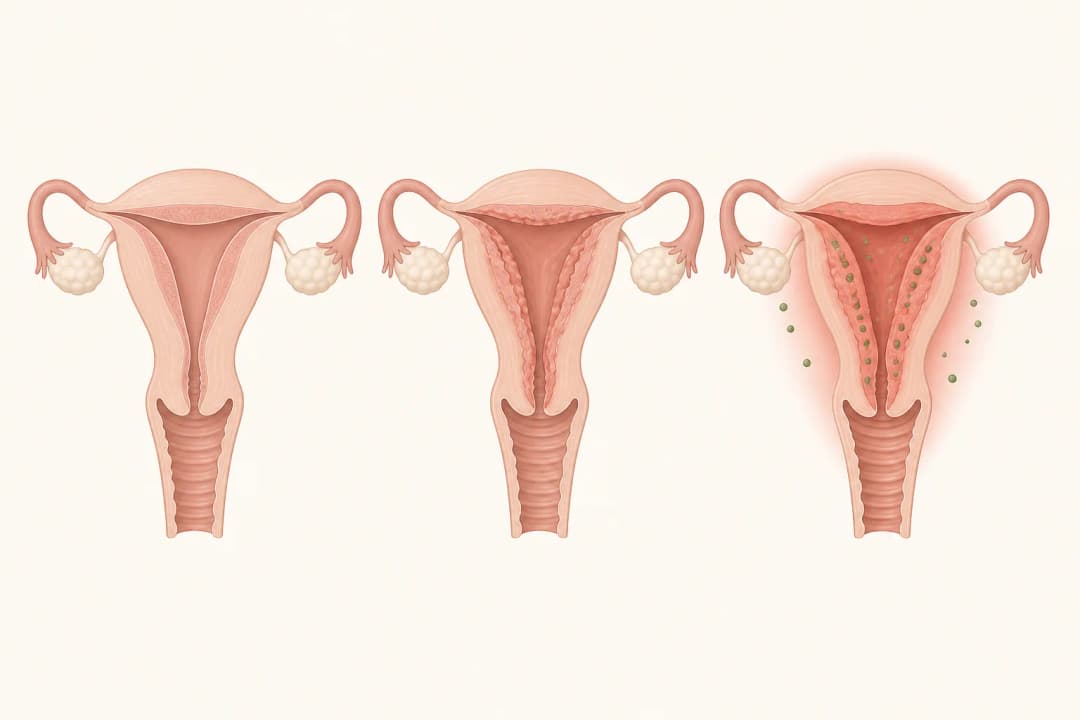
Endometritis is inflammation and infection of the uterine lining. The response can vary with the cause, how soon treatment begins, recent childbirth or a procedure, and whether infection has spread beyond the uterus. A clinician may use a combination of antibiotics, particularly when several types of bacteria may be involved.
Feeling tired or having mild pelvic tenderness may continue after the infection begins responding. Persistent fever, worsening pain, or increasing discharge is different from a gradual recovery and should be reported. If symptoms do not improve as expected, the diagnosis, antibiotic choice, or presence of retained tissue or another pelvic problem may need reassessment.
What you can do during recovery
Take the medicine at the prescribed times and finish the course unless your clinician gives new instructions. Rest, drink fluids if you can, and follow advice about pads, bathing, sex, and activity after childbirth or a procedure. Avoid using leftover antibiotics because they may not cover the cause and can delay appropriate care.
Keep a simple record of temperature, pain, bleeding, discharge, and doses. This helps the treating team judge whether the response is on track. Arrange the recommended follow-up even if symptoms improve.
When to seek urgent care
Get urgent help for severe or worsening lower abdominal pain, heavy bleeding, fainting, confusion, breathing difficulty, repeated vomiting, or fever with shaking chills and marked weakness. After delivery or a procedure, a sudden deterioration can indicate a serious infection or another complication requiring immediate assessment.
Questions for your doctor
Ask what improvement should happen first, how long to continue each medicine, whether breastfeeding affects the prescription, and when review is needed. Ask what to do if a dose is missed or if diarrhoea, a rash, or new pain develops.
Find care
General Clinics & Polyclinics in Abu Dhabi
That answer is general. If you want it applied to your own case, these are licensed general clinics & polyclinics listed in Abu Dhabi.
27 Ar Ruwwad St - Shakhbout City - MSH4 - Abu Dhabi - United Arab Emirates
Accepts: Daman, Thiqa, Cigna, MetLife +20 more
Al Ruwais, Al Dhafrah
Accepts: Daman, Thiqa, AXA, Cigna +16 more
Al Bahyah - Al Bahyah Old - Abu Dhabi - United Arab Emirates
Accepts: Daman, Thiqa, Cigna, Allianz Care +18 more
Abu Dhabi
Accepts: Daman, Thiqa, AXA, Cigna +27 more
Ordered by verification status and how complete each clinic's public record is, then alphabetically. This is a directory listing, not a ranking — Zavis does not rate or recommend providers.
A factual listing drawn from the DHA, DOH and MOHAP licence registers. It is not a referral, an endorsement, or advice that any of these providers is right for you.
Questions people ask
Is ongoing tiredness after starting treatment normal?
Tiredness can linger during recovery, but marked weakness, faintness, confusion, or worsening fever requires urgent medical advice.
What happens if endometritis does not improve?
The clinician may reassess the diagnosis, examine for another pelvic source, review antibiotic coverage, or arrange further tests or treatment.
Related
Related reading
Keep reading
Medical disclaimer. This page is general health information, not medical advice, and it cannot diagnose you. Always consult a licensed healthcare provider about your own symptoms and treatment. In an emergency in the UAE, call 998 for an ambulance.