
How Is Foot Pain Treated?
Short answer
Foot pain is treated by identifying its cause, reducing aggravating load, supporting the foot, and using rehabilitation or targeted treatment when needed.
This answers one question. It is not a diagnosis and does not replace an assessment by a licensed doctor.
At a glance
- Assessment focuses on
- Location, triggers, footwear, walking pattern and associated symptoms
- Common first steps
- Load modification, suitable footwear and targeted rehabilitation
What the treatment depends on
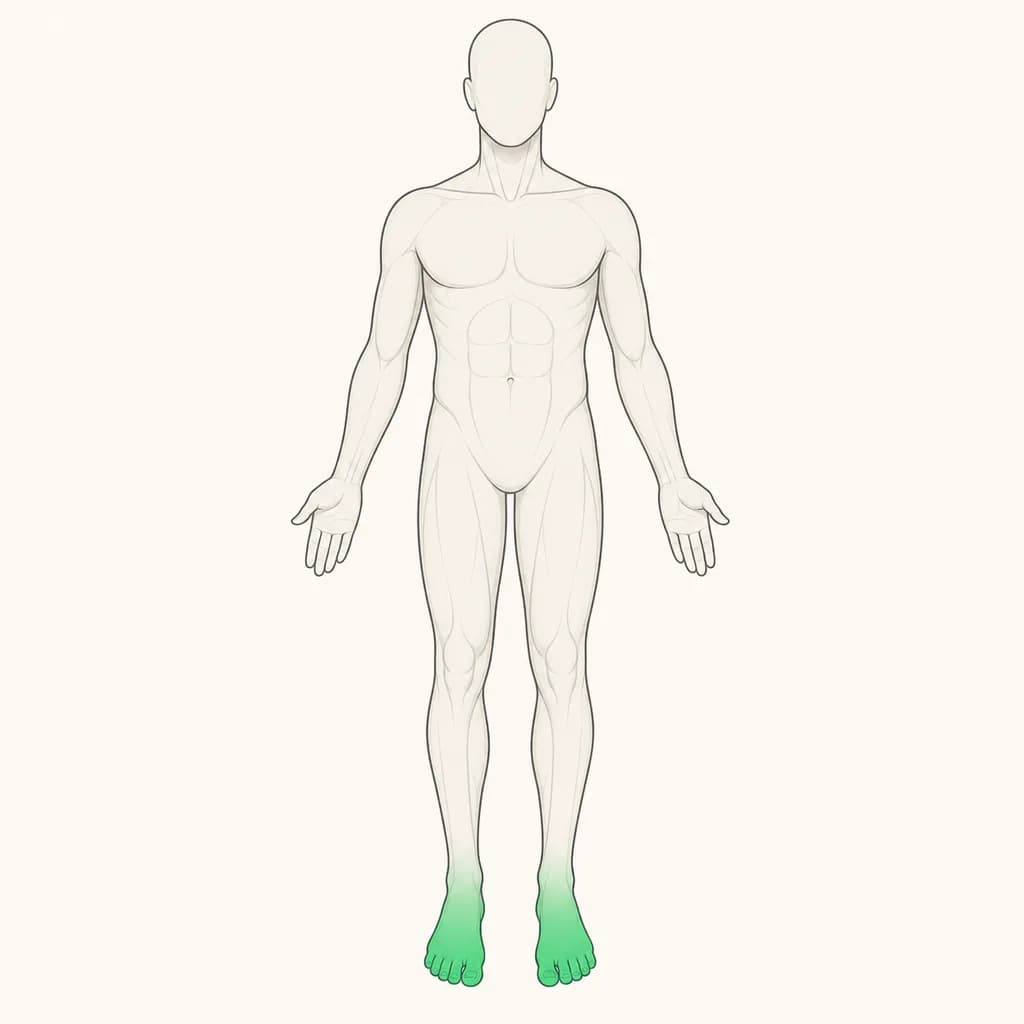
Pain may come from the sole, heel, toes, joints, tendons, nerves or a bone injury. A clinician may ask when it started, whether walking or a particular shoe triggers it, and whether there is swelling, numbness or tenderness. Flat Feet, plantar fasciitis, a stiff big-toe joint, a bent toe, nerve irritation between the toes and a stress fracture need different plans.
Initial care often includes changing the activity that provokes pain, choosing supportive footwear and allowing irritated tissue to settle. Custom orthotics may alter pressure and alignment when a foot assessment shows that support could help. A suspected stress fracture needs assessment before you return to impact activity.
Steps that may help
Keep a simple record of the painful area, footwear, activity and symptoms. Use comfortable shoes with enough room for the toes, avoid sudden increases in walking or running, and follow any advice about temporary rest, ice or prescribed medicine. Physiotherapy can address calf flexibility, foot strength, balance and movement habits when these contribute to symptoms.
Treatment is adjusted as your walking tolerance changes. If a Morton’s neuroma remains troublesome despite non-surgical care, a specialist may discuss an injection or surgery; the choice depends on the examination and the suspected source of pain.
When to seek care
Arrange prompt medical assessment for severe pain after an injury, inability to bear weight, marked swelling, a visible deformity, spreading redness, fever, a wound, new weakness or persistent numbness. Seek advice sooner if diabetes, poor circulation or reduced sensation makes foot problems harder to notice. Ongoing pain that changes your walking pattern also deserves an examination rather than repeated self-treatment.
Questions for your doctor
Ask: What structure is causing the pain? Do I need imaging? Which activities should I pause, and how can I keep active safely? Would footwear changes, Custom Orthotics or physiotherapy suit my foot? What symptoms should prompt an urgent review?
Find care
General Clinics & Polyclinics in Abu Dhabi
That answer is general. If you want it applied to your own case, these are licensed general clinics & polyclinics listed in Abu Dhabi.
27 Ar Ruwwad St - Shakhbout City - MSH4 - Abu Dhabi - United Arab Emirates
Accepts: Daman, Thiqa, Cigna, MetLife +20 more
Al Ruwais, Al Dhafrah
Accepts: Daman, Thiqa, AXA, Cigna +16 more
Al Bahyah - Al Bahyah Old - Abu Dhabi - United Arab Emirates
Accepts: Daman, Thiqa, Cigna, Allianz Care +18 more
Abu Dhabi
Accepts: Daman, Thiqa, AXA, Cigna +27 more
Ordered by verification status and how complete each clinic's public record is, then alphabetically. This is a directory listing, not a ranking — Zavis does not rate or recommend providers.
A factual listing drawn from the DHA, DOH and MOHAP licence registers. It is not a referral, an endorsement, or advice that any of these providers is right for you.
Questions people ask
Can foot pain improve without surgery?
Many causes are first managed with activity adjustment, footwear changes, support and rehabilitation; the appropriate plan depends on the diagnosis.
When might surgery be discussed?
Surgery may be considered when a specific structural problem remains limiting despite suitable non-surgical treatment, such as persistent Morton’s neuroma symptoms.
Related
Related reading
Keep reading
Medical disclaimer. This page is general health information, not medical advice, and it cannot diagnose you. Always consult a licensed healthcare provider about your own symptoms and treatment. In an emergency in the UAE, call 998 for an ambulance.