
How effective are topical corticosteroids for irritant contact dermatitis?
Short answer
Topical corticosteroids can be effective for irritant contact dermatitis by calming inflammation, but recovery also depends on stopping the irritating exposure and protecting the skin barrier.
This answers one question. It is not a diagnosis and does not replace an assessment by a licensed doctor.
At a glance
- Core step
- Stop or reduce the irritating exposure.
- Supportive care
- Frequent bland moisturising helps protect the barrier.
Why removing the trigger matters
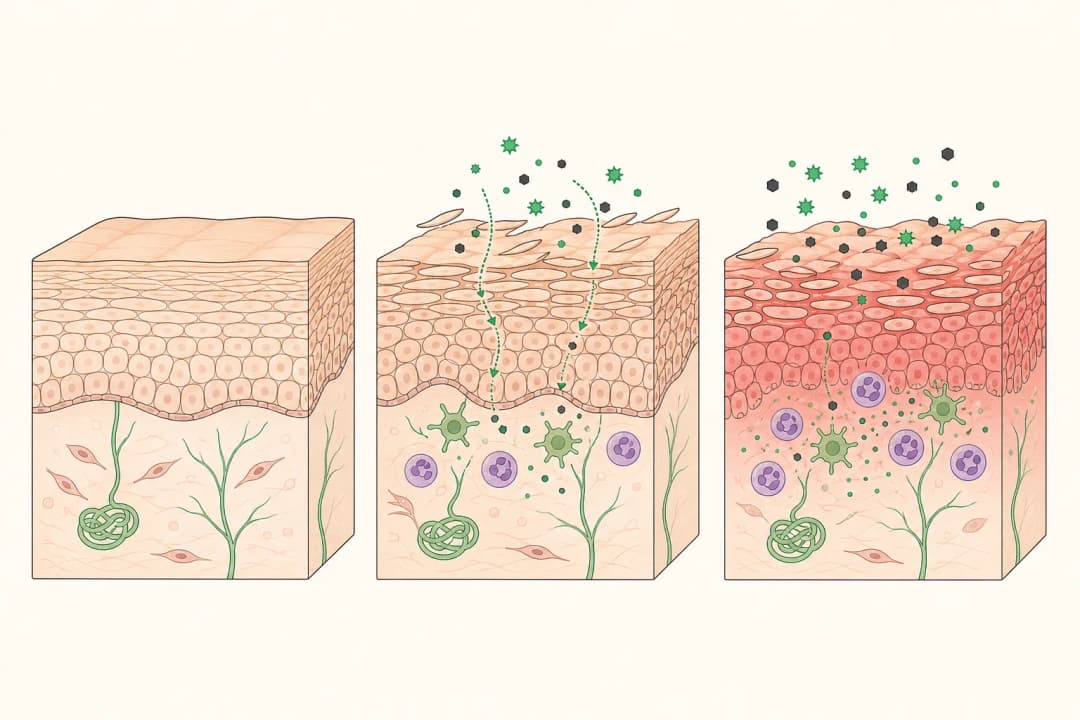
Irritant contact dermatitis follows direct damage from substances or conditions such as repeated water exposure, cleansers, solvents, friction or chemicals. The result may be burning, redness, scaling, soreness and cracks. A corticosteroid reduces the inflammatory response, but ongoing contact can keep damaging the barrier and make improvement short-lived. A rash that continues despite avoidance may involve allergy, infection or another skin condition and needs reassessment.
Protect the skin barrier
Identify and reduce the suspected irritant, use lukewarm water, dry by patting, and apply a bland fragrance-free moisturiser often. Wear suitable protective gloves for cleaning or wet work, with breathable liners if sweating is a problem. Use the corticosteroid only as directed, on active inflamed areas, and avoid applying it to infected or broken skin unless told otherwise. Keep a note of work, product or household exposures that precede flares; this can make the clinical assessment more useful.
When to seek care
Arrange review if cracking, pain or inflammation interferes with daily tasks, or if the rash persists after the suspected irritant is removed. Prompt care is needed for pus, increasing warmth, spreading redness, fever, or rapidly worsening swelling. Swelling around the eyes or breathing problems after an exposure require urgent help.
Questions for your doctor
Ask which exposure is most likely to be harming the barrier, what protective method fits your work, and how to combine moisturiser with the prescribed corticosteroid. Ask whether allergy testing is useful if the pattern is recurrent or spreads beyond contact areas.
Find care
General Clinics & Polyclinics in Abu Dhabi
That answer is general. If you want it applied to your own case, these are licensed general clinics & polyclinics listed in Abu Dhabi.
27 Ar Ruwwad St - Shakhbout City - MSH4 - Abu Dhabi - United Arab Emirates
Accepts: Daman, Thiqa, Cigna, MetLife +20 more
Al Ruwais, Al Dhafrah
Accepts: Daman, Thiqa, AXA, Cigna +16 more
Al Bahyah - Al Bahyah Old - Abu Dhabi - United Arab Emirates
Accepts: Daman, Thiqa, Cigna, Allianz Care +18 more
Abu Dhabi
Accepts: Daman, Thiqa, AXA, Cigna +27 more
Ordered by verification status and how complete each clinic's public record is, then alphabetically. This is a directory listing, not a ranking — Zavis does not rate or recommend providers.
A factual listing drawn from the DHA, DOH and MOHAP licence registers. It is not a referral, an endorsement, or advice that any of these providers is right for you.
Questions people ask
Will a corticosteroid fix irritant contact dermatitis by itself?
It may calm inflammation, but continued exposure can prolong the rash and repeated damage.
Why does the rash keep returning?
Repeated water, cleanser, chemical or friction exposure may be reopening the barrier injury.
Related
Related reading
Keep reading
Medical disclaimer. This page is general health information, not medical advice, and it cannot diagnose you. Always consult a licensed healthcare provider about your own symptoms and treatment. In an emergency in the UAE, call 998 for an ambulance.