
How effective is targeted therapy for myeloproliferative neoplasms?
Short answer
Targeted therapy can control blood-cell production or symptoms in some myeloproliferative neoplasms, but effectiveness depends on the specific disorder, molecular features and treatment goals.
This answers one question. It is not a diagnosis and does not replace an assessment by a licensed doctor.
At a glance
- Group of conditions
- Different disorders need different treatment goals
- Treatment goals
- Count control, symptom relief and complication prevention
- Follow-up
- Blood counts, symptoms and examination guide adjustments
Why results differ
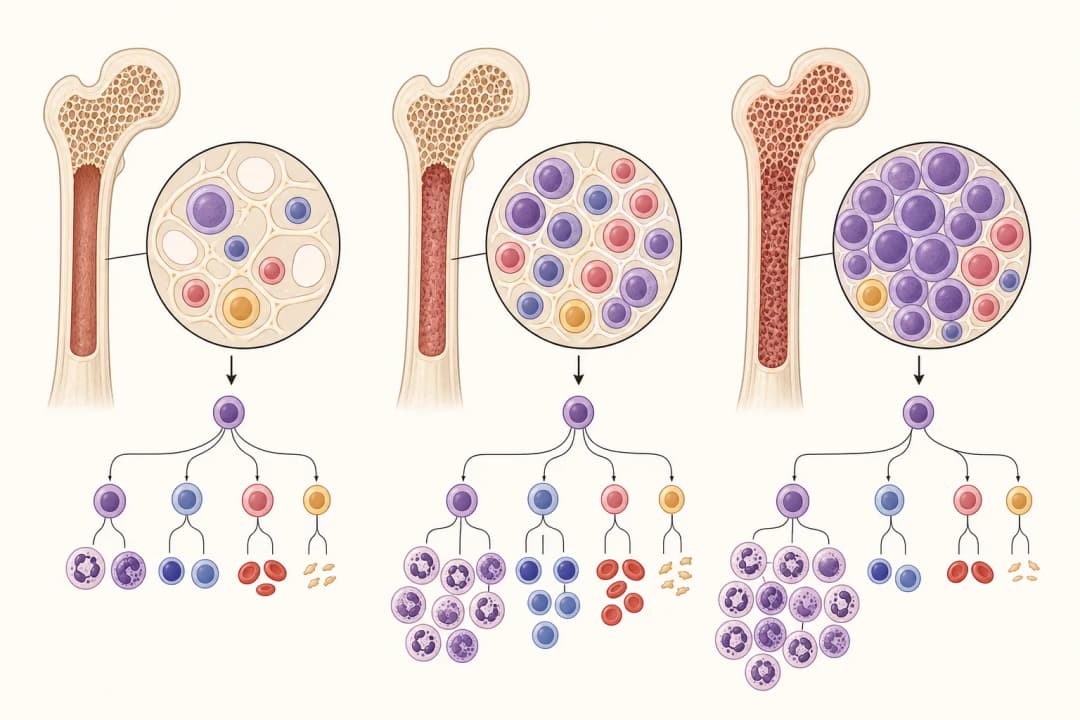
Myeloproliferative neoplasms are a group of conditions in which the bone marrow makes too many blood cells. The group includes disorders with different patterns, so a medicine useful for one may not suit another. Treatment may aim to lower excessive counts, reduce spleen enlargement, ease itching or constitutional symptoms, and lower the risk of blood clots or bleeding. Response is followed with blood counts, symptoms, examination and, when needed, molecular or marrow assessment.
Working with your specialist
Ask which part of the condition the medicine is meant to control and how progress will be measured. Take treatment as directed and tell the team about headaches, vision changes, unusual bruising, bleeding, fever, itching, abdominal fullness or new pain. Keep a current list of medicines and supplements. Regular blood tests help the clinician adjust treatment before a blood-count change causes complications. Do not alter the schedule without advice.
Warning symptoms
Seek urgent medical help for sudden weakness on one side, trouble speaking, new vision loss, severe chest pain, severe breathlessness, or a painful swollen leg. Contact your care team promptly for unusual bleeding, persistent fever, severe headache, increasing abdominal pain or rapidly worsening fatigue. These symptoms can signal clotting, bleeding, infection or another problem needing timely review.
Questions for your doctor
Ask which myeloproliferative neoplasm features your treatment targets, what blood-count range is being sought, how clotting and bleeding risks are managed, when tests are repeated, and which medicines or supplements should be avoided.
Questions people ask
Is targeted therapy the same for every myeloproliferative neoplasm?
No. The diagnosis, blood-cell pattern, molecular findings, symptoms and medical history influence the treatment choice.
What does an effective response look like?
It may involve safer blood counts, fewer symptoms, a smaller spleen or reduced signs of disease activity, depending on the condition.
Keep reading
Cancer care in the UAE
Hospitals & Medical Centers in Abu Dhabi
Most UAE cancer care is delivered inside hospital services rather than by standalone oncology clinics, so these are licensed hospitals & medical centers listed in Abu Dhabi. Confirm the specific cancer service exists before you travel, and know that asking for a second opinion is routine.
Ahalia Hospital Musaffah Building - Musaffah - Musaffah Industrial - Abu Dhabi - United Arab Emirates
Accepts: Daman, Thiqa, AXA, Cigna +26 more
Al Ruwais Industrial City - Abu Dhabi - United Arab Emirates
Accepts: Daman, Thiqa, AXA, Cigna +30 more
Abu Dhabi, Abu Dhabi
Accepts: Daman, Thiqa, AXA, Cigna +30 more
Second opinions are routine in cancer care and asking for one does not affect your treatment. How to arrange a second opinion in the UAE.
Ordered by verification status and how complete each clinic's public record is, then alphabetically. This is a directory listing, not a ranking — Zavis does not rate or recommend providers.
A factual listing drawn from the DHA, DOH and MOHAP licence registers. It is not a referral, an endorsement, or advice that any of these providers is right for you.
Medical disclaimer. This page is general health information, not medical advice, and it cannot diagnose you. Always consult a licensed healthcare provider about your own symptoms and treatment. In an emergency in the UAE, call 998 for an ambulance.