
How effective is physiotherapy for MCL injury?
Short answer
Physiotherapy can be effective for an MCL injury by restoring knee movement, strengthening the supporting muscles, and gradually rebuilding confidence with walking and activity.
This answers one question. It is not a diagnosis and does not replace an assessment by a licensed doctor.
At a glance
- Main aim
- Restore stable, confident knee movement
- Progression
- Movement, strength, balance, then activity-specific drills
What physiotherapy addresses
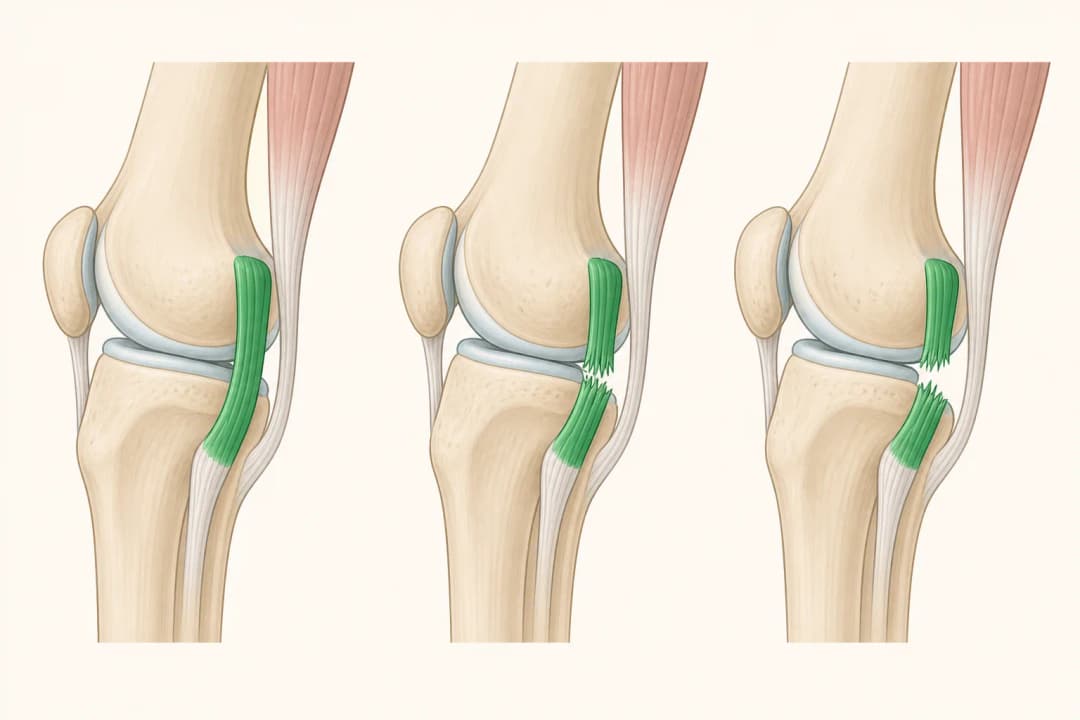
The medial collateral ligament supports the inner side of the knee. After an injury, pain, swelling, guarded movement, and reduced strength can make the knee feel unreliable. Physiotherapy begins with an assessment of tenderness, movement, walking, balance, and the knee's response to gentle load. Early care may emphasise comfortable movement and protection from forces that stress the inner knee. As symptoms settle, exercises can target the thigh, hip, and calf, while balance work helps the leg respond during everyday movement. The plan depends on the injury's severity and whether other knee structures are involved.
Making rehabilitation useful
Follow the protection and activity advice given after assessment. Use the prescribed range-of-motion and strengthening exercises regularly, keeping the knee aligned over the foot during supported tasks. Increase walking, stairs, and sport-specific drills in stages rather than moving directly from rest to pivoting or contact activity. A brace may be recommended in some cases, but its use should match clinical advice. Report persistent swelling, giving way, or pain on the inner knee so the programme can be reassessed.
When to seek medical care
Seek prompt assessment if the knee cannot bear weight, becomes locked, looks markedly deformed, or swells rapidly after an injury. Get medical advice for increasing calf swelling or pain, a cold or unusually pale foot, or new numbness. Arrange review if the knee repeatedly gives way or progress stops despite following the plan, because another ligament, cartilage, or bone injury may need consideration.
Questions to ask
Ask which movements currently stress the MCL, whether you need temporary support, and what signs show that strengthening can progress. Clarify when stairs, running, cutting, or contact drills are appropriate, and what to do if swelling returns after exercise.
Find care
General Clinics & Polyclinics in Abu Dhabi
That answer is general. If you want it applied to your own case, these are licensed general clinics & polyclinics listed in Abu Dhabi.
27 Ar Ruwwad St - Shakhbout City - MSH4 - Abu Dhabi - United Arab Emirates
Accepts: Daman, Thiqa, Cigna, MetLife +20 more
Al Ruwais, Al Dhafrah
Accepts: Daman, Thiqa, AXA, Cigna +16 more
Al Bahyah - Al Bahyah Old - Abu Dhabi - United Arab Emirates
Accepts: Daman, Thiqa, Cigna, Allianz Care +18 more
Abu Dhabi
Accepts: Daman, Thiqa, AXA, Cigna +27 more
Ordered by verification status and how complete each clinic's public record is, then alphabetically. This is a directory listing, not a ranking — Zavis does not rate or recommend providers.
A factual listing drawn from the DHA, DOH and MOHAP licence registers. It is not a referral, an endorsement, or advice that any of these providers is right for you.
Questions people ask
Can physiotherapy heal an MCL injury?
It can support the body's healing process and restore movement and strength, but the plan must match the injury and any associated damage.
When can I return to sport?
Return is gradual and depends on comfortable movement, strength, balance, and sport-specific tasks without renewed swelling or instability.
Keep reading
Medical disclaimer. This page is general health information, not medical advice, and it cannot diagnose you. Always consult a licensed healthcare provider about your own symptoms and treatment. In an emergency in the UAE, call 998 for an ambulance.