
How effective is surgical excision for xanthelasma?
Short answer
Surgical excision can remove visible xanthelasma effectively, although recurrence and eyelid scarring remain possible.
This answers one question. It is not a diagnosis and does not replace an assessment by a licensed doctor.
At a glance
- Target
- Visible eyelid deposits
- Main trade-off
- Removal versus scar and recurrence risk
- Assessment
- Skin, eyelid anatomy and general health
What the result depends on
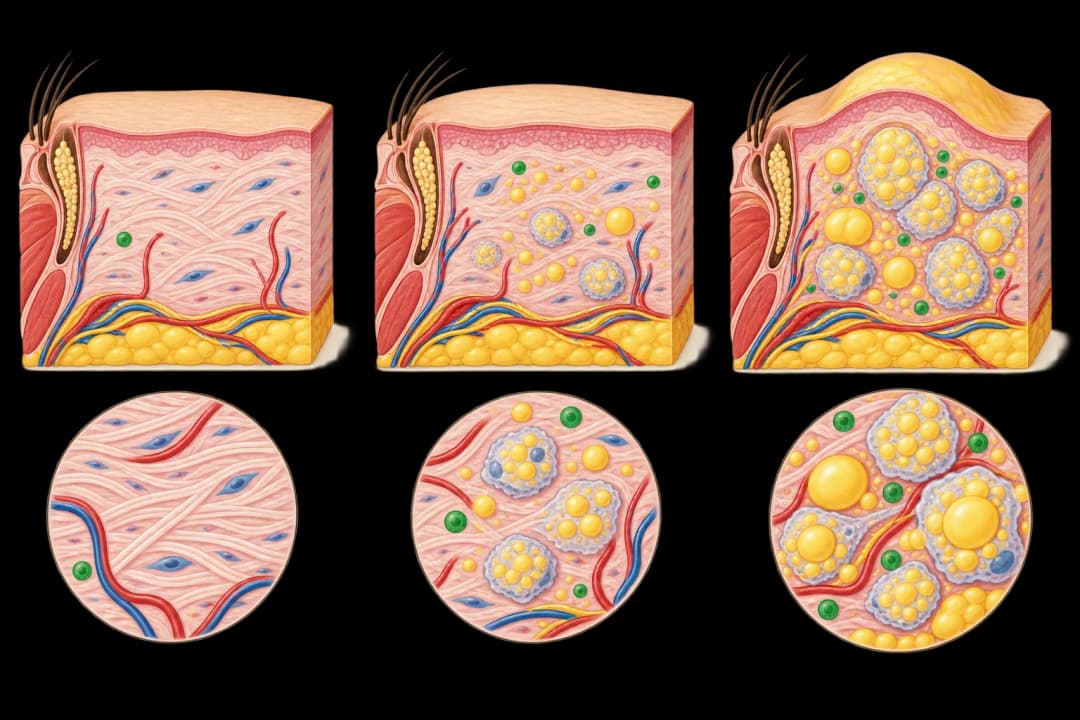
Xanthelasma is a yellowish deposit that commonly appears near the eyelids. Excision cuts out the affected tissue and closes the area carefully, so the visible raised or flat deposit is addressed directly. The result depends on the deposit's size and depth, its position near the eyelid, skin healing, and the surgeon's ability to protect normal eyelid movement. A scar may remain, and a deposit can return in the same area or elsewhere. Xanthelasma may also be associated with an underlying lipid problem, so removal does not correct that tendency.
Planning treatment
Arrange an assessment with a qualified dermatology or oculoplastic clinician. Bring details of previous eyelid procedures, medicines, bleeding conditions and any known cholesterol concerns. Ask whether excision is suitable for the location and whether another approach would better limit tissue removal. Follow wound-care instructions closely, avoid picking at the incision, and protect healing skin from strong sun. A review can check healing and help coordinate medical assessment if lipid testing is appropriate.
When to seek care
Contact the treating team promptly if swelling is rapidly worsening, the wound is opening, discharge or spreading redness develops, or pain is becoming more severe rather than settling. Seek urgent eye care for new vision changes, marked difficulty closing the eye, or sudden eyelid weakness. These symptoms need assessment because they may reflect a wound or eyelid complication rather than ordinary healing.
Questions for your doctor
Ask how much tissue would be removed, where the scar would sit, how eyelid movement will be protected, what recurrence could look like, and whether your cholesterol or other health factors should be assessed.
Find care
General Clinics & Polyclinics in Abu Dhabi
That answer is general. If you want it applied to your own case, these are licensed general clinics & polyclinics listed in Abu Dhabi.
27 Ar Ruwwad St - Shakhbout City - MSH4 - Abu Dhabi - United Arab Emirates
Accepts: Daman, Thiqa, Cigna, MetLife +20 more
Al Ruwais, Al Dhafrah
Accepts: Daman, Thiqa, AXA, Cigna +16 more
Al Bahyah - Al Bahyah Old - Abu Dhabi - United Arab Emirates
Accepts: Daman, Thiqa, Cigna, Allianz Care +18 more
Abu Dhabi
Accepts: Daman, Thiqa, AXA, Cigna +27 more
Ordered by verification status and how complete each clinic's public record is, then alphabetically. This is a directory listing, not a ranking — Zavis does not rate or recommend providers.
A factual listing drawn from the DHA, DOH and MOHAP licence registers. It is not a referral, an endorsement, or advice that any of these providers is right for you.
Questions people ask
Can xanthelasma return after excision?
Yes. Excision removes the treated deposit, but new or returning deposits can develop, particularly if an underlying lipid tendency is present.
Will excision leave a scar?
A scar is possible. Its appearance depends on the incision, eyelid location and individual healing.
Related
Related reading
Keep reading
Medical disclaimer. This page is general health information, not medical advice, and it cannot diagnose you. Always consult a licensed healthcare provider about your own symptoms and treatment. In an emergency in the UAE, call 998 for an ambulance.