
How effective is emollient therapy for irritant contact dermatitis?
Short answer
Emollient therapy can reduce dryness, tightness, and cracking in irritant contact dermatitis, but improvement depends on avoiding the substance that keeps irritating the skin.
This answers one question. It is not a diagnosis and does not replace an assessment by a licensed doctor.
At a glance
- Main support
- Reinforces the damaged skin barrier
- Essential step
- Reduce contact with the irritant
- Avoid
- Fragrance and products that sting
Why it helps
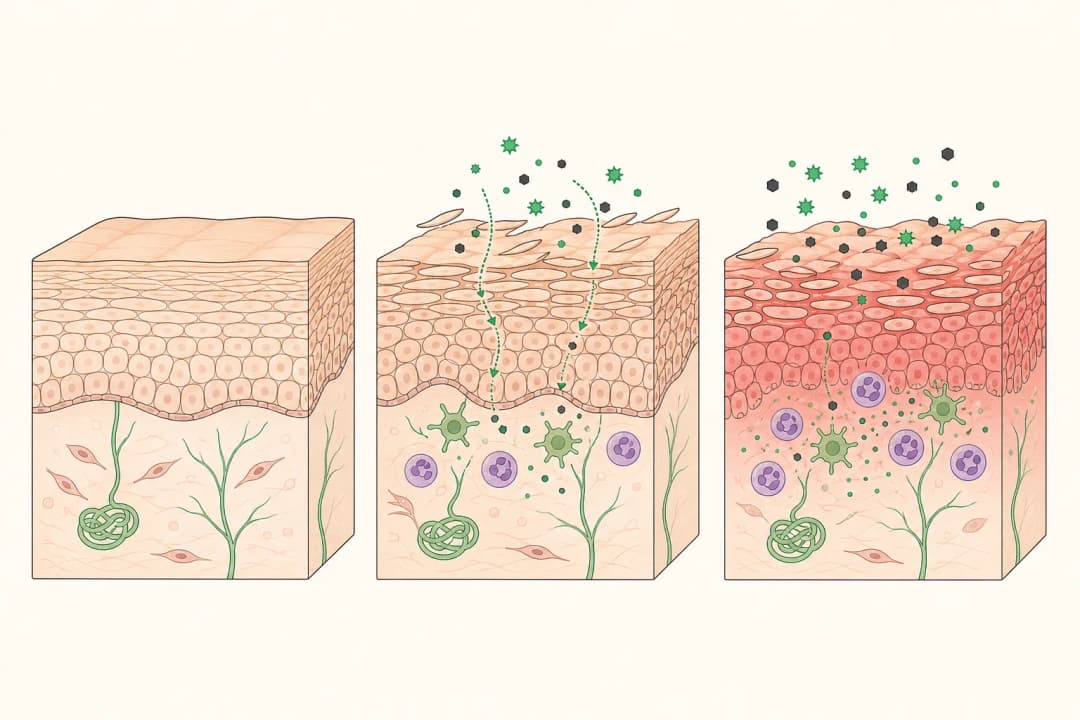
Irritant contact dermatitis occurs when repeated or intense exposure damages the outer skin barrier. Water, detergents, solvents, chemicals, friction, and frequent handwashing can all contribute. An emollient adds a protective layer and helps the skin hold moisture while the barrier recovers. It can calm roughness and soreness, yet it cannot cancel ongoing exposure. Burning immediately after application may mean the product contains a fragrance or ingredient that the damaged skin does not tolerate.
Practical skin care
Identify and reduce contact with the suspected irritant; use protective gloves appropriately and give the skin breaks from wet work when possible. Wash with lukewarm water and a gentle cleanser, then pat dry. Apply a fragrance-free emollient after washing and whenever the skin feels dry. Use enough to cover the affected area without vigorous rubbing. Do not share a product that has caused stinging, redness, or a new rash, and ask a clinician whether another treatment is needed for persistent inflammation.
When to seek care
Seek medical advice when symptoms continue despite avoiding the suspected irritant, or when cracks, pain, swelling, or oozing interfere with work or sleep. Get urgent help for breathing trouble, facial swelling, blistering over a large area, fever, or rapidly worsening skin. A clinician may need to distinguish irritant dermatitis from allergy, infection, or another eczema pattern.
Questions for your doctor
Ask which exposure is most likely responsible, whether your emollient ingredients are suitable for broken skin, and how to protect your hands or other affected areas at work. Bring the product label and describe when symptoms start after exposure.
Find care
General Clinics & Polyclinics in Abu Dhabi
That answer is general. If you want it applied to your own case, these are licensed general clinics & polyclinics listed in Abu Dhabi.
27 Ar Ruwwad St - Shakhbout City - MSH4 - Abu Dhabi - United Arab Emirates
Accepts: Daman, Thiqa, Cigna, MetLife +20 more
Al Ruwais, Al Dhafrah
Accepts: Daman, Thiqa, AXA, Cigna +16 more
Al Bahyah - Al Bahyah Old - Abu Dhabi - United Arab Emirates
Accepts: Daman, Thiqa, Cigna, Allianz Care +18 more
Abu Dhabi
Accepts: Daman, Thiqa, AXA, Cigna +27 more
Ordered by verification status and how complete each clinic's public record is, then alphabetically. This is a directory listing, not a ranking — Zavis does not rate or recommend providers.
A factual listing drawn from the DHA, DOH and MOHAP licence registers. It is not a referral, an endorsement, or advice that any of these providers is right for you.
Questions people ask
Can emollients heal irritant contact dermatitis?
They support barrier recovery and ease dryness, but the skin may stay inflamed if exposure to the irritant continues.
What if an emollient burns?
Stop using it and seek advice about its ingredients and a better-tolerated alternative, especially when the skin is cracked.
Keep reading
Medical disclaimer. This page is general health information, not medical advice, and it cannot diagnose you. Always consult a licensed healthcare provider about your own symptoms and treatment. In an emergency in the UAE, call 998 for an ambulance.