
How effective is chronic disease review for COPD?
Short answer
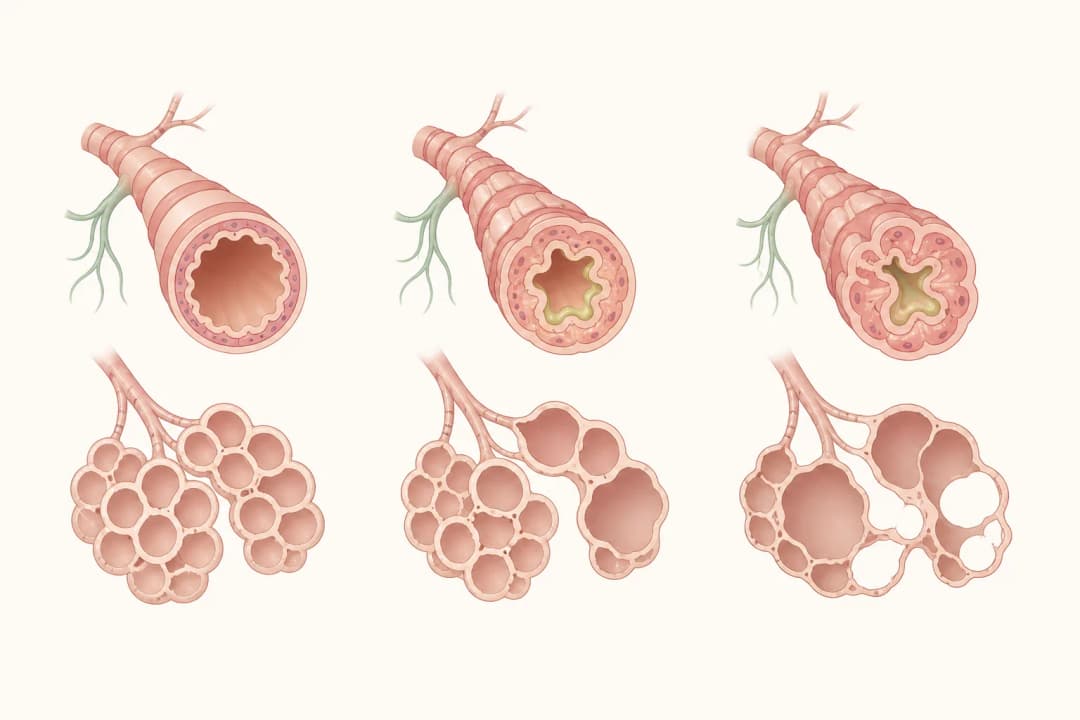
Chronic disease review can improve COPD management by identifying changing symptoms, checking inhaler technique and coordinating treatment, but it cannot remove the underlying airway damage.
This answers one question. It is not a diagnosis and does not replace an assessment by a licensed doctor.
At a glance
- Review focus
- Symptoms, inhaler technique, treatment use and a flare-up action plan.
- Key limitation
- Review supports control and preparedness; it does not undo established airway damage.
What effectiveness looks like
A useful review looks beyond a prescription. Your clinician may ask about cough, sputum, wheeze, breathlessness, activity and sleep, then watch how you use each inhaler. This can uncover technique problems, side effects, missed doses or a need to revisit the treatment plan. The discussion may also cover smoking or vaping exposure, vaccinations, exercise, breathing support and an action plan for flare-ups. Comparing your usual symptoms with a new pattern helps distinguish everyday variation from a possible exacerbation. Read more about [COPD](/conditions/copd/) and [Chronic Disease Review](/treatments/consultations-and-assessment/chronic-disease-review/).
Make the appointment count
Bring every inhaler and spacer you use, including older devices, and demonstrate your technique rather than relying on memory. Record how often you use reliever medicine and describe any change in walking distance, stairs, sleep or sputum. Ask for written instructions about flare-ups and confirm when to arrange follow-up. Use prescribed inhalers consistently; do not stop maintenance treatment or start leftover antibiotics without clinical advice.
When breathing needs urgent attention
Seek emergency help for severe breathlessness at rest, blue or grey lips, new confusion, fainting, severe chest pain, or difficulty speaking because of breathlessness. Contact your clinician promptly when breathlessness or wheeze is clearly worse than usual, sputum changes markedly, or your reliever is not giving the expected relief. Do not wait for a routine review if symptoms are rapidly progressing.
Questions for your doctor
Am I using each inhaler correctly, and would a spacer help? What is my personal flare-up plan? Which symptoms mean I should call the clinic, and which require emergency help? Should my activity, vaccination or smoking-support plan change?
Find care
General Clinics & Polyclinics in Abu Dhabi
That answer is general. If you want it applied to your own case, these are licensed general clinics & polyclinics listed in Abu Dhabi.
27 Ar Ruwwad St - Shakhbout City - MSH4 - Abu Dhabi - United Arab Emirates
Accepts: Daman, Thiqa, Cigna, MetLife +20 more
Al Ruwais, Al Dhafrah
Accepts: Daman, Thiqa, AXA, Cigna +16 more
Al Bahyah - Al Bahyah Old - Abu Dhabi - United Arab Emirates
Accepts: Daman, Thiqa, Cigna, Allianz Care +18 more
Abu Dhabi
Accepts: Daman, Thiqa, AXA, Cigna +27 more
Ordered by verification status and how complete each clinic's public record is, then alphabetically. This is a directory listing, not a ranking — Zavis does not rate or recommend providers.
A factual listing drawn from the DHA, DOH and MOHAP licence registers. It is not a referral, an endorsement, or advice that any of these providers is right for you.
Questions people ask
Does a review replace COPD treatment?
No. It checks whether the current plan is suitable and used correctly, then supports changes when needed.
Should I bring my inhalers?
Yes. Bringing every device lets the clinician check technique, timing and whether a spacer is appropriate.
Related
Related reading
Keep reading
Medical disclaimer. This page is general health information, not medical advice, and it cannot diagnose you. Always consult a licensed healthcare provider about your own symptoms and treatment. In an emergency in the UAE, call 998 for an ambulance.