
How is nappy rash different in children?
Short answer
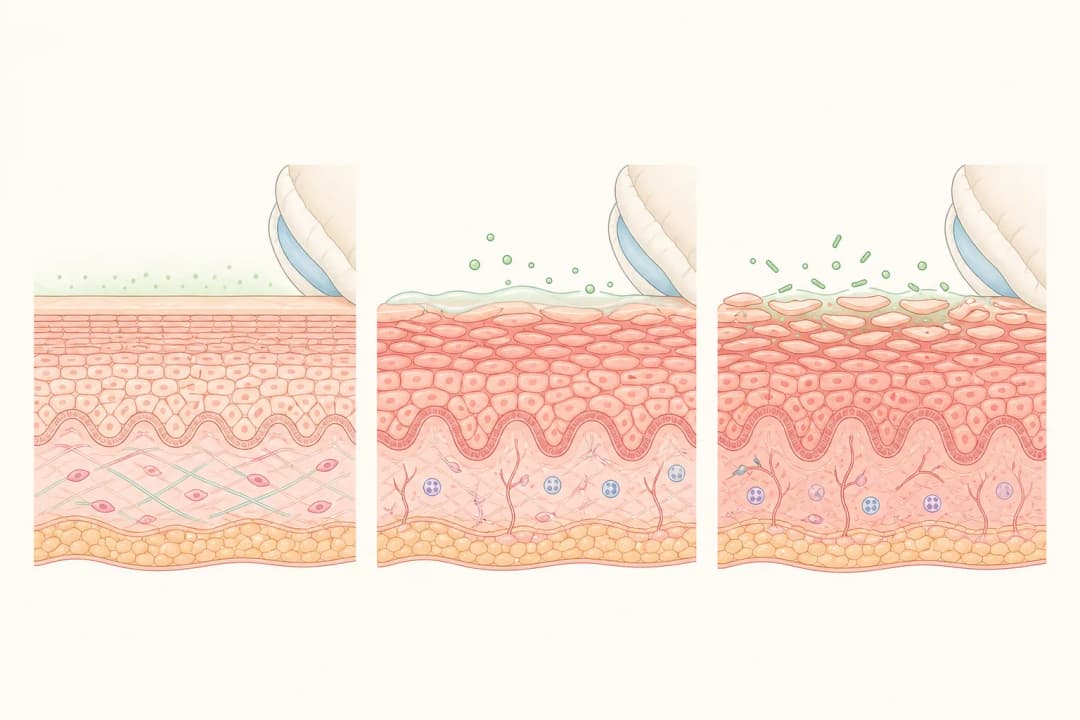
Nappy rash in children affects delicate, occluded skin where moisture, stool, urine, and friction can quickly cause soreness and irritation.
This answers one question. It is not a diagnosis and does not replace an assessment by a licensed doctor.
At a glance
- Main triggers
- Moisture, stool, urine, friction, and irritants.
- Protective step
- Frequent changes plus a simple barrier ointment.
Why children are prone to it
A nappy holds warmth and moisture against the skin. Urine and stool can weaken the outer barrier, while rubbing from a wet or tight nappy adds irritation. The rash may look red, shiny, or sore on the areas covered by the nappy, including the buttocks, genitals, and upper thighs. Folds may be relatively spared when simple irritant dermatitis is the main problem.
A yeast rash can be more vivid and involve the skin folds, sometimes with small spots just beyond the main red area. Other conditions, such as eczema or bacterial infection, can resemble nappy rash, so appearance alone cannot confirm the cause.
Care at home
Change nappies promptly, rinse with lukewarm water or use a gentle fragrance-free wipe, and pat rather than rub. Give the skin brief nappy-free periods when practical. Apply a protective barrier ointment to clean, dry skin and avoid fragranced products, talc, and scrubbing. Make sure the nappy is comfortable rather than tight. If the rash keeps returning, note links with diarrhoea, antibiotics, new wipes, or a change in product and share those details with the child's clinician. Do not use steroid or antifungal creams unless a healthcare professional recommends the product and instructions.
When medical advice is needed
Arrange medical advice if the rash is spreading, very painful, blistered, raw, bleeding, or not settling with gentle care. Prompt review is needed for fever, pus, honey-coloured crusting, marked swelling, or a child who seems unusually unwell. A baby with extensive redness or poor feeding should be assessed promptly. A clinician can distinguish irritation from yeast, bacterial infection, eczema, or another cause and choose child-appropriate treatment.
What to ask
Ask whether the pattern suggests irritation, yeast, eczema, or infection; which barrier product and cleansing routine suit your child; how long to try it; and which changes mean the child needs review.
Find care
General Clinics & Polyclinics in Abu Dhabi
That answer is general. If you want it applied to your own case, these are licensed general clinics & polyclinics listed in Abu Dhabi.
27 Ar Ruwwad St - Shakhbout City - MSH4 - Abu Dhabi - United Arab Emirates
Accepts: Daman, Thiqa, Cigna, MetLife +20 more
Al Ruwais, Al Dhafrah
Accepts: Daman, Thiqa, AXA, Cigna +16 more
Al Bahyah - Al Bahyah Old - Abu Dhabi - United Arab Emirates
Accepts: Daman, Thiqa, Cigna, Allianz Care +18 more
Abu Dhabi
Accepts: Daman, Thiqa, AXA, Cigna +27 more
Ordered by verification status and how complete each clinic's public record is, then alphabetically. This is a directory listing, not a ranking — Zavis does not rate or recommend providers.
A factual listing drawn from the DHA, DOH and MOHAP licence registers. It is not a referral, an endorsement, or advice that any of these providers is right for you.
Questions people ask
Should I stop using wipes?
If wipes sting or contain fragrance, use lukewarm water and a soft cloth temporarily, then pat the skin dry.
When is nappy rash more than irritation?
Fever, pus, blisters, spreading redness, severe pain, or a rash that does not settle needs clinical advice.
Medical disclaimer. This page is general health information, not medical advice, and it cannot diagnose you. Always consult a licensed healthcare provider about your own symptoms and treatment. In an emergency in the UAE, call 998 for an ambulance.