
How common are cold hands and feet in anaemia?
Short answer
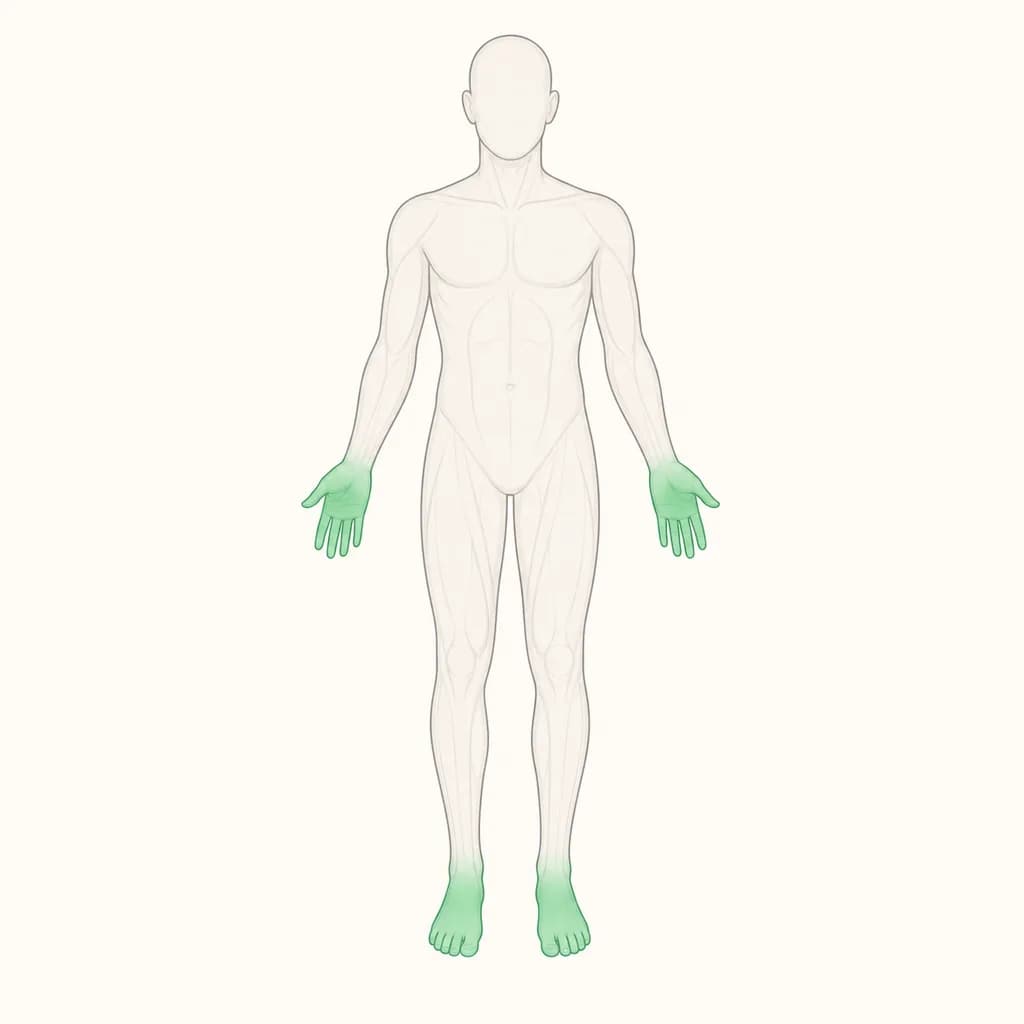
Cold Hands and Feet is a common presentation of Anaemia because reduced oxygen-carrying capacity can leave the extremities feeling cold.
This answers one question. It is not a diagnosis and does not replace an assessment by a licensed doctor.
At a glance
- Possible mechanism
- Reduced oxygen delivery to tissues
- Other symptoms
- Tiredness, dizziness, paleness, or breathlessness
- Helpful test
- Blood testing can check for anaemia
Why this feeling can occur
Anaemia means there are not enough healthy red blood cells or not enough haemoglobin to carry oxygen effectively. Some people notice cold fingers or toes, especially in a cool setting, with tiredness, breathlessness on exertion, dizziness, headaches, paleness, or a racing heartbeat. Cold hands and feet also happen with ordinary cold exposure, circulation changes, thyroid problems, anxiety, and some medicines. The sensation on its own cannot show whether anaemia is present.
A sensible next step
Book a clinical appointment if the cold feeling is persistent, new, or paired with fatigue, breathlessness, dizziness, or paleness. A clinician can discuss diet, menstrual bleeding, stomach or bowel symptoms, medicines, family history, and any recent illness. A blood test may be used to check for anaemia and help identify its cause. Do not start iron supplements unless a clinician advises them, because anaemia has different causes and treatment depends on the cause.
When to seek urgent care
Get urgent help for chest pain, severe shortness of breath, fainting, confusion, or a fast heartbeat with feeling very unwell. Seek prompt medical advice for black or bloody stools, vomiting blood, unusually heavy bleeding, or symptoms that rapidly worsen. These warning signs need assessment because they may point to significant blood loss or another condition requiring timely care.
Questions to ask
Ask whether your symptoms warrant a blood test, what type of anaemia is being considered, and whether you need tests for bleeding or nutritional causes. If treatment is recommended, ask how it addresses the identified cause and what symptoms should prompt earlier review.
Find care
General Clinics & Polyclinics in Abu Dhabi
That answer is general. If you want it applied to your own case, these are licensed general clinics & polyclinics listed in Abu Dhabi.
27 Ar Ruwwad St - Shakhbout City - MSH4 - Abu Dhabi - United Arab Emirates
Accepts: Daman, Thiqa, Cigna, MetLife +20 more
Al Ruwais, Al Dhafrah
Accepts: Daman, Thiqa, AXA, Cigna +16 more
Al Bahyah - Al Bahyah Old - Abu Dhabi - United Arab Emirates
Accepts: Daman, Thiqa, Cigna, Allianz Care +18 more
Abu Dhabi
Accepts: Daman, Thiqa, AXA, Cigna +27 more
Ordered by verification status and how complete each clinic's public record is, then alphabetically. This is a directory listing, not a ranking — Zavis does not rate or recommend providers.
A factual listing drawn from the DHA, DOH and MOHAP licence registers. It is not a referral, an endorsement, or advice that any of these providers is right for you.
Questions people ask
Are cold hands and feet enough to diagnose anaemia?
No. Many non-anaemia causes can make hands and feet feel cold, so assessment considers your symptoms and may include a blood test.
Should I take iron for cold hands and feet?
Only after clinical advice. Iron may be appropriate for some causes of anaemia, but it is not the right treatment for every cause.
Related
Related reading
Keep reading
Medical disclaimer. This page is general health information, not medical advice, and it cannot diagnose you. Always consult a licensed healthcare provider about your own symptoms and treatment. In an emergency in the UAE, call 998 for an ambulance.