
How is central centrifugal cicatricial alopecia different in skin of colour?
Short answer
In skin of colour, central centrifugal cicatricial alopecia often begins at the crown and may cause subtle inflammation, tenderness, or altered pigmentation before hair loss becomes extensive.
This answers one question. It is not a diagnosis and does not replace an assessment by a licensed doctor.
At a glance
- Typical starting area
- The crown or central scalp.
- Useful warning sign
- Pain, burning, itch, or tenderness with progressive thinning.
How it can look
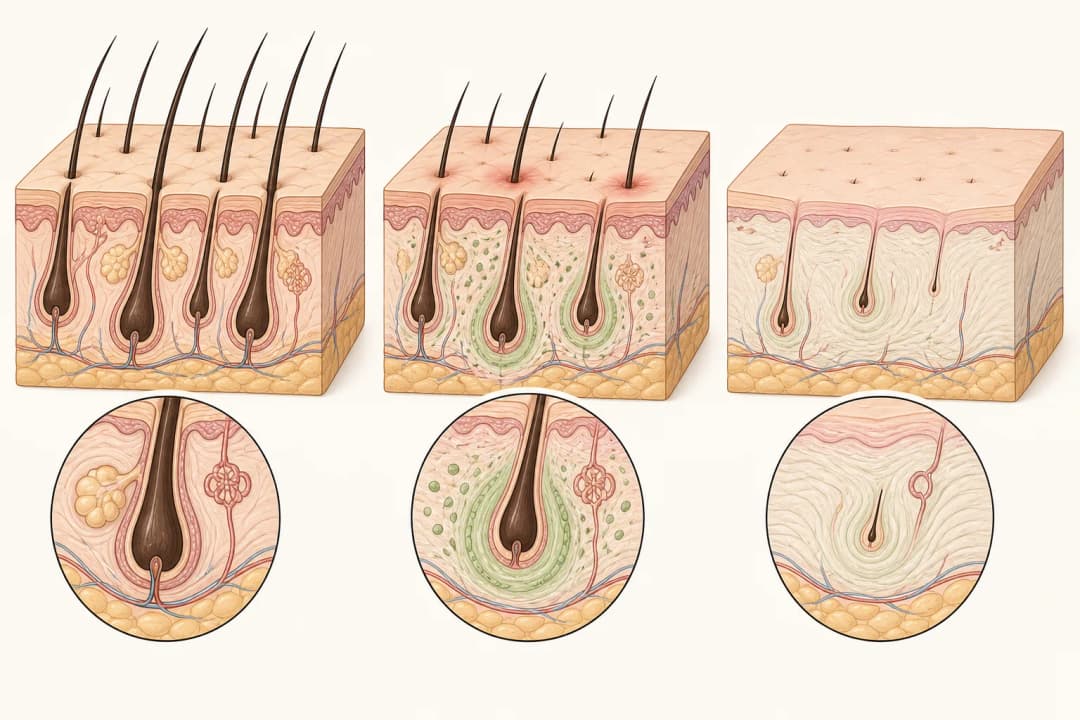
CCCA damages hair follicles and replaces them with scar tissue. Hair usually thins from the centre of the scalp, then expands outward in a pattern that can be easy to miss beneath a hairstyle. Itching, burning, tenderness, scaling, or a smooth and shiny scalp may occur, although some people have little discomfort. In darker skin, inflammation can appear brown, purple, grey, or less visibly red; lighter or darker patches may remain after activity settles. CCCA can overlap with traction from tight styles, chemical processing, or other forms of alopecia, so a scalp examination and sometimes a biopsy help identify active scarring.
Protect the scalp and hair
Book a dermatology assessment when widening central thinning, scalp tenderness, or persistent breakage appears. Until then, avoid tight braids, extensions, glued pieces, heated tools, and procedures that sting the scalp. Choose gentle washing and loosen styles that cause pulling or pain. Photograph the crown periodically in similar lighting to track change, without delaying an appointment. Treatment may aim to calm inflammation and protect follicles that are still active; established scar tissue generally cannot grow a new follicle, which is why timing matters.
When to seek prompt care
Arrange prompt review for rapidly expanding thinning, pustules, crusting, bleeding, marked pain, or areas that feel hot or swollen. Sudden hair loss after a new medicine or illness may have another cause and should be assessed rather than attributed automatically to CCCA. Seek urgent help for facial swelling, fever, or spreading scalp redness. A clinician can also help when hair practices are causing pain, sores, or traction at the edges.
Questions for your doctor
Ask whether the follicles show active inflammation, whether a biopsy is useful, and which styling changes could reduce traction. Discuss treatment goals, scalp-care products, follow-up photographs, and what symptoms would mean the condition is becoming more active. If hair loss affects wellbeing, ask about camouflage options that do not pull on the scalp.
Find care
General Clinics & Polyclinics in Abu Dhabi
That answer is general. If you want it applied to your own case, these are licensed general clinics & polyclinics listed in Abu Dhabi.
27 Ar Ruwwad St - Shakhbout City - MSH4 - Abu Dhabi - United Arab Emirates
Accepts: Daman, Thiqa, Cigna, MetLife +20 more
Al Ruwais, Al Dhafrah
Accepts: Daman, Thiqa, AXA, Cigna +16 more
Al Bahyah - Al Bahyah Old - Abu Dhabi - United Arab Emirates
Accepts: Daman, Thiqa, Cigna, Allianz Care +18 more
Abu Dhabi
Accepts: Daman, Thiqa, AXA, Cigna +27 more
Ordered by verification status and how complete each clinic's public record is, then alphabetically. This is a directory listing, not a ranking — Zavis does not rate or recommend providers.
A factual listing drawn from the DHA, DOH and MOHAP licence registers. It is not a referral, an endorsement, or advice that any of these providers is right for you.
Questions people ask
Is CCCA only a cosmetic concern?
No. It is a scarring process that can permanently damage follicles, and active inflammation may need treatment even when symptoms are mild.
Can a hairstyle cause CCCA?
Tight or chemically treated styles may add traction or irritation, but the cause is not always one styling practice. A dermatologist can assess contributing factors.
Medical disclaimer. This page is general health information, not medical advice, and it cannot diagnose you. Always consult a licensed healthcare provider about your own symptoms and treatment. In an emergency in the UAE, call 998 for an ambulance.