
What should you know about hives under eyes?
Short answer
Hives under the eyes are itchy, raised welts that can occur with nearby swelling and need urgent attention if breathing or swallowing changes.
This answers one question. It is not a diagnosis and does not replace an assessment by a licensed doctor.
At a glance
- Typical sensation
- Itching, stinging, or tight eyelid skin
- Helpful first step
- Cool compress and avoid rubbing
- Emergency warning
- Mouth or throat swelling with breathing trouble
What the appearance may mean
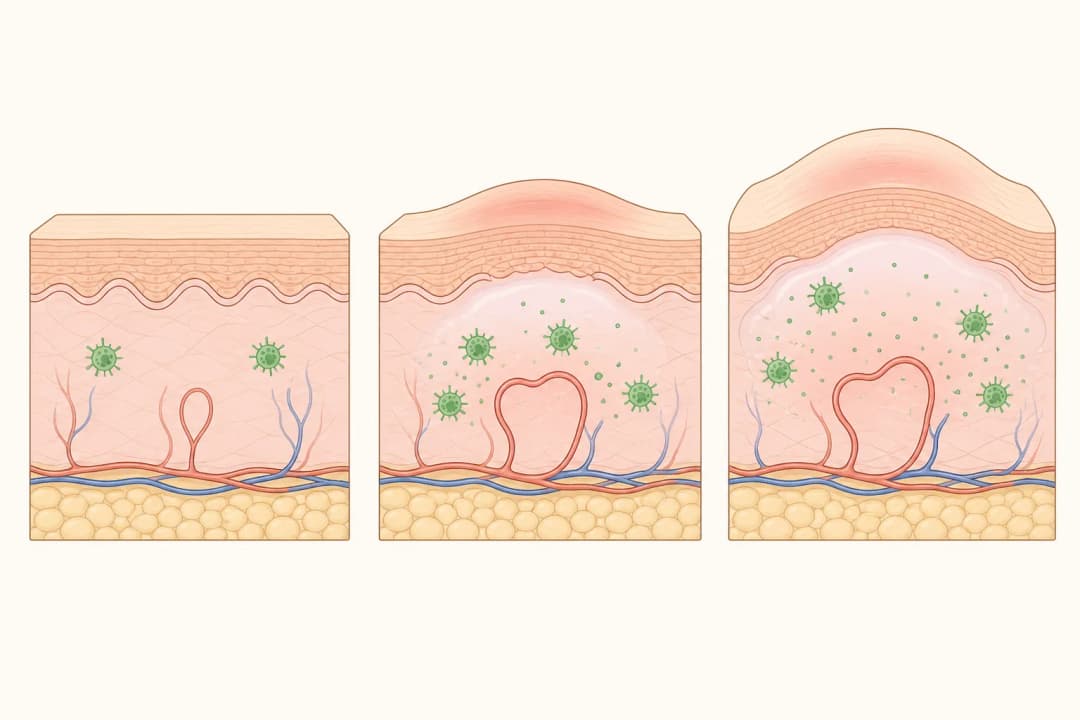
Hives are temporary areas of skin inflammation caused by histamine release. Around the eyes, the loose tissue can also become puffy; this deeper swelling is called angioedema. The eyelids may feel tight, itchy, or warm, while the welts can change shape or appear in new places. Triggers can include an infection, food, medicine, contact exposure, heat, or pressure, although a cause is not always found. Hives are a skin reaction, not proof that a particular food or product is responsible.
What you can do now
Keep the area cool with a clean, cool compress and avoid rubbing the eyelids. Stop any newly introduced eye, skin, or cosmetic product until a clinician has reviewed the episode. Note when the welts began, what touched the area, recent medicines or foods, and whether swelling moved beyond the eyelids. A pharmacist or clinician can advise whether an oral antihistamine is suitable; do not put non-prescribed creams close to the eyes. Repeated episodes may need assessment and a treatment plan.
When to seek medical care
Call emergency services immediately for swelling of the lips, tongue, mouth, or throat; trouble breathing, wheezing, faintness, or difficulty swallowing. Seek prompt medical advice if eye swelling is severe, vision changes, the eye is painful, fever accompanies marked redness, or symptoms follow a new medicine or sting. Arrange a clinical review when hives keep returning, last beyond a short episode, or interfere with sleep.
Questions for your doctor
Ask whether the eyelid changes look like hives, angioedema, or another rash; whether your medicines could be contributing; what warning symptoms require emergency action; and which antihistamine plan is appropriate for you.
Find care
General Clinics & Polyclinics in Abu Dhabi
That answer is general. If you want it applied to your own case, these are licensed general clinics & polyclinics listed in Abu Dhabi.
27 Ar Ruwwad St - Shakhbout City - MSH4 - Abu Dhabi - United Arab Emirates
Accepts: Daman, Thiqa, Cigna, MetLife +20 more
Al Ruwais, Al Dhafrah
Accepts: Daman, Thiqa, AXA, Cigna +16 more
Al Bahyah - Al Bahyah Old - Abu Dhabi - United Arab Emirates
Accepts: Daman, Thiqa, Cigna, Allianz Care +18 more
Abu Dhabi
Accepts: Daman, Thiqa, AXA, Cigna +27 more
Ordered by verification status and how complete each clinic's public record is, then alphabetically. This is a directory listing, not a ranking — Zavis does not rate or recommend providers.
A factual listing drawn from the DHA, DOH and MOHAP licence registers. It is not a referral, an endorsement, or advice that any of these providers is right for you.
Questions people ask
Can hives affect the eyelids?
Yes. Hives can appear on the eyelids, and nearby deeper swelling can make the area look puffy.
Should I use a cream around my eyes?
Avoid non-prescribed creams near the eyes and ask a pharmacist or clinician about a suitable option.
Related
Related reading
Keep reading
Medical disclaimer. This page is general health information, not medical advice, and it cannot diagnose you. Always consult a licensed healthcare provider about your own symptoms and treatment. In an emergency in the UAE, call 998 for an ambulance.