
Hives and skin allergy
Short answer
Hives can be an allergic skin reaction, but triggers vary; manage the itch carefully and treat breathing or throat symptoms as an emergency.
This answers one question. It is not a diagnosis and does not replace an assessment by a licensed doctor.
At a glance
- Allergic triggers
- Food, medicines, and insect stings can trigger hives
- Other triggers
- Infections, heat, pressure, or no identified cause
- Emergency symptoms
- Breathing trouble or tongue and throat swelling
Hives and allergy
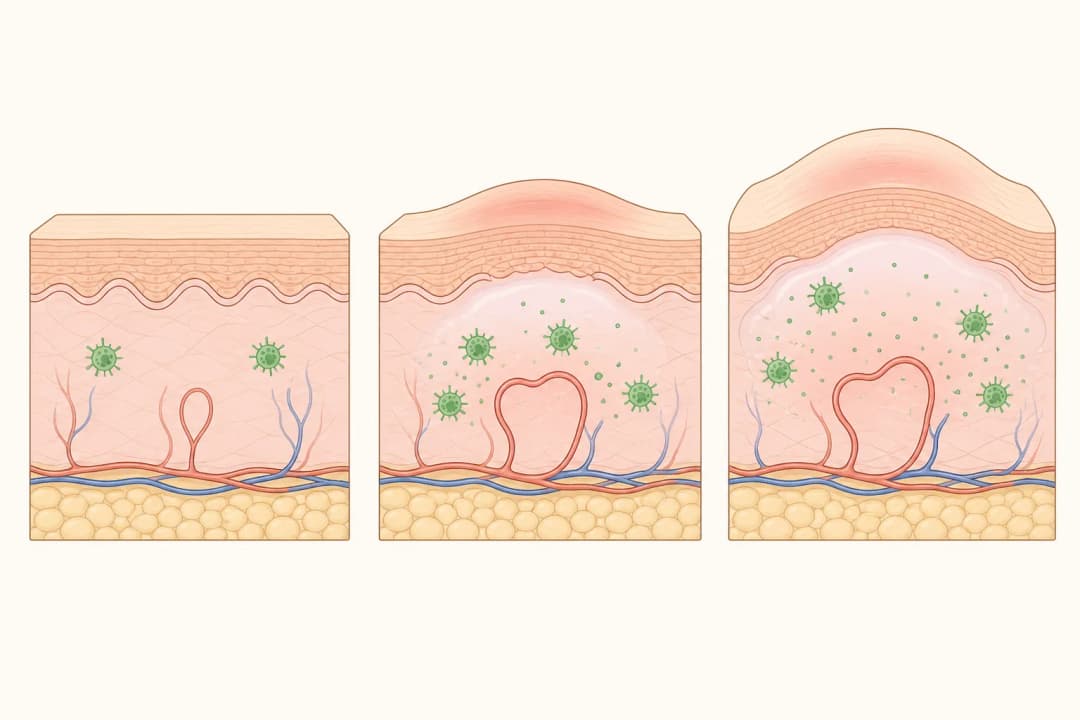
Hives are also called urticaria. They form when signals in the skin cause small blood vessels to leak fluid into nearby tissue, producing raised, itchy welts. An allergy to a food, medicine, or insect sting can trigger this response, but infections, heat, pressure, or other non-allergic causes can do the same. A skin reaction alone cannot identify the trigger. Hives may appear with deeper swelling, called angioedema, around the lips, eyelids, hands, or feet. The pattern, timing, and associated symptoms help a clinician assess what is happening.
What to do now
Stop further contact with a suspected cosmetic, food, or environmental trigger and wash exposed skin gently. Do not deliberately re-test a suspected food or medicine at home. Cool compresses and loose clothing may reduce discomfort. Ask a pharmacist or clinician whether an oral antihistamine is appropriate for you, especially if you have other medical conditions, are pregnant, or take regular medicines. Write down the product, meal, medicine, sting, illness, activity, and timing around the episode. Keep photographs because welts may fade before an appointment. A recurring pattern needs individual assessment rather than assuming every episode is an allergy.
When it is urgent
Call emergency services immediately for breathing difficulty, wheezing, throat tightness, trouble swallowing, tongue swelling, sudden hoarseness, faintness, or collapse. These symptoms can indicate a severe allergic reaction. Seek prompt clinical advice after a new medicine or sting, with rapidly increasing facial swelling, or when vomiting, severe abdominal symptoms, fever, or marked illness accompanies the skin changes. Arrange review if episodes recur or the marks become painful, fixed, blistered, or bruise-like.
Questions to bring
Ask whether the timing suggests an allergy, whether testing is useful, which antihistamine is safe for you, and how to make an emergency plan. Ask what to avoid until the cause is clearer.
Find care
General Clinics & Polyclinics in Abu Dhabi
That answer is general. If you want it applied to your own case, these are licensed general clinics & polyclinics listed in Abu Dhabi.
27 Ar Ruwwad St - Shakhbout City - MSH4 - Abu Dhabi - United Arab Emirates
Accepts: Daman, Thiqa, Cigna, MetLife +20 more
Al Ruwais, Al Dhafrah
Accepts: Daman, Thiqa, AXA, Cigna +16 more
Al Bahyah - Al Bahyah Old - Abu Dhabi - United Arab Emirates
Accepts: Daman, Thiqa, Cigna, Allianz Care +18 more
Abu Dhabi
Accepts: Daman, Thiqa, AXA, Cigna +27 more
Ordered by verification status and how complete each clinic's public record is, then alphabetically. This is a directory listing, not a ranking — Zavis does not rate or recommend providers.
A factual listing drawn from the DHA, DOH and MOHAP licence registers. It is not a referral, an endorsement, or advice that any of these providers is right for you.
Questions people ask
Do hives always mean an allergy?
No. Hives can follow non-allergic triggers such as infection, heat, pressure, or an unknown cause.
Can I test a suspected trigger myself?
Avoid deliberate re-exposure and ask a clinician for safer guidance, particularly if swelling or whole-body symptoms occurred.
Related
Related reading
Keep reading
Medical disclaimer. This page is general health information, not medical advice, and it cannot diagnose you. Always consult a licensed healthcare provider about your own symptoms and treatment. In an emergency in the UAE, call 998 for an ambulance.