
Hives itch relief: what can help
Short answer
Hives itch relief usually starts with cooling the skin, avoiding triggers, and using clinician-guided antihistamine treatment.
This answers one question. It is not a diagnosis and does not replace an assessment by a licensed doctor.
At a glance
- Helpful first step
- Cool the skin and avoid heat and rubbing.
- Treatment discussion
- Ask about an oral antihistamine.
- Urgent warning
- Mouth or throat swelling with breathing trouble needs emergency help.
Why hives itch
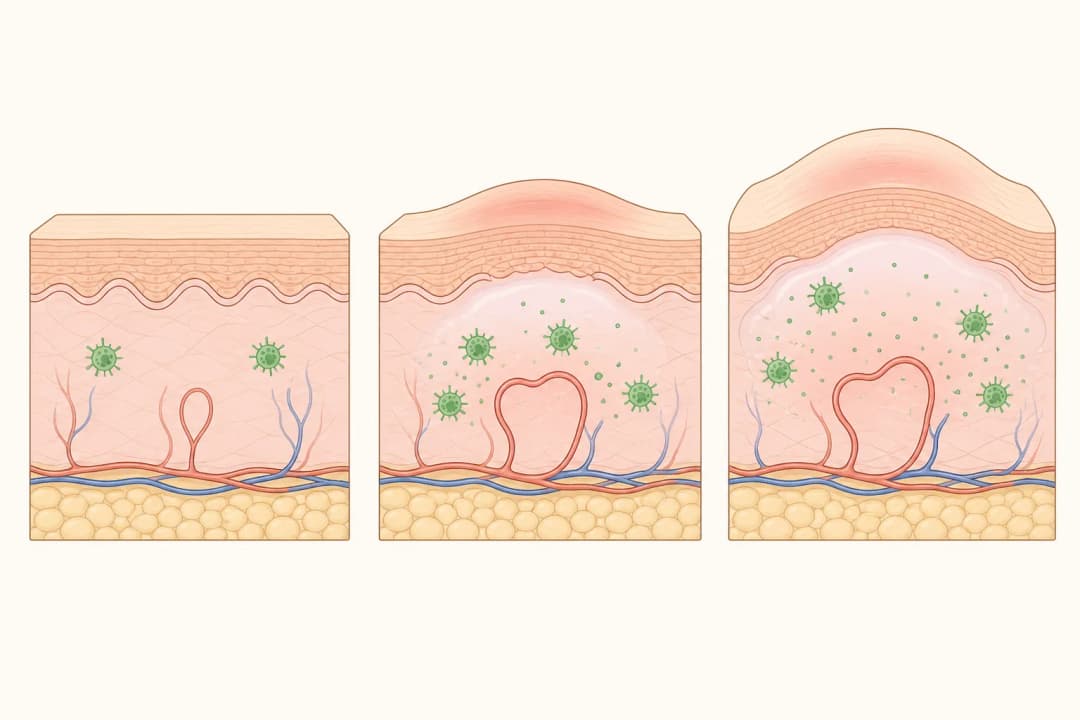
Hives are raised, itchy welts caused by temporary changes in the skin's small blood vessels and nearby nerve endings. Individual welts may fade while others appear elsewhere, so the rash can seem to move. Heat, pressure, infection, medicines, foods, or emotional stress can sometimes contribute, although a clear trigger is not always found. Swelling deeper under the skin may occur alongside hives; this is called angioedema.
The itch can be intense even when the visible rash looks limited. Scratching may irritate the surface and make discomfort harder to settle, but it does not identify the cause.
Ways to ease the itch
Use a cool, damp cloth for short periods, take a comfortably cool shower, and wear loose, soft clothing. Avoid hot baths, vigorous rubbing, tight waistbands, and fragranced products while the skin is reactive. Keep nails short and pat rather than scratch. A pharmacist or clinician can advise whether an oral antihistamine is suitable and how to take it safely; do not combine products or exceed label directions without advice. Oral corticosteroids may be considered by a clinician for selected severe flares, not as a routine self-treatment.
Record foods, medicines, heat, exercise, pressure, and recent illness around each episode. Photos can help when the welts have already faded.
When hives need prompt care
Seek emergency help if hives occur with swelling of the lips, tongue, mouth, or throat; trouble breathing or swallowing; faintness; confusion; or repeated vomiting. These symptoms can signal a serious allergic reaction. Arrange medical review when episodes keep returning, swelling lasts, the rash is painful rather than itchy, or marks remain in one place instead of fading. A clinician can assess medicines, illnesses, and patterns that may be relevant.
Questions for your doctor
Could a medicine, infection, pressure, heat, or another exposure be contributing? Which antihistamine fits my age, health conditions, and other medicines? What should I do if facial swelling appears? Should recurring episodes be assessed for chronic urticaria or angioedema?
Find care
General Clinics & Polyclinics in Abu Dhabi
That answer is general. If you want it applied to your own case, these are licensed general clinics & polyclinics listed in Abu Dhabi.
27 Ar Ruwwad St - Shakhbout City - MSH4 - Abu Dhabi - United Arab Emirates
Accepts: Daman, Thiqa, Cigna, MetLife +20 more
Al Ruwais, Al Dhafrah
Accepts: Daman, Thiqa, AXA, Cigna +16 more
Al Bahyah - Al Bahyah Old - Abu Dhabi - United Arab Emirates
Accepts: Daman, Thiqa, Cigna, Allianz Care +18 more
Abu Dhabi
Accepts: Daman, Thiqa, AXA, Cigna +27 more
Ordered by verification status and how complete each clinic's public record is, then alphabetically. This is a directory listing, not a ranking — Zavis does not rate or recommend providers.
A factual listing drawn from the DHA, DOH and MOHAP licence registers. It is not a referral, an endorsement, or advice that any of these providers is right for you.
Questions people ask
Can scratching make hives worse?
Scratching can increase surface irritation and discomfort, even though it does not cause the underlying hives.
Should I use a steroid cream for hives?
Hives arise deeper than many itchy rashes, so ask a clinician or pharmacist which treatment is appropriate rather than choosing a product at random.
Related
Related reading
Keep reading
Medical disclaimer. This page is general health information, not medical advice, and it cannot diagnose you. Always consult a licensed healthcare provider about your own symptoms and treatment. In an emergency in the UAE, call 998 for an ambulance.