
What should you know about hives in infants?
Short answer
Hives in infants are raised, changing welts; keep the baby cool, avoid unapproved medicines, and seek urgent help for breathing or facial swelling.
This answers one question. It is not a diagnosis and does not replace an assessment by a licensed doctor.
At a glance
- Observe
- Breathing, feeding, alertness, and swelling
- Avoid
- Unapproved medicines and deliberate trigger testing
What infant hives look like
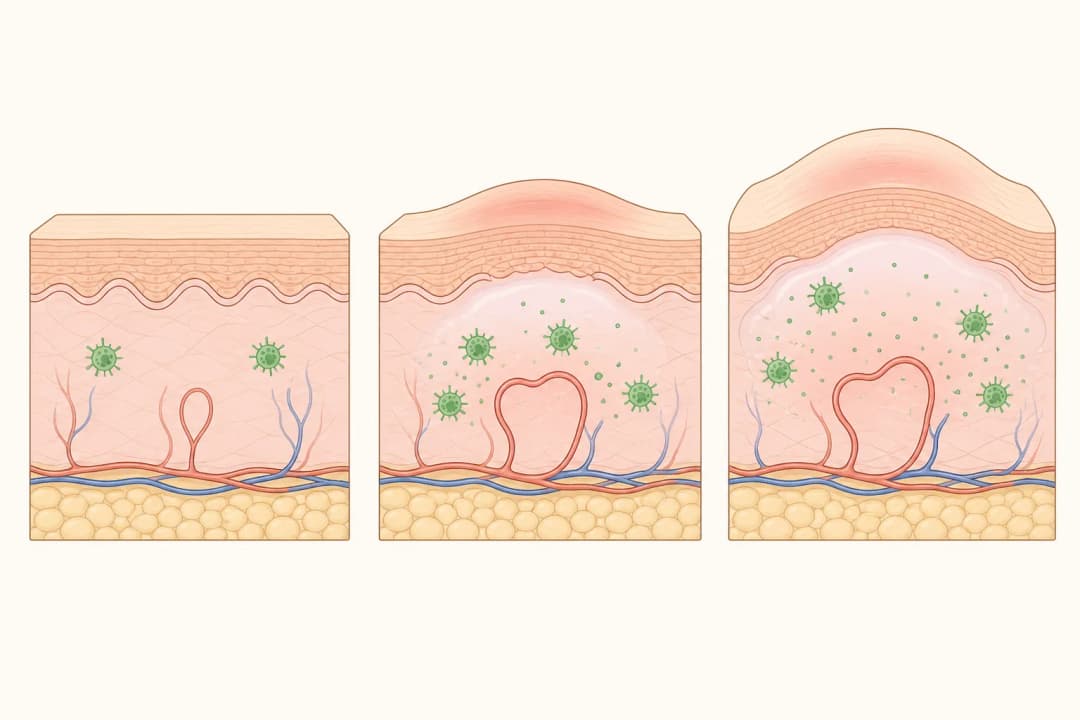
Hives are raised patches or welts that may be pink, red, or close to the infant’s skin tone. Individual marks can fade while new ones appear elsewhere. Viral infections are common associations, but food, medicine, insect exposure, heat, pressure, and skin products may also be involved. The appearance does not identify the trigger by itself.
Swelling can affect the eyelids, lips, hands, or feet. Swelling of the tongue or throat is dangerous. A rash with blisters, peeling, bruising, significant pain, or a very unwell baby is not something to monitor at home without medical advice.
Safe steps for caregivers
Keep the baby comfortably cool, use soft loose clothing, and avoid new soaps, creams, and fragranced products. Do not scratch or rub the welts. Take clear photographs and write down new foods, formula, medicines, vaccines, and products with their timing.
Call the baby’s clinician for advice before giving an antihistamine or any other medicine. Infant age and weight affect safe choices, and some products are unsuitable. Do not deliberately reintroduce a suspected food or medicine to test the reaction.
When to get urgent help
Seek emergency help for breathing difficulty, wheezing, a hoarse cry, drooling with trouble swallowing, unusual sleepiness, collapse, or swelling of the tongue, mouth, or face. These signs can develop quickly and require immediate assessment.
Contact a clinician promptly if the infant is under three months, has fever, is feeding poorly, has repeated vomiting, or the hives keep returning. A clinician should also review hives that follow a new medicine or food.
Questions for your doctor
Ask whether the pattern fits hives, whether a medicine or food should be avoided, what dose guidance applies to your infant, and which breathing or swelling changes require emergency action.
Find care
General Clinics & Polyclinics in Abu Dhabi
That answer is general. If you want it applied to your own case, these are licensed general clinics & polyclinics listed in Abu Dhabi.
27 Ar Ruwwad St - Shakhbout City - MSH4 - Abu Dhabi - United Arab Emirates
Accepts: Daman, Thiqa, Cigna, MetLife +20 more
Al Ruwais, Al Dhafrah
Accepts: Daman, Thiqa, AXA, Cigna +16 more
Al Bahyah - Al Bahyah Old - Abu Dhabi - United Arab Emirates
Accepts: Daman, Thiqa, Cigna, Allianz Care +18 more
Abu Dhabi
Accepts: Daman, Thiqa, AXA, Cigna +27 more
Ordered by verification status and how complete each clinic's public record is, then alphabetically. This is a directory listing, not a ranking — Zavis does not rate or recommend providers.
A factual listing drawn from the DHA, DOH and MOHAP licence registers. It is not a referral, an endorsement, or advice that any of these providers is right for you.
Questions people ask
Can teething cause infant hives?
Hives should not automatically be attributed to teething; infection, food, medicines, or contact exposures may need review.
Should I bathe an infant with hives?
A lukewarm bath may be comfortable, but avoid hot water, rubbing, and fragranced products.
Keep reading
Medical disclaimer. This page is general health information, not medical advice, and it cannot diagnose you. Always consult a licensed healthcare provider about your own symptoms and treatment. In an emergency in the UAE, call 998 for an ambulance.