
What should you know about high temp cold hands and feet?
Short answer
High temperature with cold hands and feet can occur during chills, but persistent colour change or serious symptoms warrants prompt medical care.
This answers one question. It is not a diagnosis and does not replace an assessment by a licensed doctor.
At a glance
- Common during chills
- Blood vessels can narrow in hands and feet
- Persistent symptoms
- May need checks for blood, thyroid, or circulation problems
- Skin safety
- Use gentle warmth, not direct intense heat
Possible explanations
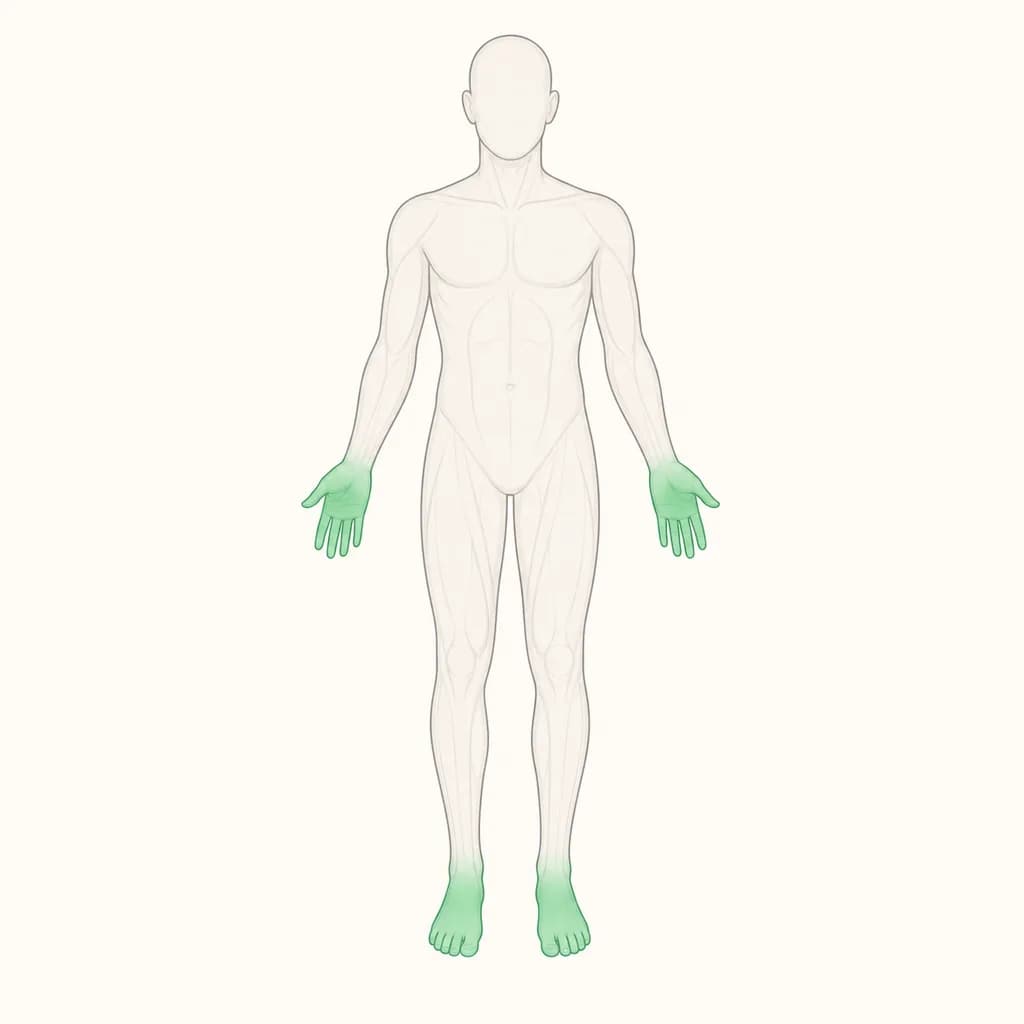
When the body is fighting an infection, blood vessels in the hands and feet may narrow while temperature regulation changes. This can cause cold fingers and toes during a chill even though the trunk feels hot. They should gradually warm as the episode passes.
If cold extremities continue between fevers, other explanations include anaemia, iron deficiency anaemia, hypothyroidism, or reduced arterial circulation. This symptom does not identify any one condition. A clinician may ask about tiredness, weight change, pale skin, pain when walking, smoking, and whether one side is colder.
What you can do now
Check the temperature, note when the hands and feet became cold, and watch alertness, breathing, skin colour, and fluid intake. Offer fluids and rest. Warm the room and use socks or gloves, but avoid direct high heat on numb skin.
Arrange a medical review if the pattern repeats, lasts after the fever settles, or comes with marked fatigue, breathlessness, pale skin, pins and needles, or leg pain during walking. Do not start iron supplementation without advice, because the cause of low iron should be confirmed.
Get urgent help for red flags
Call emergency services for blue, grey, or mottled hands or feet with difficulty breathing, confusion, collapse, severe drowsiness, or a rapidly worsening illness. Seek urgent assessment for one limb that becomes suddenly cold, pale, painful, weak, or numb.
Prompt review is also appropriate for a high temperature with a spreading rash, severe pain, dehydration, or an infant who is unusually difficult to wake.
Questions for your appointment
Ask whether blood tests for anaemia, iron status, or thyroid function are appropriate, whether circulation needs checking, and what warming measures are safe. Tell the clinician about diet, bleeding, medicines, smoking, and symptoms that occur after exercise.
Find care
General Clinics & Polyclinics in Abu Dhabi
That answer is general. If you want it applied to your own case, these are licensed general clinics & polyclinics listed in Abu Dhabi.
27 Ar Ruwwad St - Shakhbout City - MSH4 - Abu Dhabi - United Arab Emirates
Accepts: Daman, Thiqa, Cigna, MetLife +20 more
Al Ruwais, Al Dhafrah
Accepts: Daman, Thiqa, AXA, Cigna +16 more
Al Bahyah - Al Bahyah Old - Abu Dhabi - United Arab Emirates
Accepts: Daman, Thiqa, Cigna, Allianz Care +18 more
Abu Dhabi
Accepts: Daman, Thiqa, AXA, Cigna +27 more
Ordered by verification status and how complete each clinic's public record is, then alphabetically. This is a directory listing, not a ranking — Zavis does not rate or recommend providers.
A factual listing drawn from the DHA, DOH and MOHAP licence registers. It is not a referral, an endorsement, or advice that any of these providers is right for you.
Questions people ask
Can a fever make both hands and feet cold?
Yes. During chills, the body can reduce blood flow near the skin of both hands and feet while temperature regulation changes.
When should cold hands and feet be checked?
Arrange review if they persist after the fever, keep recurring, or occur with fatigue, pale skin, numbness, or walking-related leg pain.
Related
Related reading
Keep reading
Medical disclaimer. This page is general health information, not medical advice, and it cannot diagnose you. Always consult a licensed healthcare provider about your own symptoms and treatment. In an emergency in the UAE, call 998 for an ambulance.