
High fever with cold hands and feet
Short answer
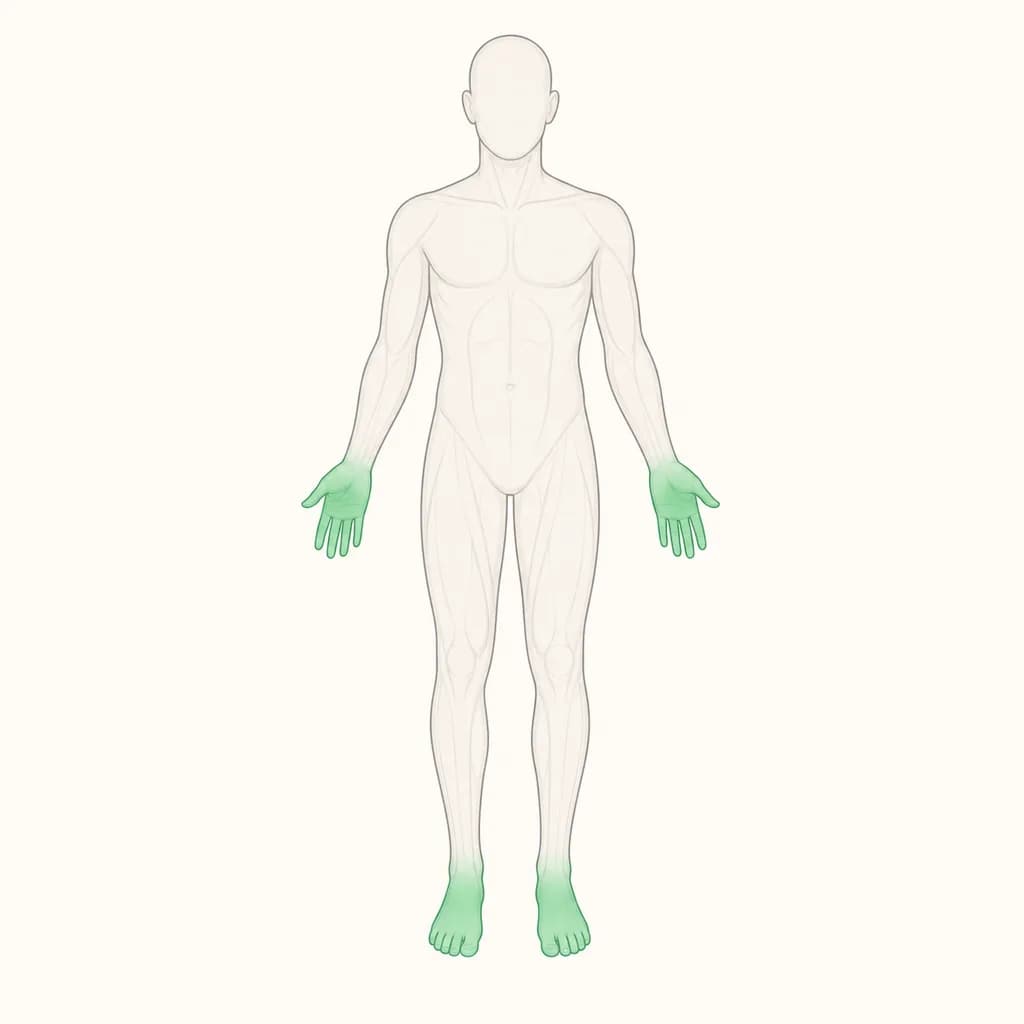
High fever with cold hands and feet can happen as the body changes blood flow during illness, but cold, pale, blue, or clammy skin with severe symptoms needs urgent medical assessment.
This answers one question. It is not a diagnosis and does not replace an assessment by a licensed doctor.
At a glance
- Watch closely
- Skin colour, breathing, alertness, drinking, and urine output.
- Avoid
- Ice baths, vigorous rubbing, and unsupervised iron treatment.
Why this can happen
During fever, the body may narrow blood vessels in the hands and feet while directing circulation towards central organs. Chills can make the skin feel cold even while the core temperature is raised. The symptom can also occur with dehydration or a serious infection. Outside an acute illness, recurring cold hands and feet may be associated with anaemia, iron deficiency, an underactive thyroid, or reduced circulation such as Peripheral Arterial Disease. The symptom alone cannot identify one diagnosis.
Practical steps
Measure temperature with a reliable thermometer, encourage small frequent drinks if the person is awake and able to swallow, and use light clothing and comfortable room ventilation. Avoid ice baths, vigorous rubbing, or piling on heavy blankets. Look at skin colour, breathing, alertness, and urine output. Do not start iron supplements or other treatment simply because the hands and feet feel cold; a clinician may need an examination and blood tests first.
When to seek urgent care
Get emergency help for difficult breathing, fainting, new confusion, extreme sleepiness, a seizure, severe weakness, blue or mottled skin, or hands and feet that remain cold and clammy. Seek prompt assessment when fever is accompanied by a rapidly worsening illness, very little urine, repeated vomiting, or inability to drink. Babies, older adults, and people with poor circulation or significant medical conditions may need earlier advice.
What to ask
Ask whether the temperature reading is reliable, whether your circulation and hydration need checking, and whether blood tests for anaemia or thyroid function are appropriate. Mention tiredness, breathlessness, weight change, numbness, pain when walking, heavy menstrual bleeding, and medicines that may affect circulation.
Find care
General Clinics & Polyclinics in Abu Dhabi
That answer is general. If you want it applied to your own case, these are licensed general clinics & polyclinics listed in Abu Dhabi.
27 Ar Ruwwad St - Shakhbout City - MSH4 - Abu Dhabi - United Arab Emirates
Accepts: Daman, Thiqa, Cigna, MetLife +20 more
Al Ruwais, Al Dhafrah
Accepts: Daman, Thiqa, AXA, Cigna +16 more
Al Bahyah - Al Bahyah Old - Abu Dhabi - United Arab Emirates
Accepts: Daman, Thiqa, Cigna, Allianz Care +18 more
Abu Dhabi
Accepts: Daman, Thiqa, AXA, Cigna +27 more
Ordered by verification status and how complete each clinic's public record is, then alphabetically. This is a directory listing, not a ranking — Zavis does not rate or recommend providers.
A factual listing drawn from the DHA, DOH and MOHAP licence registers. It is not a referral, an endorsement, or advice that any of these providers is right for you.
Questions people ask
Are cold hands and feet always dangerous during fever?
No. Chills and temporary blood-vessel narrowing can cause them, but abnormal colour, clammy skin, confusion, or breathing trouble is urgent.
Could anaemia cause cold hands and feet?
Anaemia can contribute to cold extremities, especially with fatigue or breathlessness, but testing is needed to confirm the cause.
Related
Related reading
Keep reading
Medical disclaimer. This page is general health information, not medical advice, and it cannot diagnose you. Always consult a licensed healthcare provider about your own symptoms and treatment. In an emergency in the UAE, call 998 for an ambulance.