
Heat Stroke and Rhabdomyolysis: What You Should Know
Short answer
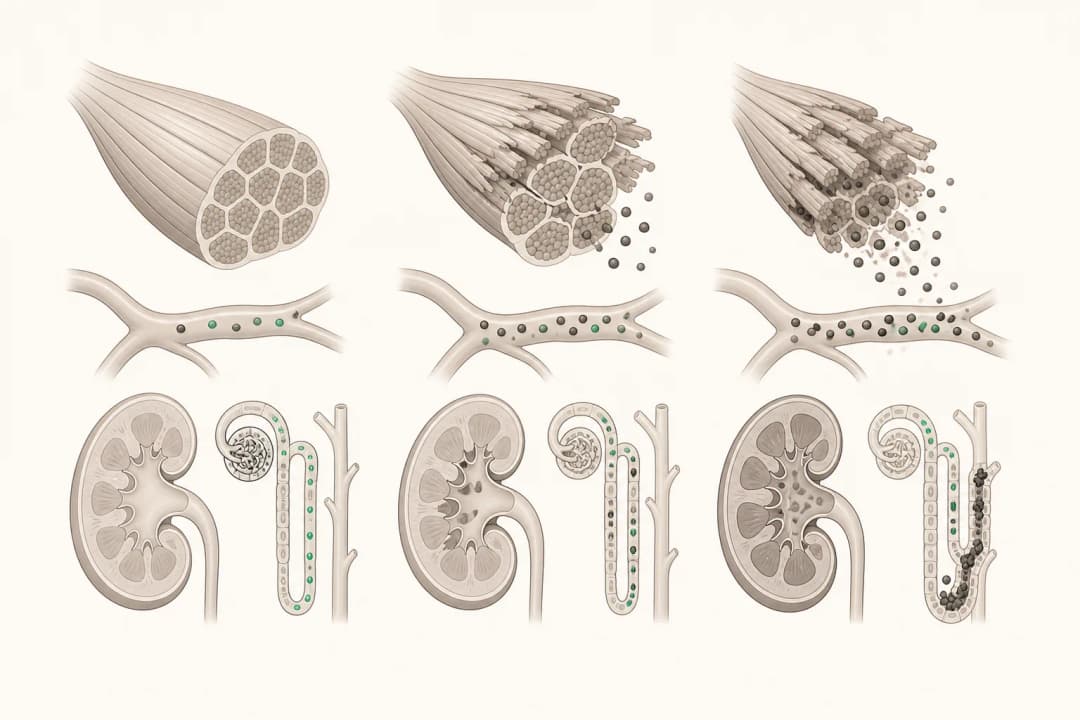
Heat stroke can cause rhabdomyolysis, a serious breakdown of muscle tissue that needs urgent medical assessment.
This answers one question. It is not a diagnosis and does not replace an assessment by a licensed doctor.
At a glance
- Main concern
- Heat stroke with possible muscle breakdown
- Urgency
- Emergency assessment is needed when heat stroke is suspected
- Watch for
- Weakness, swelling, severe muscle pain, or dark urine
What this combination means
Heat stroke is a medical emergency in which the body cannot control its temperature and the brain or other organs may be affected. Rhabdomyolysis happens when damaged muscle fibres release substances into the bloodstream. Severe heat, intense exertion, dehydration, or prolonged collapse can contribute to this muscle injury. Possible clues include marked muscle pain, weakness, swelling, unusual tiredness, or urine that looks darker than usual. Symptoms can develop during the heat illness or later, so feeling cooler does not by itself rule out ongoing injury.
What to do now
Call emergency services if heat stroke is suspected. Move the person to a cooler place, remove excess clothing, and cool the skin with cool wet cloths or water while help is coming. Do not give drinks to someone who is confused, vomiting, having a seizure, or unable to swallow safely. Do not rely on rest at home when severe heat exposure is followed by muscle weakness, swelling, or dark urine. In a medical setting, clinicians may check temperature, kidney function, electrolytes, and muscle injury, then provide treatment and monitoring.
When to seek urgent care
Seek emergency care immediately for confusion, fainting, seizure, loss of consciousness, very hot skin, trouble breathing, or inability to drink safely. Prompt assessment is also needed for severe muscle pain or weakness, reduced urine, or dark urine after strenuous activity in the heat. These signs can indicate heat-related organ injury or rhabdomyolysis; they should not be judged by comparing them with ordinary Muscle Soreness After Exercise.
Questions for your doctor
Ask which blood and urine tests are needed, whether kidney function needs repeat checking, how much activity and heat exposure to avoid during recovery, and which changes in urine, swelling, or strength should prompt a return visit.
Find care
General Clinics & Polyclinics in Abu Dhabi
That answer is general. If you want it applied to your own case, these are licensed general clinics & polyclinics listed in Abu Dhabi.
27 Ar Ruwwad St - Shakhbout City - MSH4 - Abu Dhabi - United Arab Emirates
Accepts: Daman, Thiqa, Cigna, MetLife +20 more
Al Ruwais, Al Dhafrah
Accepts: Daman, Thiqa, AXA, Cigna +16 more
Al Bahyah - Al Bahyah Old - Abu Dhabi - United Arab Emirates
Accepts: Daman, Thiqa, Cigna, Allianz Care +18 more
Abu Dhabi
Accepts: Daman, Thiqa, AXA, Cigna +27 more
Ordered by verification status and how complete each clinic's public record is, then alphabetically. This is a directory listing, not a ranking — Zavis does not rate or recommend providers.
A factual listing drawn from the DHA, DOH and MOHAP licence registers. It is not a referral, an endorsement, or advice that any of these providers is right for you.
Questions people ask
Can rhabdomyolysis happen after heat exposure?
Yes. Severe heat illness and strenuous exertion can injure muscle tissue and trigger rhabdomyolysis.
Should someone with suspected heat stroke drink water?
Only if they are alert and can swallow safely. Confusion, vomiting, or a seizure requires emergency help rather than drinks by mouth.
Keep reading
Medical disclaimer. This page is general health information, not medical advice, and it cannot diagnose you. Always consult a licensed healthcare provider about your own symptoms and treatment. In an emergency in the UAE, call 998 for an ambulance.