
What should you know about hands and feet feel cold but are not?
Short answer
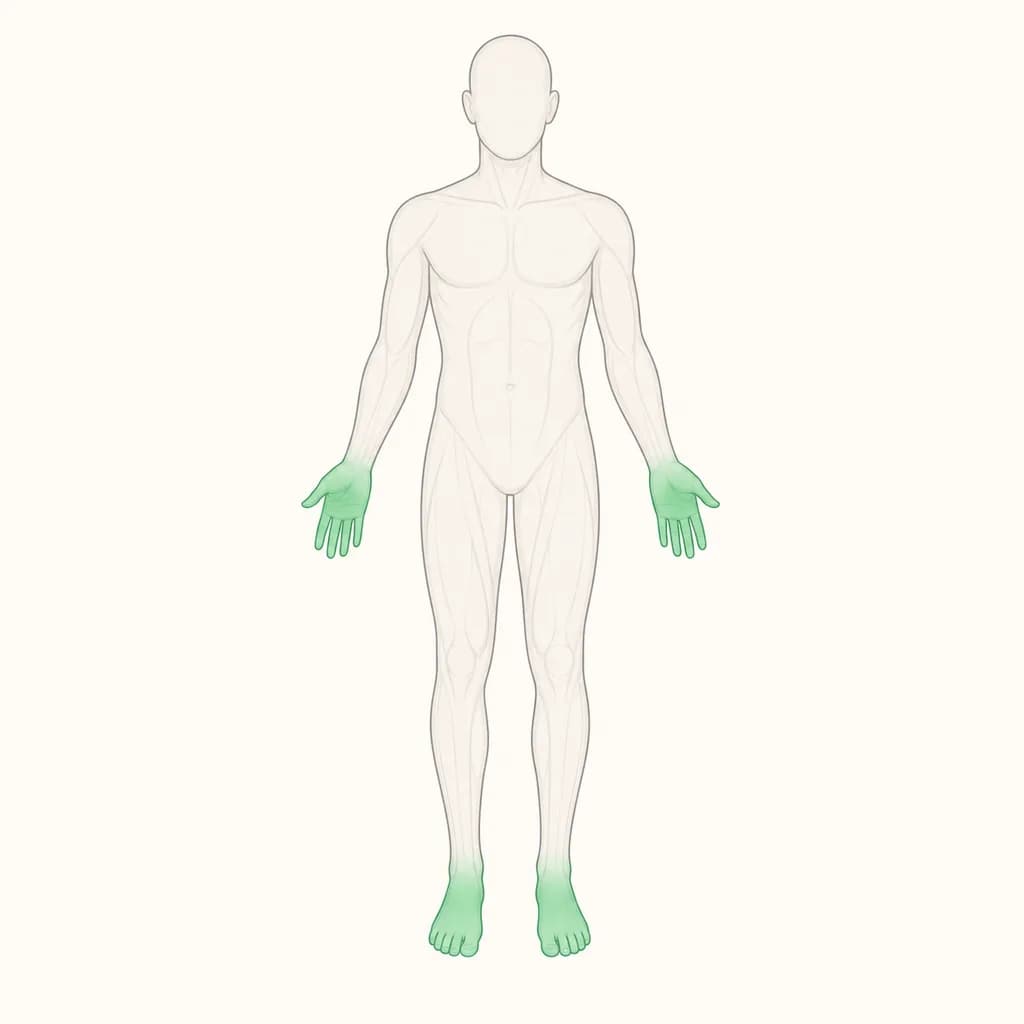
Hands and feet that feel cold without being cold to touch may reflect altered nerve signals, vessel responses or heightened temperature sensitivity.
This answers one question. It is not a diagnosis and does not replace an assessment by a licensed doctor.
At a glance
- Sensation
- Cold, burning, prickling and numbness are different clues
- Track
- Timing, triggers, side, colour and associated symptoms
- Protect
- Inspect skin when sensation is reduced
Understanding the sensation
Hands and feet that feel cold without being cold to touch may reflect altered nerve signals, vessel responses or heightened temperature sensitivity. Stress can change blood flow and attention to bodily sensations. Nerve irritation, anaemia, iron deficiency and hypothyroidism are other possibilities. The sensation alone cannot identify its cause.
Clues worth noticing
Describe whether the feeling is cold, burning, numb, prickling or painful. Tingling or reduced sensation may point toward a nerve issue, while fatigue, pale skin or breathlessness can accompany anaemia. Cold intolerance with dry skin, constipation or low energy may occur with hypothyroidism. A single cold feeling does not mean that you have any of these conditions.
How to respond
Check the area for pressure marks, blisters or injuries, particularly if sensation is reduced. Keep hands and feet protected, take movement breaks and avoid nicotine. Note when the feeling starts, its location, triggers and associated colour change. Arrange a routine review if it persists, spreads or disrupts sleep. Your clinician may assess sensation, circulation, medicines and relevant blood tests.
When it needs prompt attention
Seek urgent care for sudden numbness or weakness, a cold feeling confined to one side, new blue or pale skin, severe pain, trouble walking or a wound that is not healing. Call for emergency help if symptoms begin with facial drooping, speech difficulty or sudden loss of coordination. These neurological or circulation signs need rapid assessment.
Questions to raise
Ask whether the sensation sounds nerve-related, whether circulation should be tested, whether anaemia or thyroid tests are suitable, and how to protect skin that feels less sensitive.
Find care
General Clinics & Polyclinics in Abu Dhabi
That answer is general. If you want it applied to your own case, these are licensed general clinics & polyclinics listed in Abu Dhabi.
27 Ar Ruwwad St - Shakhbout City - MSH4 - Abu Dhabi - United Arab Emirates
Accepts: Daman, Thiqa, Cigna, MetLife +20 more
Al Ruwais, Al Dhafrah
Accepts: Daman, Thiqa, AXA, Cigna +16 more
Al Bahyah - Al Bahyah Old - Abu Dhabi - United Arab Emirates
Accepts: Daman, Thiqa, Cigna, Allianz Care +18 more
Abu Dhabi
Accepts: Daman, Thiqa, AXA, Cigna +27 more
Ordered by verification status and how complete each clinic's public record is, then alphabetically. This is a directory listing, not a ranking — Zavis does not rate or recommend providers.
A factual listing drawn from the DHA, DOH and MOHAP licence registers. It is not a referral, an endorsement, or advice that any of these providers is right for you.
Questions people ask
Why can something feel cold when it is not?
Nerves can send altered temperature signals, and stress-related vessel changes can amplify the sensation.
Should persistent cold sensation be checked?
Yes, especially when it is new, spreading, one-sided or paired with numbness, weakness, pain or colour change.
Related
Related reading
Keep reading
Medical disclaimer. This page is general health information, not medical advice, and it cannot diagnose you. Always consult a licensed healthcare provider about your own symptoms and treatment. In an emergency in the UAE, call 998 for an ambulance.