
What should you know about gallstones and kidney stones?
Short answer
Gallstones and kidney stones are different conditions, so pain location and urinary symptoms help guide assessment.
This answers one question. It is not a diagnosis and does not replace an assessment by a licensed doctor.
At a glance
- Gallstone pain
- Often upper abdominal
- Kidney-stone pain
- Often flank or back, sometimes towards the groin
- Useful test
- Ultrasound may assess both areas
How they differ
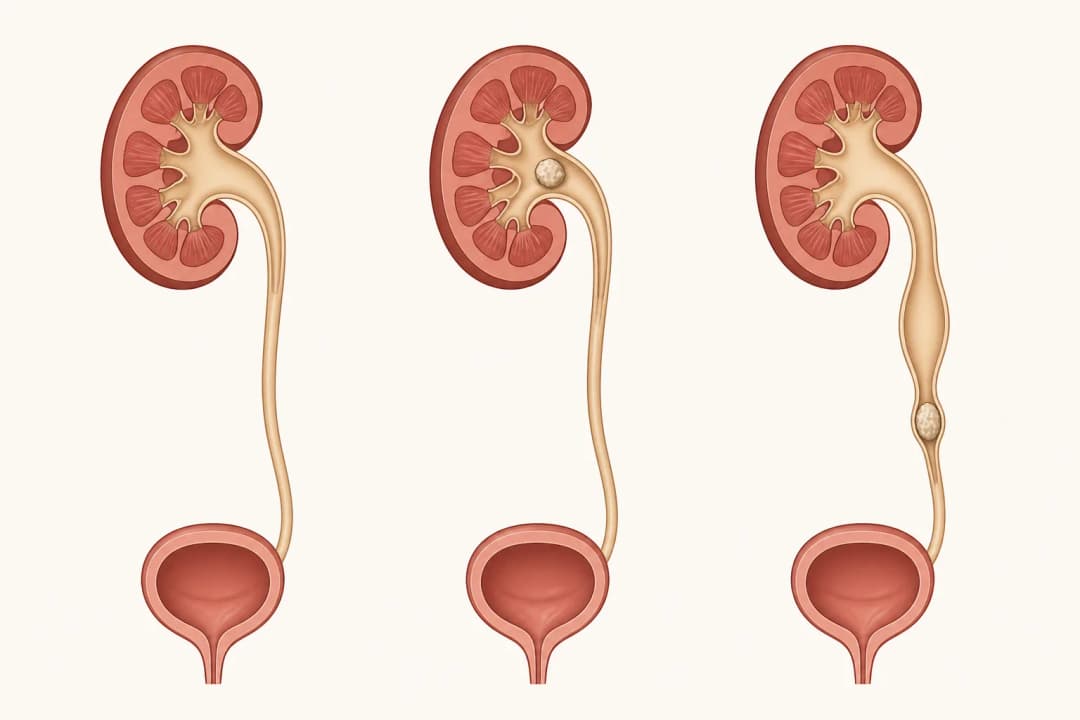
Gallstones form in the gallbladder from substances in bile. They commonly cause pain in the upper right or upper middle abdomen, sometimes after food. Kidney stones form in the urinary tract and may cause severe pain in the flank or back that travels towards the groin, with painful urination or difficulty passing urine.
The two conditions are not the same and one does not turn into the other. Dehydration can make urine more concentrated and may contribute to kidney-stone formation, while gallstone symptoms relate to bile flow. Abdominal pain alone cannot identify which organ is involved.
How to arrange assessment
A GP Consultation can help compare the timing, location and character of your pain. Bring a list of medicines and describe fever, vomiting, bowel changes, urine colour and any visible blood. An Abdominal Ultrasound may examine the gallbladder and kidneys, while urine and blood tests can add useful information.
Drink fluids regularly unless a clinician has told you to restrict them. Do not force large amounts of fluid during severe pain or vomiting. Treatment depends on the stone's position, symptoms and effect on drainage; do not rely on home remedies to dissolve or pass an undiagnosed stone.
When urgent care is needed
Seek urgent help for severe or worsening pain, fever or chills with flank pain, repeated vomiting, blood in urine, or inability to pass urine. A blocked urinary tract with infection can become serious. Sudden intense abdominal pain with faintness or persistent vomiting also needs immediate assessment.
Questions for your doctor
Ask which organ seems responsible, whether imaging is needed, how kidney and gallbladder stones are treated differently, what fluid intake is suitable for you, and which warning signs should send you to urgent care.
Find care
General Clinics & Polyclinics in Abu Dhabi
That answer is general. If you want it applied to your own case, these are licensed general clinics & polyclinics listed in Abu Dhabi.
27 Ar Ruwwad St - Shakhbout City - MSH4 - Abu Dhabi - United Arab Emirates
Accepts: Daman, Thiqa, Cigna, MetLife +20 more
Al Ruwais, Al Dhafrah
Accepts: Daman, Thiqa, AXA, Cigna +16 more
Al Bahyah - Al Bahyah Old - Abu Dhabi - United Arab Emirates
Accepts: Daman, Thiqa, Cigna, Allianz Care +18 more
Abu Dhabi
Accepts: Daman, Thiqa, AXA, Cigna +27 more
Ordered by verification status and how complete each clinic's public record is, then alphabetically. This is a directory listing, not a ranking — Zavis does not rate or recommend providers.
A factual listing drawn from the DHA, DOH and MOHAP licence registers. It is not a referral, an endorsement, or advice that any of these providers is right for you.
Questions people ask
Can gallstones and kidney stones be confused?
Yes. Both can cause abdominal or back pain, so location, urinary symptoms, examination and testing help separate them.
Does drinking water remove every stone?
No. Fluids support hydration, but they do not reliably dissolve every stone or treat blockage and infection.
Related
Related reading
Keep reading
Medical disclaimer. This page is general health information, not medical advice, and it cannot diagnose you. Always consult a licensed healthcare provider about your own symptoms and treatment. In an emergency in the UAE, call 998 for an ambulance.