
What should you know about foul smelling urine kidney stones?
Short answer
Foul-smelling urine with kidney stones may reflect concentrated urine or an infection behind an obstruction, so pain, fever or reduced urine needs prompt assessment.
This answers one question. It is not a diagnosis and does not replace an assessment by a licensed doctor.
At a glance
- Possible explanation
- Concentrated urine, stone irritation or urinary infection
- Helpful assessment
- Urine testing and, when appropriate, abdominal imaging
- Urgent combination
- Fever, pain and difficulty passing urine
How stones can be involved
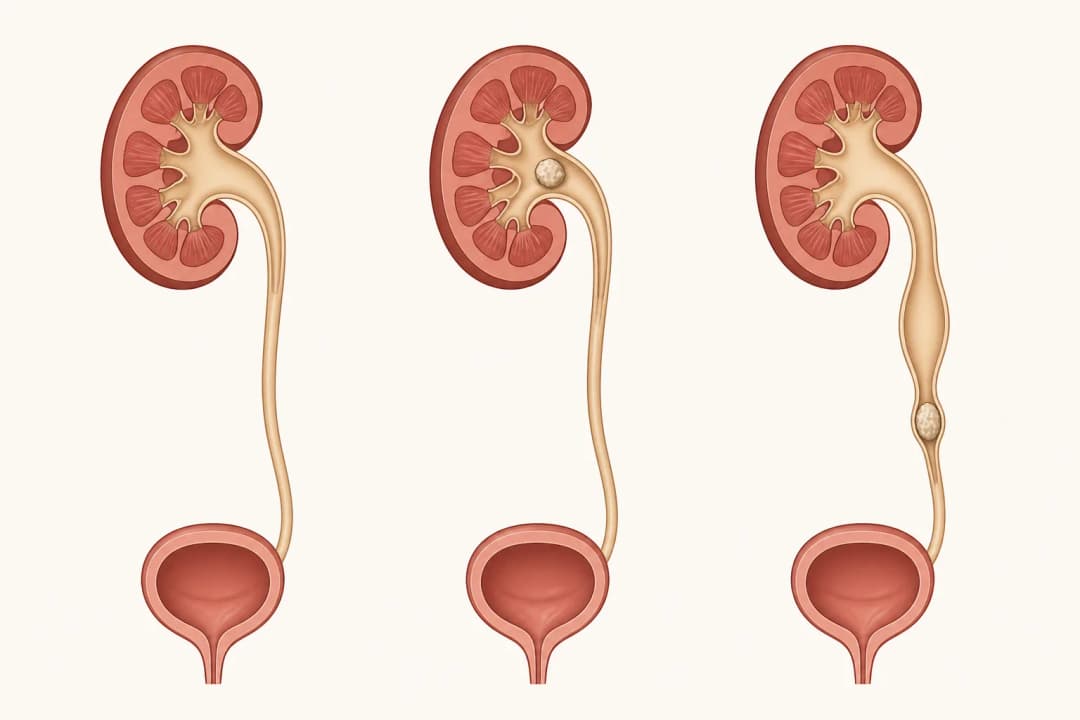
Kidney stones can irritate the urinary tract and cause flank or abdominal pain, painful urination, blood in the urine or difficulty passing urine. A strong smell may come from concentrated urine, but it can also signal bacteria. A stone that blocks urine flow can make infection more serious because infected urine may not drain normally. Smell alone cannot show whether a stone is present or whether infection is involved.
What to do next
Arrange a GP Consultation when foul smell continues, especially with flank pain, painful urination, blood, nausea or a known history of stones. Drink fluids regularly if you have no fluid restriction, but do not force large amounts when you are vomiting or unable to pass urine. Do not take leftover antibiotics. A clinician may check a urine sample and decide whether imaging, such as an Abdominal Ultrasound, is appropriate.
Urgent warning signs
Seek urgent help for fever or chills with suspected stones, worsening flank or abdominal pain, vomiting, confusion, fainting, or difficulty passing urine. A blocked urinary tract with infection can deteriorate quickly. Emergency assessment is also needed if you feel severely unwell or cannot keep fluids down.
Questions to bring
Could the smell be from infection rather than the stone itself? Is urine testing needed before treatment? Is there evidence of blockage, and would imaging help? Which pain medicines and fluids are suitable for me? What changes require emergency care?
Find care
General Clinics & Polyclinics in Abu Dhabi
That answer is general. If you want it applied to your own case, these are licensed general clinics & polyclinics listed in Abu Dhabi.
27 Ar Ruwwad St - Shakhbout City - MSH4 - Abu Dhabi - United Arab Emirates
Accepts: Daman, Thiqa, Cigna, MetLife +20 more
Al Ruwais, Al Dhafrah
Accepts: Daman, Thiqa, AXA, Cigna +16 more
Al Bahyah - Al Bahyah Old - Abu Dhabi - United Arab Emirates
Accepts: Daman, Thiqa, Cigna, Allianz Care +18 more
Abu Dhabi
Accepts: Daman, Thiqa, AXA, Cigna +27 more
Ordered by verification status and how complete each clinic's public record is, then alphabetically. This is a directory listing, not a ranking — Zavis does not rate or recommend providers.
A factual listing drawn from the DHA, DOH and MOHAP licence registers. It is not a referral, an endorsement, or advice that any of these providers is right for you.
Questions people ask
Do kidney stones always cause foul-smelling urine?
No. Stones may cause pain or blood without changing smell; an unpleasant smell can have other causes, including dehydration or infection.
Why is fever with a stone concerning?
A stone can obstruct drainage, so fever with stone symptoms may indicate infection requiring prompt medical assessment.
Related
Related reading
Keep reading
Medical disclaimer. This page is general health information, not medical advice, and it cannot diagnose you. Always consult a licensed healthcare provider about your own symptoms and treatment. In an emergency in the UAE, call 998 for an ambulance.