
What are the first signs of rhabdomyolysis?
Short answer
The first signs of rhabdomyolysis can include unusual muscle pain, weakness, swelling, and dark or reduced urine after exertion or injury.
This answers one question. It is not a diagnosis and does not replace an assessment by a licensed doctor.
At a glance
- Key concern
- Muscle damage can affect kidney function
- Warning sign
- Dark or reduced urine
- Action
- Stop exertion and seek urgent assessment
Why the pattern matters
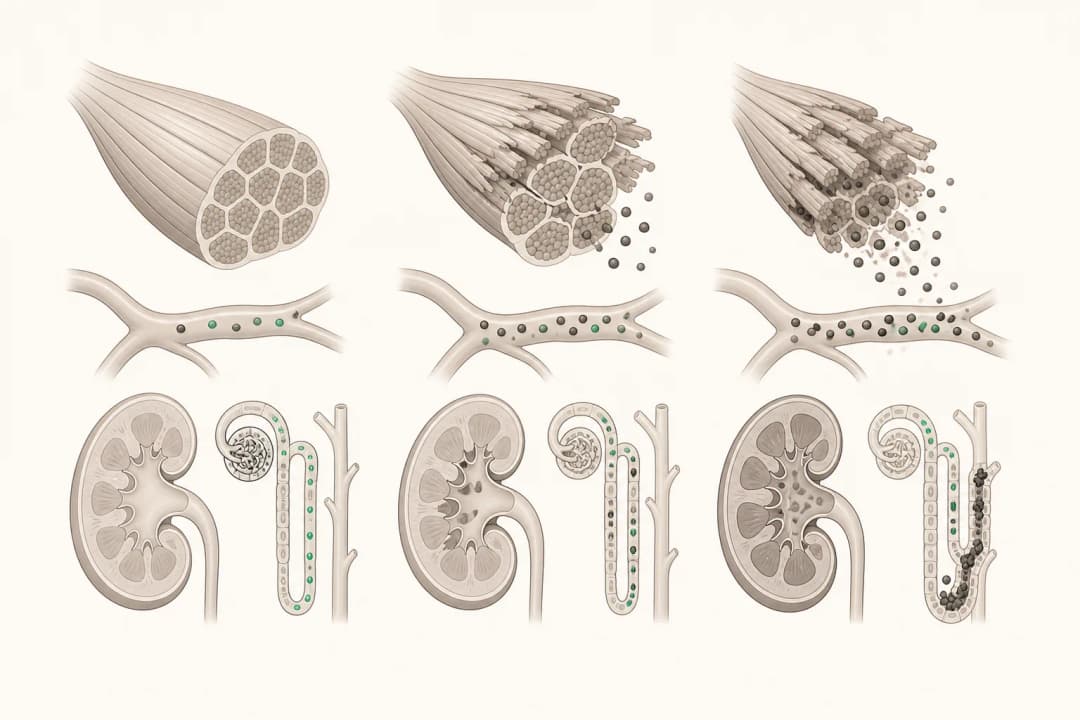
Rhabdomyolysis happens when damaged muscle releases substances into the bloodstream that can strain the kidneys and disturb body chemistry. Symptoms may affect the muscles used during intense exercise, but they can also follow a crush injury, heat illness, prolonged immobility, or certain medicines. Ordinary muscle soreness after exercise usually follows a familiar workload and improves gradually; severe pain, pronounced weakness, swelling, or urine changes are different warning signs. Not everyone has every symptom.
What to do now
Stop strenuous exercise and do not attempt to train through severe muscle pain or weakness. Move to a cool place if heat was involved, and take small drinks only if you are alert and able to swallow normally. Contact urgent medical services or an emergency department for assessment; clinicians may check blood and urine and monitor kidney function. Do not self-treat with leftover medicines.
When it is urgent
Seek emergency care immediately for dark tea-coloured urine, very little urine, worsening weakness, confusion, fainting, breathing difficulty, severe swelling, or muscle pain that is out of proportion to the activity. Also seek urgent assessment after a major injury or heat illness, even if symptoms seem limited at first.
Questions for the clinical team
Tell the team what exercise, injury, heat exposure, or medicine preceded the symptoms. Ask which tests are needed, how much activity and fluid intake are appropriate for you, and which warning signs should bring you back for care.
Find care
General Clinics & Polyclinics in Abu Dhabi
That answer is general. If you want it applied to your own case, these are licensed general clinics & polyclinics listed in Abu Dhabi.
27 Ar Ruwwad St - Shakhbout City - MSH4 - Abu Dhabi - United Arab Emirates
Accepts: Daman, Thiqa, Cigna, MetLife +20 more
Al Ruwais, Al Dhafrah
Accepts: Daman, Thiqa, AXA, Cigna +16 more
Al Bahyah - Al Bahyah Old - Abu Dhabi - United Arab Emirates
Accepts: Daman, Thiqa, Cigna, Allianz Care +18 more
Abu Dhabi
Accepts: Daman, Thiqa, AXA, Cigna +27 more
Ordered by verification status and how complete each clinic's public record is, then alphabetically. This is a directory listing, not a ranking — Zavis does not rate or recommend providers.
A factual listing drawn from the DHA, DOH and MOHAP licence registers. It is not a referral, an endorsement, or advice that any of these providers is right for you.
Questions people ask
Is muscle soreness after exercise always rhabdomyolysis?
No. Typical soreness is usually milder and follows a familiar workout; severe weakness, swelling, or urine changes need urgent assessment.
Can rhabdomyolysis happen without dark urine?
Yes. Urine may look normal, so severe muscle symptoms or weakness after a trigger should still be assessed promptly.
Related
Related reading
Keep reading
Medical disclaimer. This page is general health information, not medical advice, and it cannot diagnose you. Always consult a licensed healthcare provider about your own symptoms and treatment. In an emergency in the UAE, call 998 for an ambulance.