
What should you know about extensive-stage small-cell lung cancer prognosis?
Short answer
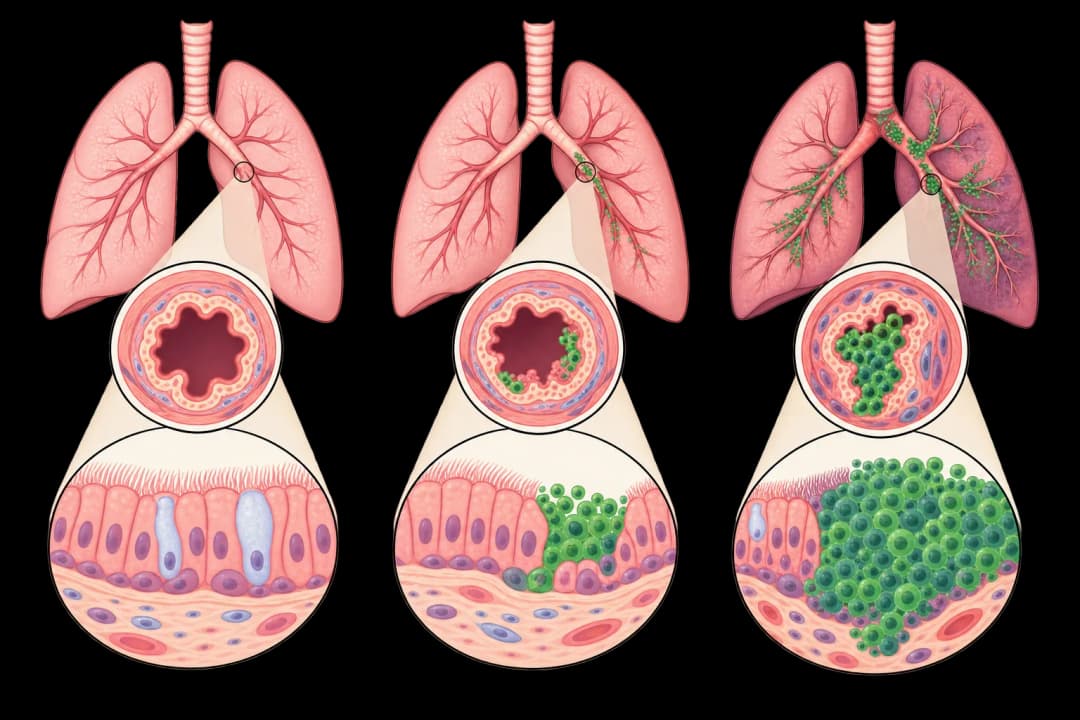
Prognosis in extensive-stage small-cell lung cancer varies between people and depends on spread, overall health, treatment response and how the illness behaves over time.
This answers one question. It is not a diagnosis and does not replace an assessment by a licensed doctor.
At a glance
- Prognosis depends on
- Spread, health, function and treatment response
- Reviewed through
- Symptoms, examinations and follow-up scans
- Support available
- Palliative care alongside cancer treatment
How doctors discuss prognosis
Prognosis is an informed clinical estimate, not a fixed prediction. Your team considers where the cancer has spread, the amount of disease, breathing and organ function, nutrition, other health conditions and how you are managing day to day. They also watch how the cancer responds on scans and whether symptoms improve. Small-cell lung cancer may respond quickly to treatment, but the response can change, so the plan is reviewed at follow-up visits rather than decided once.
Making the plan personal
Ask your oncologist to explain the aim of treatment in plain language: reducing tumour burden, easing symptoms, helping you stay active, or combining these goals. Chemotherapy and immunotherapy may be used to treat disease throughout the body. Radiotherapy can relieve symptoms from a particular site, and whole-brain radiotherapy may be considered for brain involvement. Palliative care supports breathlessness, pain, fatigue, sleep, appetite and emotional wellbeing at any stage. A second oncology opinion can help if you want another view of the options.
Changes that need prompt attention
Contact your treatment team quickly if breathlessness, pain, confusion, weakness, appetite loss or fatigue suddenly worsens. Seek emergency care for severe breathing difficulty, chest pain, coughing blood, a seizure, fainting or new one-sided weakness. Fever or shaking chills during treatment also need urgent advice, because infection may require immediate assessment.
Questions for your doctor
Ask what factors are shaping your individual outlook, how response will be measured, what changes would alter treatment, and which symptoms should trigger an urgent call. You can also ask for help discussing priorities, advance care planning and family support.
Questions people ask
Can anyone predict exactly what will happen?
No. Clinicians can explain likely patterns and the factors affecting your outlook, but an exact course cannot be known for an individual.
Does palliative care mean cancer treatment has stopped?
No. Palliative care can be added while cancer treatment continues, with attention to symptoms, daily function and personal goals.
Related
Related reading
Keep reading
Cancer care in the UAE
Hospitals & Medical Centers in Abu Dhabi
Most UAE cancer care is delivered inside hospital services rather than by standalone oncology clinics, so these are licensed hospitals & medical centers listed in Abu Dhabi. Confirm the specific cancer service exists before you travel, and know that asking for a second opinion is routine.
Ahalia Hospital Musaffah Building - Musaffah - Musaffah Industrial - Abu Dhabi - United Arab Emirates
Accepts: Daman, Thiqa, AXA, Cigna +26 more
Al Ruwais Industrial City - Abu Dhabi - United Arab Emirates
Accepts: Daman, Thiqa, AXA, Cigna +30 more
Abu Dhabi, Abu Dhabi
Accepts: Daman, Thiqa, AXA, Cigna +30 more
Second opinions are routine in cancer care and asking for one does not affect your treatment. How to arrange a second opinion in the UAE.
Ordered by verification status and how complete each clinic's public record is, then alphabetically. This is a directory listing, not a ranking — Zavis does not rate or recommend providers.
A factual listing drawn from the DHA, DOH and MOHAP licence registers. It is not a referral, an endorsement, or advice that any of these providers is right for you.
Medical disclaimer. This page is general health information, not medical advice, and it cannot diagnose you. Always consult a licensed healthcare provider about your own symptoms and treatment. In an emergency in the UAE, call 998 for an ambulance.