
Exertional rhabdomyolysis in horses: what to know
Short answer
Exertional rhabdomyolysis in horses is exercise-related muscle injury that needs prompt veterinary assessment.
This answers one question. It is not a diagnosis and does not replace an assessment by a licensed doctor.
At a glance
- Also called
- Exercise-related muscle breakdown
- First step
- Stop exercise and contact a veterinarian
The short answer
Exertional rhabdomyolysis in horses is exercise-related muscle injury that needs prompt veterinary assessment. It can cause firm or painful muscles, sweating, stiffness, reluctance to move, and dark urine. The episode may follow strenuous work, a sudden return to exercise, stress, or an individual tendency to muscle episodes.
What the condition means
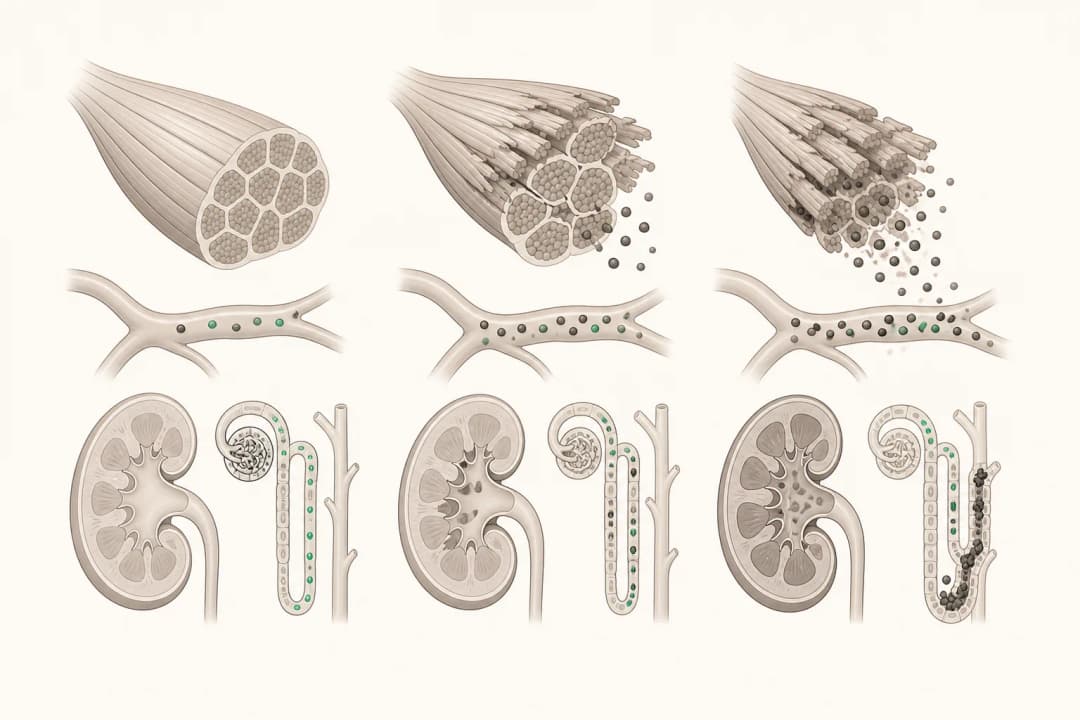
During an episode, muscle cells are damaged and release their contents into the bloodstream. The hindquarters are often noticeably tight, and a horse may take short steps or resist being led. Signs can begin during work or soon afterward. A veterinarian may examine movement and muscles and use blood and urine tests to assess muscle injury and kidney effects. Similar signs can have other causes, so a diagnosis should not be made from appearance alone.
What to do now
Stop exercise and keep the horse calm. Do not force walking, loading, stretching, or further work if movement is painful. Offer water if the horse can drink normally, keep the environment quiet, and contact a veterinarian promptly. Note the work performed, recent rest or diet changes, medications, sweating, urine colour, and when signs began. Follow the veterinary plan for fluids, pain control, rest, and a gradual return to activity.
When urgent care is needed
Seek urgent veterinary help for severe stiffness, collapse, inability to stand or walk, repeated sweating, marked distress, very dark urine, reduced urination, or worsening weakness. These signs can indicate substantial muscle injury or complications involving hydration and kidney function. A horse that seems better still needs professional advice before exercise resumes.
Questions for your veterinarian
Ask what tests are needed, whether fluids or pain relief are appropriate, how much movement is safe, which feeding or training changes may reduce future episodes, and what signs should trigger an immediate call.
Find care
General Clinics & Polyclinics in Abu Dhabi
That answer is general. If you want it applied to your own case, these are licensed general clinics & polyclinics listed in Abu Dhabi.
27 Ar Ruwwad St - Shakhbout City - MSH4 - Abu Dhabi - United Arab Emirates
Accepts: Daman, Thiqa, Cigna, MetLife +20 more
Al Ruwais, Al Dhafrah
Accepts: Daman, Thiqa, AXA, Cigna +16 more
Al Bahyah - Al Bahyah Old - Abu Dhabi - United Arab Emirates
Accepts: Daman, Thiqa, Cigna, Allianz Care +18 more
Abu Dhabi
Accepts: Daman, Thiqa, AXA, Cigna +27 more
Ordered by verification status and how complete each clinic's public record is, then alphabetically. This is a directory listing, not a ranking — Zavis does not rate or recommend providers.
A factual listing drawn from the DHA, DOH and MOHAP licence registers. It is not a referral, an endorsement, or advice that any of these providers is right for you.
Questions people ask
Can a horse with suspected rhabdomyolysis be exercised lightly?
Avoid exercise until a veterinarian has assessed the horse and given a specific activity plan.
What should dark urine mean in this setting?
Dark urine can reflect muscle pigments and warrants urgent veterinary advice, especially with stiffness or weakness.
Related
Related reading
Keep reading
Medical disclaimer. This page is general health information, not medical advice, and it cannot diagnose you. Always consult a licensed healthcare provider about your own symptoms and treatment. In an emergency in the UAE, call 998 for an ambulance.