
What should you know about excessive swelling in pregnancy?
Short answer
Mild swelling can occur in pregnancy, but sudden or excessive swelling of the face or hands needs prompt medical assessment.
This answers one question. It is not a diagnosis and does not replace an assessment by a licensed doctor.
At a glance
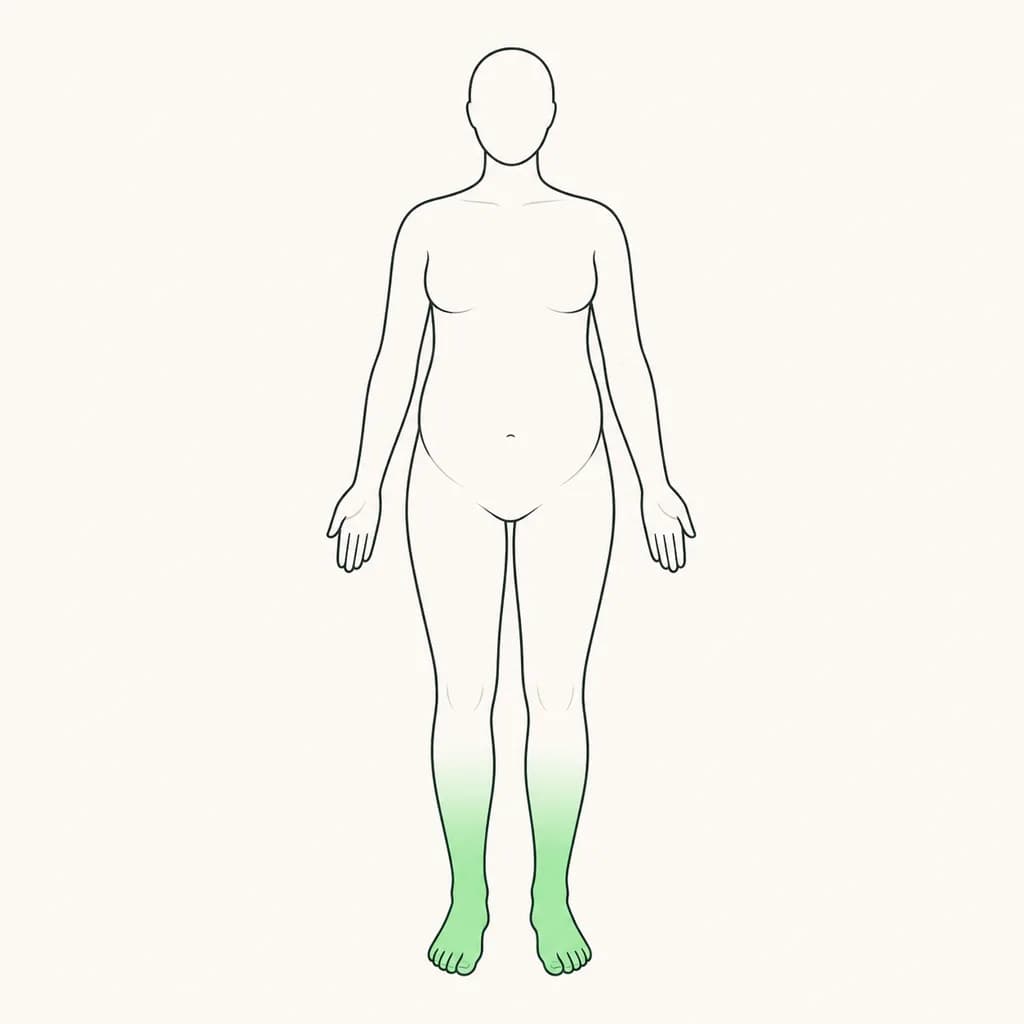
- Common areas
- Feet, ankles and lower legs
- Needs prompt review
- Sudden swelling of the face or hands
- Do not do alone
- Start medicines or restrict fluids
What swelling may mean
Pregnancy can cause fluid to collect in the feet, ankles and lower legs, especially after standing or later in the day. Swelling that develops gradually and improves with rest is often less concerning. Swelling that appears quickly, affects the face or hands, or is accompanied by a severe headache, visual changes, pain under the ribs, vomiting or feeling very unwell can be a sign of pre-eclampsia. One-sided leg swelling with pain, warmth or breathlessness needs urgent attention because a blood clot may be involved.
What you can do now
Tell your maternity team about new or worsening swelling so they can check your blood pressure and urine and decide whether further tests are needed. While waiting for advice, rest on your side, raise your legs when sitting, avoid standing for long periods, wear comfortable shoes and keep gently active if you feel well. Do not restrict fluids or start medicines, compression garments or supplements without personalised advice.
When to seek care
Contact your maternity service promptly for sudden swelling, swelling of the face or hands, a severe or persistent headache, flashing lights or blurred vision, upper-abdominal pain, breathlessness, chest pain, or a marked reduction in your baby’s movements. Seek emergency help for severe breathing difficulty, chest pain, fainting or a seizure. These warning signs need assessment even if the swelling itself seems manageable.
Questions for your doctor or midwife
Ask what pattern of swelling is expected at your stage of pregnancy, whether your blood pressure and urine should be checked today, and which symptoms should send you to emergency care. Ask whether your medicines or medical history change your risk, and how to monitor your baby’s movements. You can also ask about [Pre-eclampsia](/conditions/pre-eclampsia/).
Find care
General Clinics & Polyclinics in Abu Dhabi
That answer is general. If you want it applied to your own case, these are licensed general clinics & polyclinics listed in Abu Dhabi.
27 Ar Ruwwad St - Shakhbout City - MSH4 - Abu Dhabi - United Arab Emirates
Accepts: Daman, Thiqa, Cigna, MetLife +20 more
Al Ruwais, Al Dhafrah
Accepts: Daman, Thiqa, AXA, Cigna +16 more
Al Bahyah - Al Bahyah Old - Abu Dhabi - United Arab Emirates
Accepts: Daman, Thiqa, Cigna, Allianz Care +18 more
Abu Dhabi
Accepts: Daman, Thiqa, AXA, Cigna +27 more
Ordered by verification status and how complete each clinic's public record is, then alphabetically. This is a directory listing, not a ranking — Zavis does not rate or recommend providers.
A factual listing drawn from the DHA, DOH and MOHAP licence registers. It is not a referral, an endorsement, or advice that any of these providers is right for you.
Questions people ask
Is swelling in pregnancy always dangerous?
No. Gradual swelling in the feet and ankles can occur, but sudden or facial swelling needs prompt assessment.
Can I reduce pregnancy swelling at home?
Resting on your side, raising your legs and avoiding long periods of standing may help while you arrange advice.
Related
Related reading
Keep reading
Medical disclaimer. This page is general health information, not medical advice, and it cannot diagnose you. Always consult a licensed healthcare provider about your own symptoms and treatment. In an emergency in the UAE, call 998 for an ambulance.