
What should you know about excessive hair growth women?
Short answer
Excessive hair growth in women is a pattern with several possible explanations, so assessment focuses on where it appears, how it changed, and what else is happening.
This answers one question. It is not a diagnosis and does not replace an assessment by a licensed doctor.
At a glance
- Key clue
- Distribution and speed of change are useful clues.
- Cosmetic care
- Shaving does not alter the follicle or make hair biologically thicker.
- Medical review
- Associated menstrual, acne, scalp, or voice changes deserve attention.
Understanding excess hair
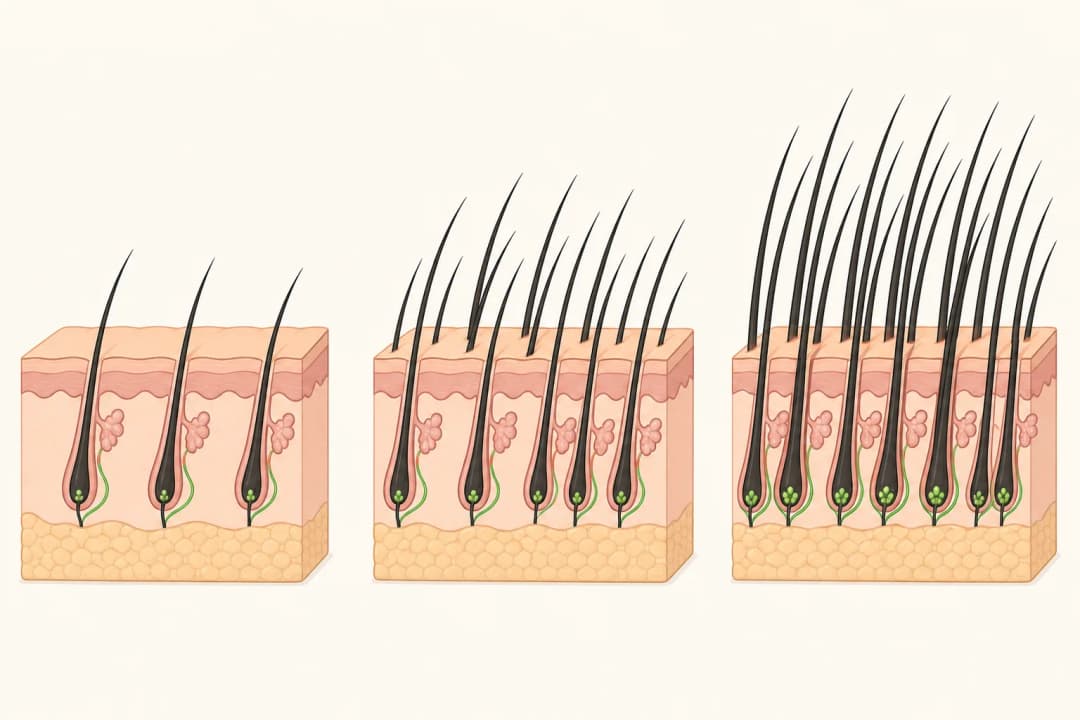
Fine body hair can become more noticeable with age or changing skin and hair colour. Coarse dark hair on the face, chest, abdomen, or back is often described as hirsutism, while hypertrichosis refers to increased hair in areas where hair may naturally grow. A pattern alone cannot identify its cause. Family traits, medicines, hormonal conditions, and follicle sensitivity may all contribute.
Track menstrual regularity, acne, scalp shedding, and the timing of hair changes. These details help a clinician decide whether examination alone is enough or whether further evaluation should be considered.
Managing the concern
For immediate grooming, shaving and trimming do not make hair grow back thicker, although short regrowth can feel stubbly. Waxing, threading, and depilatory creams may help but can trigger irritation or ingrown hairs. Use gentle skin care and avoid applying strong products to freshly treated skin.
Longer-term cosmetic choices include Electrolysis Hair Removal and Laser Hair Removal. Their suitability varies with hair pigment, skin tone, body site, and treatment history. A consultation can also separate cosmetic management from care for an underlying condition.
Signs that warrant review
Seek medical review for a rapid increase in coarse hair or associated irregular periods, persistent severe acne, scalp hair thinning, voice deepening, or other abrupt body changes. Get prompt care for infection signs such as increasing warmth, swelling, pus, fever, or severe tenderness after grooming.
Questions to bring
What pattern do you see, and what causes should be considered? Are my menstrual or skin changes relevant? Should any medicine or supplement be reviewed? Which hair-removal option is safest for my skin?
Find care
General Clinics & Polyclinics in Abu Dhabi
That answer is general. If you want it applied to your own case, these are licensed general clinics & polyclinics listed in Abu Dhabi.
27 Ar Ruwwad St - Shakhbout City - MSH4 - Abu Dhabi - United Arab Emirates
Accepts: Daman, Thiqa, Cigna, MetLife +20 more
Al Ruwais, Al Dhafrah
Accepts: Daman, Thiqa, AXA, Cigna +16 more
Al Bahyah - Al Bahyah Old - Abu Dhabi - United Arab Emirates
Accepts: Daman, Thiqa, Cigna, Allianz Care +18 more
Abu Dhabi
Accepts: Daman, Thiqa, AXA, Cigna +27 more
Ordered by verification status and how complete each clinic's public record is, then alphabetically. This is a directory listing, not a ranking — Zavis does not rate or recommend providers.
A factual listing drawn from the DHA, DOH and MOHAP licence registers. It is not a referral, an endorsement, or advice that any of these providers is right for you.
Questions people ask
Can shaving make women’s hair thicker?
No. Shaving cuts hair at the surface, so new growth may feel blunt without changing the follicle.
When should excess hair be medically assessed?
Assessment is sensible when growth is new, rapidly changing, widespread, or accompanied by other body changes.
Related
Related reading
Keep reading
Medical disclaimer. This page is general health information, not medical advice, and it cannot diagnose you. Always consult a licensed healthcare provider about your own symptoms and treatment. In an emergency in the UAE, call 998 for an ambulance.