
What should you know about excessive hair growth hirsutism?
Short answer
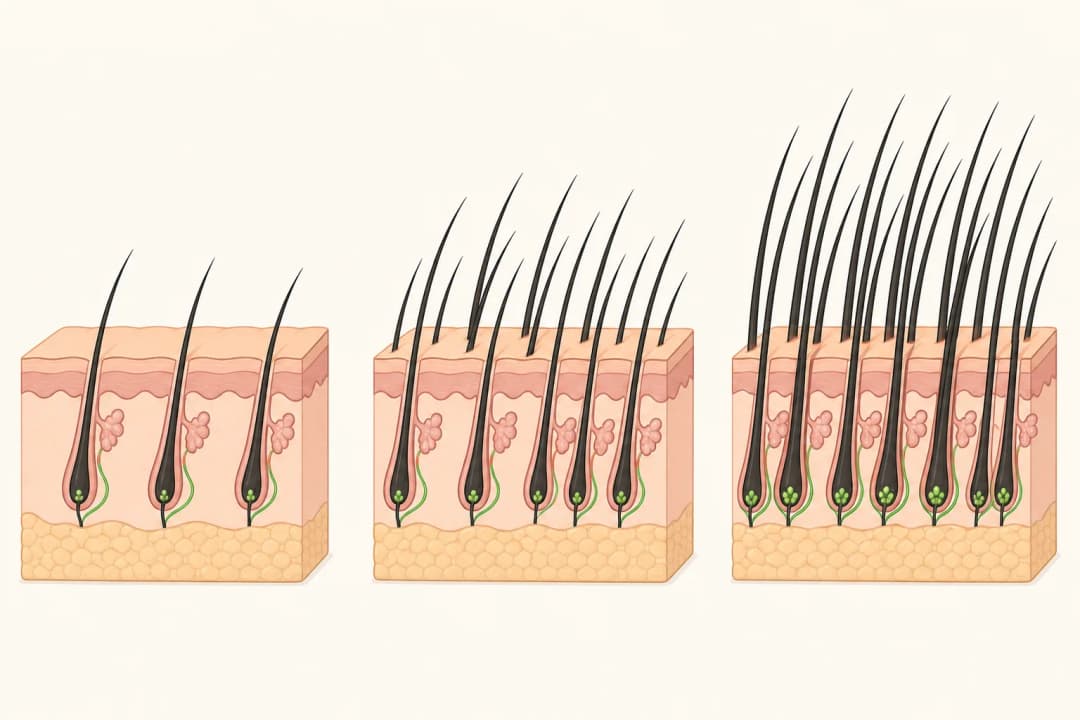
Excessive hair growth means more hair than expected for a person's age, sex, or body area; it may be hypertrichosis or hirsutism and deserves assessment when it is new, rapidly changing, or accompanied by other symptoms.
This answers one question. It is not a diagnosis and does not replace an assessment by a licensed doctor.
At a glance
- Main distinction
- Hypertrichosis is excess hair in any body area; hirsutism follows an androgen-sensitive pattern.
- Assessment matters
- New or rapidly changing growth, especially with hormonal symptoms, should be medically reviewed.
What the terms mean
Hypertrichosis is excess hair growth in a body area where hair may normally occur. It can be present from birth or develop later, and it may affect a small area or much of the body. Hirsutism is a different pattern: coarse, dark hair develops in areas more commonly influenced by androgens, such as the face, chest, abdomen, or back in women. A clinician may consider family traits, medicines, hormonal conditions, and the timing of the change when working out the pattern.
The hair itself is usually not dangerous, but a new pattern can sometimes accompany a medical issue. Shaving, trimming, waxing, or depilatory products change the visible hair without addressing why it appeared.
What you can do
Arrange a dermatology or primary-care assessment if the growth is new, bothersome, or spreading. Note when it began, where it is growing, whether the hair became darker or coarser, and any medicines or supplements started around the same time. Your clinician may examine the hair pattern and skin and ask about menstrual changes, acne, voice changes, scalp hair thinning, or other signs of hormonal change. Testing is chosen according to your history rather than automatically required for every person.
For cosmetic reduction, options can include temporary removal or longer-term reduction with a professional treatment. Discuss skin tone, hair colour, the treatment area, and the possibility of irritation or pigment changes before choosing an approach. See the pages on Laser Hair Removal and Electrolysis Hair Removal for more detail.
When to seek care promptly
Book a prompt medical review if coarse hair appears quickly or is accompanied by a deeper voice, marked acne, increased muscle bulk, scalp hair loss, or changes in menstrual bleeding. Seek urgent care for sudden severe symptoms, facial swelling, trouble breathing, or a serious reaction after using a hair-removal product. These warning signs do not identify a diagnosis on their own, but they make timely assessment more appropriate.
Questions for your doctor
Ask: Does this pattern fit hypertrichosis, hirsutism, or another cause? Could any medicine or supplement be contributing? Do my other symptoms suggest hormone testing? Which removal method suits my hair colour, skin tone, and treatment area? What skin reaction should make me stop a product and contact you?
Find care
General Clinics & Polyclinics in Abu Dhabi
That answer is general. If you want it applied to your own case, these are licensed general clinics & polyclinics listed in Abu Dhabi.
27 Ar Ruwwad St - Shakhbout City - MSH4 - Abu Dhabi - United Arab Emirates
Accepts: Daman, Thiqa, Cigna, MetLife +20 more
Al Ruwais, Al Dhafrah
Accepts: Daman, Thiqa, AXA, Cigna +16 more
Al Bahyah - Al Bahyah Old - Abu Dhabi - United Arab Emirates
Accepts: Daman, Thiqa, Cigna, Allianz Care +18 more
Abu Dhabi
Accepts: Daman, Thiqa, AXA, Cigna +27 more
Ordered by verification status and how complete each clinic's public record is, then alphabetically. This is a directory listing, not a ranking — Zavis does not rate or recommend providers.
A factual listing drawn from the DHA, DOH and MOHAP licence registers. It is not a referral, an endorsement, or advice that any of these providers is right for you.
Questions people ask
Is excessive hair growth the same as hirsutism?
No. Hypertrichosis can occur in any body area, while hirsutism describes coarse, dark hair in an androgen-influenced pattern in women.
Can hair removal treat the cause of excessive growth?
Hair removal changes visible hair but may not address an underlying hormonal or medicine-related cause, so new growth should be assessed separately.
Related
Related reading
Keep reading
Medical disclaimer. This page is general health information, not medical advice, and it cannot diagnose you. Always consult a licensed healthcare provider about your own symptoms and treatment. In an emergency in the UAE, call 998 for an ambulance.