
What should you know about etiology of kidney stones?
Short answer
Kidney stones form when urine becomes concentrated and minerals crystallise, with fluid intake, diet, body chemistry, and medical conditions influencing the process.
This answers one question. It is not a diagnosis and does not replace an assessment by a licensed doctor.
At a glance
- Formation
- Crystals grow from concentrated urine
- Risk factor
- Dehydration and altered urine chemistry
- Possible location
- Kidney or ureter
How stones develop
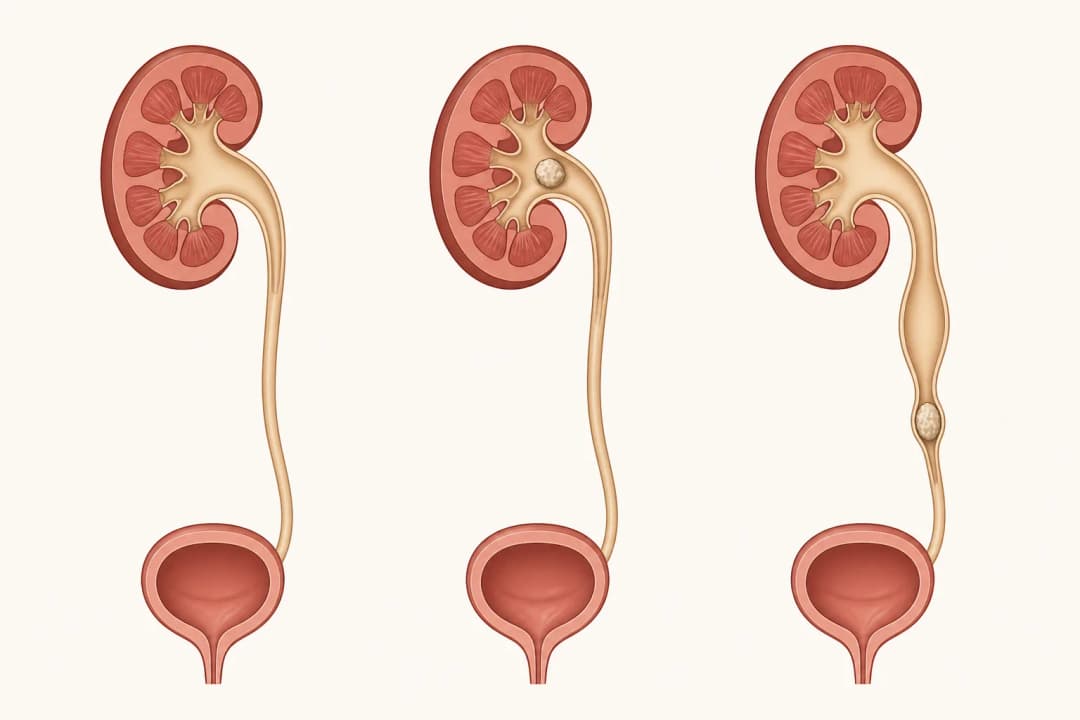
Urine normally carries dissolved waste out of the body. When there is too little fluid or too much of a stone-forming substance, crystals can join together and grow. Dehydration, heavy sweating, dietary patterns, family tendency, some medicines, and disorders affecting the kidneys or bowel can alter this balance. A stone may stay in the kidney without symptoms or move into the ureter, causing severe flank pain, abdominal pain, painful urination, or difficulty passing urine.
What can help
Drink fluids regularly unless a clinician has advised a restriction, especially during heat or exercise. Do not make major dietary changes or take supplements to prevent recurrence without knowing the stone type. A GP consultation can review previous stones, medicines, family history, and relevant health conditions. An abdominal ultrasound may help locate a stone or show urinary blockage; further testing can assess urine and kidney function.
When to seek care
Seek urgent care for severe or worsening pain, fever or chills with urinary symptoms, repeated vomiting, inability to pass urine, or feeling faint. A blocked urinary tract with infection needs prompt treatment. Arrange medical review for blood in the urine, recurrent painful urination, or pain that does not settle, even if the discomfort is manageable.
Questions for your doctor
Could my symptoms indicate a stone or another urinary problem? Do I need an ultrasound or urine test? Was my previous stone a particular type, and what prevention plan fits my health?
Find care
General Clinics & Polyclinics in Abu Dhabi
That answer is general. If you want it applied to your own case, these are licensed general clinics & polyclinics listed in Abu Dhabi.
27 Ar Ruwwad St - Shakhbout City - MSH4 - Abu Dhabi - United Arab Emirates
Accepts: Daman, Thiqa, Cigna, MetLife +20 more
Al Ruwais, Al Dhafrah
Accepts: Daman, Thiqa, AXA, Cigna +16 more
Al Bahyah - Al Bahyah Old - Abu Dhabi - United Arab Emirates
Accepts: Daman, Thiqa, Cigna, Allianz Care +18 more
Abu Dhabi
Accepts: Daman, Thiqa, AXA, Cigna +27 more
Ordered by verification status and how complete each clinic's public record is, then alphabetically. This is a directory listing, not a ranking — Zavis does not rate or recommend providers.
A factual listing drawn from the DHA, DOH and MOHAP licence registers. It is not a referral, an endorsement, or advice that any of these providers is right for you.
Questions people ask
Can dehydration contribute to kidney stones?
Yes. Less fluid makes urine more concentrated, allowing dissolved minerals to crystallise more readily.
Does flank pain prove that a kidney stone is present?
No. Flank pain has several possible causes, so assessment and sometimes imaging are needed.
Related
Related reading
Keep reading
Medical disclaimer. This page is general health information, not medical advice, and it cannot diagnose you. Always consult a licensed healthcare provider about your own symptoms and treatment. In an emergency in the UAE, call 998 for an ambulance.