
What should you know about enlarged prostate treatment?
Short answer
Enlarged prostate treatment may involve monitoring, lifestyle changes, medicines or a procedure, chosen after assessing urinary symptoms and their effect on daily life.
This answers one question. It is not a diagnosis and does not replace an assessment by a licensed doctor.
At a glance
- Possible approaches
- Monitoring, lifestyle changes, medicines or a procedure
- What guides choice
- Symptoms, health conditions and preferences
- Test sometimes used
- Urine Test
How treatment is chosen
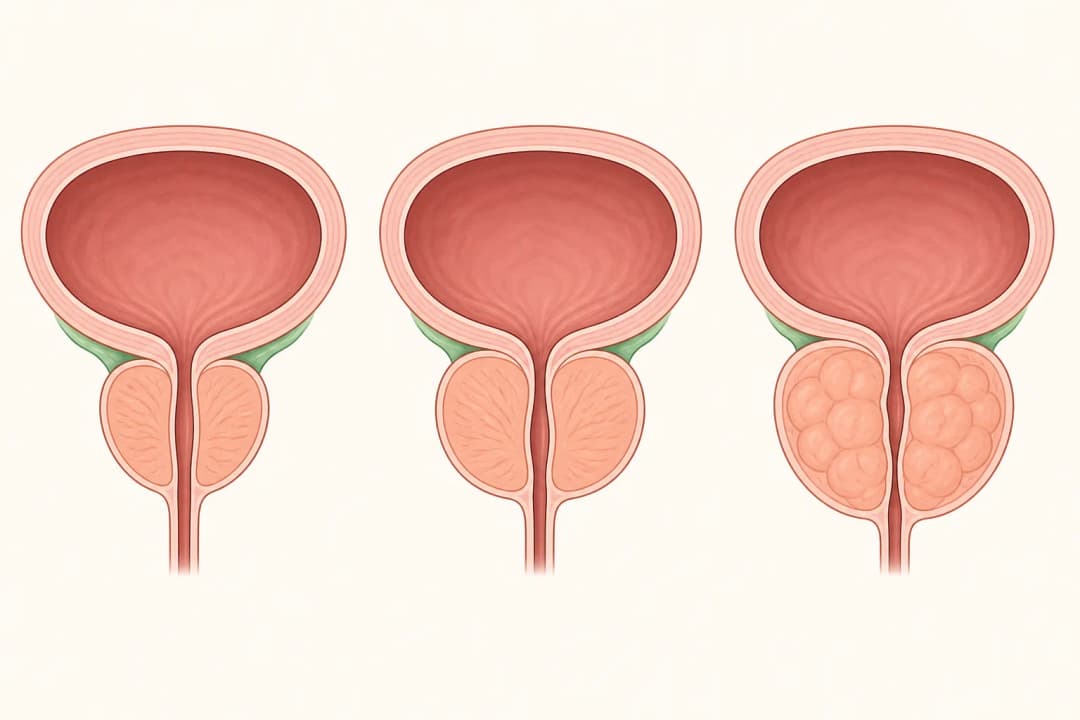
Benign prostatic hyperplasia can narrow the urine channel as the prostate grows. Some people have mild symptoms that can be watched, while others have a weak stream, hesitancy, urgency, frequent urination or leakage that interferes with sleep and activities. Treatment aims to improve emptying and comfort, while reducing the chance of complications. The right option depends on symptom severity, bladder function, other illnesses, current medicines and personal preferences.
Options to discuss
Start with a GP Consultation to describe your usual fluid intake, evening drinks, urinary pattern and any leakage. Practical changes may include reducing drinks that irritate the bladder, spreading fluids through the day and using the toilet before bed, while avoiding dehydration. Medicines can relax prostate muscle or reduce gland growth; they may have side effects and need review. If symptoms persist or complications develop, a specialist may discuss a procedure to improve urine flow. A Urine Test may check for infection or blood before decisions are made.
When treatment needs prompt review
Seek urgent help if you cannot pass urine or develop severe lower-abdominal pain. Contact a clinician promptly for fever, visible blood in urine, repeated infections, worsening leakage or symptoms that suddenly change. Do not double a missed dose or stop prostate medicine without advice, particularly if you feel dizzy or faint.
Questions for your doctor
Ask which treatment target matters most for you, how long an option may take to help, what side effects to watch for, and when progress will be reviewed. Ask whether another medicine or a procedure would be considered if your stream remains weak.
Find care
General Clinics & Polyclinics in Abu Dhabi
That answer is general. If you want it applied to your own case, these are licensed general clinics & polyclinics listed in Abu Dhabi.
27 Ar Ruwwad St - Shakhbout City - MSH4 - Abu Dhabi - United Arab Emirates
Accepts: Daman, Thiqa, Cigna, MetLife +20 more
Al Ruwais, Al Dhafrah
Accepts: Daman, Thiqa, AXA, Cigna +16 more
Al Bahyah - Al Bahyah Old - Abu Dhabi - United Arab Emirates
Accepts: Daman, Thiqa, Cigna, Allianz Care +18 more
Abu Dhabi
Accepts: Daman, Thiqa, AXA, Cigna +27 more
Ordered by verification status and how complete each clinic's public record is, then alphabetically. This is a directory listing, not a ranking — Zavis does not rate or recommend providers.
A factual listing drawn from the DHA, DOH and MOHAP licence registers. It is not a referral, an endorsement, or advice that any of these providers is right for you.
Questions people ask
Does everyone with an enlarged prostate need treatment?
No. Mild symptoms may be monitored when they are not affecting daily life, with review if the pattern changes.
Can lifestyle changes cure prostate enlargement?
They may reduce bothersome urinary symptoms, but they do not remove the enlarged gland. A clinician can match them with other care when needed.
Related
Related reading
Keep reading
Medical disclaimer. This page is general health information, not medical advice, and it cannot diagnose you. Always consult a licensed healthcare provider about your own symptoms and treatment. In an emergency in the UAE, call 998 for an ambulance.