
What should you know about endometritis treatment antibiotics?
Short answer
Antibiotics are commonly used for endometritis, with the choice and route guided by how unwell you are, likely organisms, and relevant test results.
This answers one question. It is not a diagnosis and does not replace an assessment by a licensed doctor.
At a glance
- Treatment type
- Clinician-prescribed antibiotics
- Route
- By mouth or through a vein, depending on illness
- Follow-up
- Needed if symptoms persist or worsen
Understanding antibiotic treatment
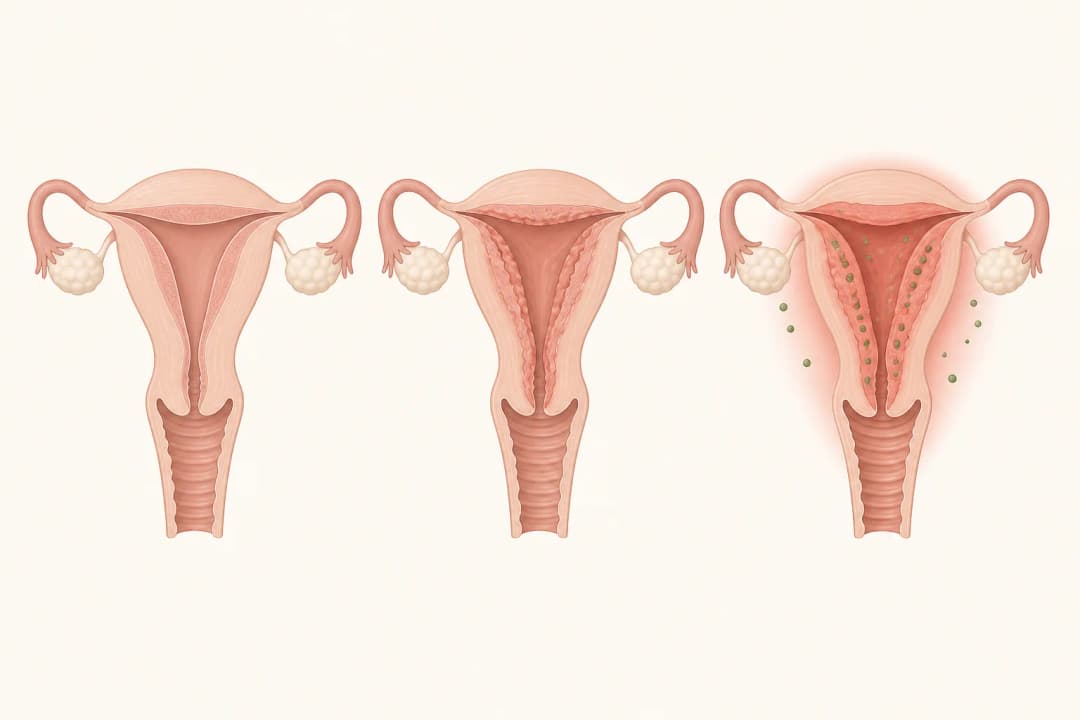
Endometritis affects the lining of the womb and can follow childbirth, miscarriage, termination, a procedure, or an infection in the reproductive tract. Clinicians may begin treatment based on the overall picture rather than waiting for every result. A combination of medicines may be selected because more than one type of organism can be involved. Treatment may be given by mouth when illness is less severe, or through a vein in hospital when symptoms are serious or oral medicine is not suitable. Improvement should be reviewed rather than assumed.
Using antibiotics safely
Take each dose at the prescribed time and complete the course unless the prescriber changes the plan. Tell your clinician about drug allergies, pregnancy, breastfeeding, kidney or liver problems, and other medicines or supplements. Do not share leftover antibiotics or use someone else’s prescription. Keep a note of fever, pain, discharge, bleeding, and your ability to drink. If symptoms are not easing as expected, contact the treating team; a different medicine, examination, or additional test may be needed. Sexual partners may need assessment when a sexually transmitted infection is suspected.
When to get urgent help
Seek urgent care for severe pelvic pain, high fever or shaking chills, fainting, confusion, repeated vomiting, heavy bleeding, or rapidly worsening illness. Get emergency help for facial swelling, breathing difficulty, or widespread hives after an antibiotic. These can indicate a serious infection or an allergic reaction. Do not wait for the course to finish if you feel significantly worse.
Questions to ask
Which antibiotic plan is right for me, and how should I take it? What improvement should I expect first? Could a culture or other test change the medicine? What should I do if I miss a dose or develop diarrhoea? When will you reassess me?
Find care
General Clinics & Polyclinics in Abu Dhabi
That answer is general. If you want it applied to your own case, these are licensed general clinics & polyclinics listed in Abu Dhabi.
27 Ar Ruwwad St - Shakhbout City - MSH4 - Abu Dhabi - United Arab Emirates
Accepts: Daman, Thiqa, Cigna, MetLife +20 more
Al Ruwais, Al Dhafrah
Accepts: Daman, Thiqa, AXA, Cigna +16 more
Al Bahyah - Al Bahyah Old - Abu Dhabi - United Arab Emirates
Accepts: Daman, Thiqa, Cigna, Allianz Care +18 more
Abu Dhabi
Accepts: Daman, Thiqa, AXA, Cigna +27 more
Ordered by verification status and how complete each clinic's public record is, then alphabetically. This is a directory listing, not a ranking — Zavis does not rate or recommend providers.
A factual listing drawn from the DHA, DOH and MOHAP licence registers. It is not a referral, an endorsement, or advice that any of these providers is right for you.
Questions people ask
Should I stop antibiotics when I feel better?
No. Follow the prescribed plan unless the clinician who prescribed it tells you to change or stop it.
What if antibiotics do not improve endometritis?
Contact the treating team promptly because the diagnosis, organism, medicine, or need for hospital care may need reassessment.
Related
Related reading
Keep reading
Medical disclaimer. This page is general health information, not medical advice, and it cannot diagnose you. Always consult a licensed healthcare provider about your own symptoms and treatment. In an emergency in the UAE, call 998 for an ambulance.