
End stage small cell lung cancer: what to know
Short answer
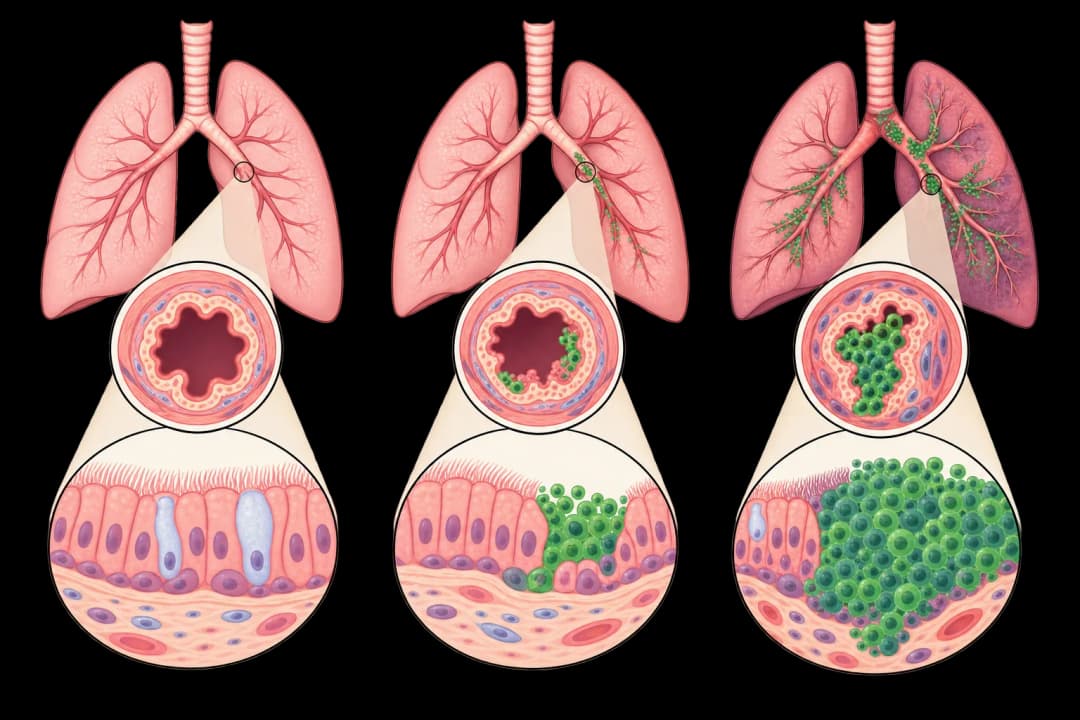
End stage small cell lung cancer means the cancer is advanced, and care focuses on control, comfort, symptoms and personal goals.
This answers one question. It is not a diagnosis and does not replace an assessment by a licensed doctor.
At a glance
- Cancer type
- Small cell lung cancer
- Care priorities
- Symptom relief, treatment choices and personal goals
- Urgent concern
- Severe breathing change, seizure or new confusion
What this stage can involve
Small cell lung cancer can spread beyond the lung to areas such as the brain, bones, liver or adrenal glands. Your team may discuss whether treatment is intended to slow growth, ease a specific problem, or support comfort when cancer-directed treatment is no longer helpful. The outlook varies with the cancer’s spread, previous treatment, overall health and response to care.
Symptoms may include breathlessness, cough, chest discomfort, tiredness, reduced appetite, pain or confusion. These symptoms can have more than one cause, so tell the team what has changed rather than assuming the cancer is progressing.
Planning care
Ask for a joined-up plan covering medicines, breathing support, nutrition, mobility, emotional support and practical help at home. Radiotherapy may relieve pain, bleeding or pressure from a tumour; Whole Brain Radiotherapy may be discussed when cancer has spread to the brain. Chemotherapy or Immunotherapy may be considered according to prior treatment, current health and goals.
Palliative care can be involved alongside cancer treatment to relieve symptoms and help with decisions. Discuss who should be contacted out of hours and record your wishes about hospital care, home care and emergency treatment.
When to seek urgent care
Seek urgent medical help for severe or rapidly worsening breathlessness, blue or grey lips, new confusion, a seizure, sudden weakness, coughing up a large amount of blood, uncontrolled pain, or an inability to keep fluids down. Contact your oncology team promptly for a new symptom, fever, worsening cough, increasing sleepiness or a sudden fall in ability to manage daily activities.
Questions to take to the team
Ask: What does end stage mean in my situation? What is each treatment meant to achieve? Which symptoms should trigger an urgent call? Could palliative care or home nursing help now? Who can support my family, and whom should I contact overnight?
Questions people ask
Does end stage mean there are no care options?
No. Options may include symptom treatment, focused radiotherapy, medicines, palliative care and practical support, depending on your needs and goals.
Can breathlessness be treated?
Often, yes. The team can look for treatable causes and offer medicines, oxygen when appropriate, positioning and breathing support.
Related
Related reading
Keep reading
Cancer care in the UAE
Hospitals & Medical Centers in Abu Dhabi
Most UAE cancer care is delivered inside hospital services rather than by standalone oncology clinics, so these are licensed hospitals & medical centers listed in Abu Dhabi. Confirm the specific cancer service exists before you travel, and know that asking for a second opinion is routine.
Ahalia Hospital Musaffah Building - Musaffah - Musaffah Industrial - Abu Dhabi - United Arab Emirates
Accepts: Daman, Thiqa, AXA, Cigna +26 more
Al Ruwais Industrial City - Abu Dhabi - United Arab Emirates
Accepts: Daman, Thiqa, AXA, Cigna +30 more
Abu Dhabi, Abu Dhabi
Accepts: Daman, Thiqa, AXA, Cigna +30 more
Second opinions are routine in cancer care and asking for one does not affect your treatment. How to arrange a second opinion in the UAE.
Ordered by verification status and how complete each clinic's public record is, then alphabetically. This is a directory listing, not a ranking — Zavis does not rate or recommend providers.
A factual listing drawn from the DHA, DOH and MOHAP licence registers. It is not a referral, an endorsement, or advice that any of these providers is right for you.
Medical disclaimer. This page is general health information, not medical advice, and it cannot diagnose you. Always consult a licensed healthcare provider about your own symptoms and treatment. In an emergency in the UAE, call 998 for an ambulance.