
What should you know about elevated CK and rhabdomyolysis?
Short answer
An elevated CK can signal muscle injury, while rhabdomyolysis is a more serious pattern of muscle breakdown needing prompt medical assessment.
This answers one question. It is not a diagnosis and does not replace an assessment by a licensed doctor.
At a glance
- CK
- An enzyme that can rise after muscle stress or injury
- Rhabdomyolysis
- Substantial muscle breakdown requiring prompt evaluation
- Warning sign
- Dark urine with weakness, swelling, or severe muscle pain
What the result can mean
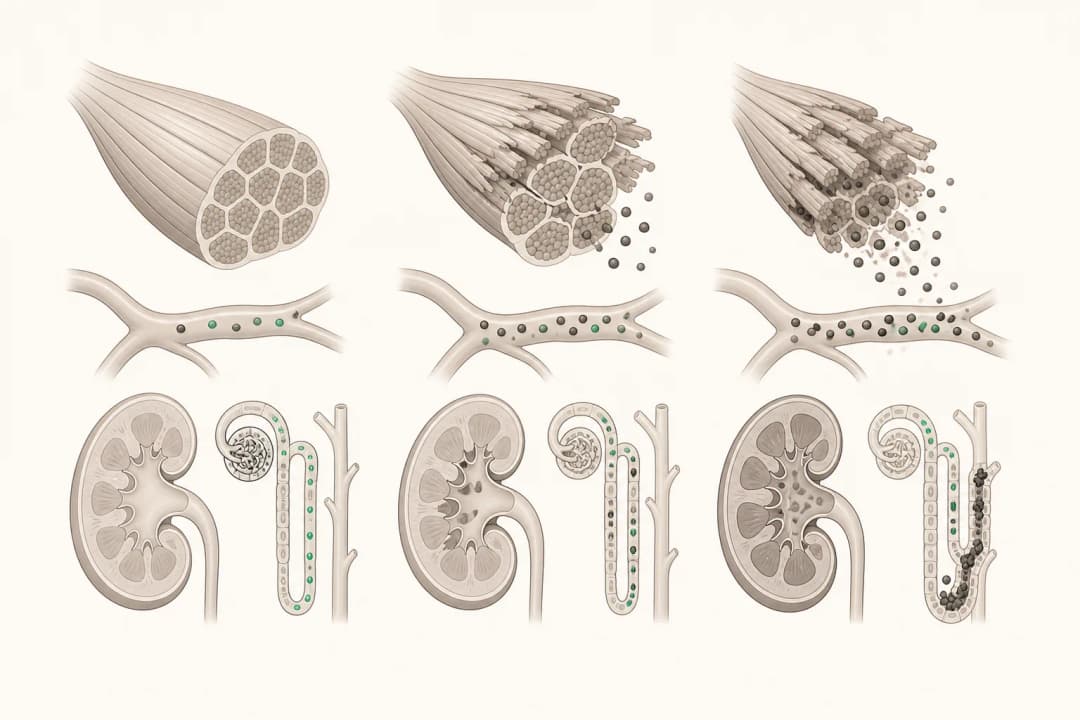
Creatine kinase, or CK, is an enzyme released when muscle fibres are stressed or damaged. Exercise, a fall, a seizure, medicines, infection, heat, or prolonged pressure on a muscle can raise the result. The number must be interpreted alongside symptoms, examination findings, kidney tests, urine findings, and how it changes over time.
Rhabdomyolysis describes substantial muscle breakdown that releases muscle contents into the bloodstream. It can cause muscle pain, weakness, swelling, or unusually dark urine, although symptoms are not always complete. Muscle soreness after exercise can have less serious causes, so do not diagnose rhabdomyolysis from soreness or a laboratory result alone.
What to do after an elevated CK
Contact the clinician who ordered the test and ask when it should be repeated. Until advised otherwise, pause strenuous exercise, avoid overheating, and follow personalised fluid guidance. Share every medicine, supplement, recent workout, injury, illness, and alcohol exposure because these details can change the evaluation.
Do not restart intense training simply because soreness improves. Keep track of urine colour, urine output, weakness, swelling, and pain. Treatment may involve monitoring, fluids, stopping a trigger, and checking kidney function; the appropriate plan depends on the cause and examination.
When to seek urgent care
Seek urgent assessment for dark tea-coloured urine, markedly reduced urination, severe or rapidly increasing muscle pain, significant swelling, profound weakness, vomiting, confusion, fainting, or an irregular heartbeat. These warning signs matter even if the muscle symptoms began after exercise. Call emergency services for collapse, breathing difficulty, or sudden severe weakness.
Questions for your doctor
What could explain my CK result in the context of my recent activity and medicines? Do I need repeat CK, urine, or kidney tests? Should I stop a medicine or supplement? When can I return to exercise, and which warning signs require immediate help?
Find care
General Clinics & Polyclinics in Abu Dhabi
That answer is general. If you want it applied to your own case, these are licensed general clinics & polyclinics listed in Abu Dhabi.
27 Ar Ruwwad St - Shakhbout City - MSH4 - Abu Dhabi - United Arab Emirates
Accepts: Daman, Thiqa, Cigna, MetLife +20 more
Al Ruwais, Al Dhafrah
Accepts: Daman, Thiqa, AXA, Cigna +16 more
Al Bahyah - Al Bahyah Old - Abu Dhabi - United Arab Emirates
Accepts: Daman, Thiqa, Cigna, Allianz Care +18 more
Abu Dhabi
Accepts: Daman, Thiqa, AXA, Cigna +27 more
Ordered by verification status and how complete each clinic's public record is, then alphabetically. This is a directory listing, not a ranking — Zavis does not rate or recommend providers.
A factual listing drawn from the DHA, DOH and MOHAP licence registers. It is not a referral, an endorsement, or advice that any of these providers is right for you.
Questions people ask
Does a high CK always mean rhabdomyolysis?
No. CK can rise for several reasons, including strenuous exercise or injury. Symptoms and repeat clinical testing help determine significance.
Should I exercise with elevated CK?
Pause strenuous activity and ask the clinician managing your result when gradual return is appropriate.
Related
Related reading
Keep reading
Medical disclaimer. This page is general health information, not medical advice, and it cannot diagnose you. Always consult a licensed healthcare provider about your own symptoms and treatment. In an emergency in the UAE, call 998 for an ambulance.