
What should you know about effects of enlarged prostate?
Short answer
An enlarged prostate can narrow the urine channel, leading to a weak stream, difficulty starting, frequent or urgent urination, and sometimes leakage or retention.
This answers one question. It is not a diagnosis and does not replace an assessment by a licensed doctor.
At a glance
- Possible changes
- Weak stream, hesitancy, frequency, urgency or leakage
- Urgent warning
- Being unable to pass urine with lower-abdominal pain
- First assessment
- A GP consultation and urine test may clarify the cause
How an enlarged prostate affects urination
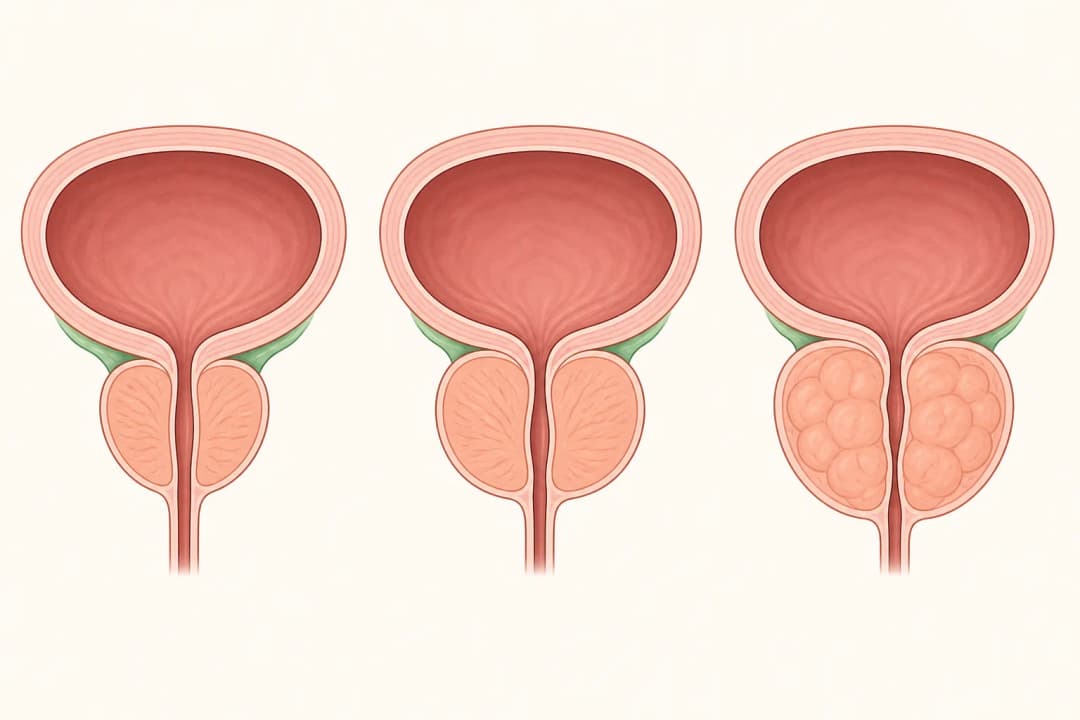
The prostate sits below the bladder and surrounds part of the urethra. As it enlarges, pressure around that tube may make urine flow slower or interrupted. You might need to wait for the stream to start, strain, pass small amounts, wake at night, or feel that the bladder has not emptied. Urgency and leakage can occur when the bladder has to work harder. These symptoms are common presentations of benign prostatic hyperplasia, but infection, medicines, bladder problems and other conditions can cause similar changes.
Persistent symptoms deserve assessment because incomplete emptying can leave urine in the bladder and increase discomfort or infection risk. A clinician can interpret the pattern alongside your examination and medical history.
Practical steps
Book a GP consultation if urinary symptoms are new, troublesome or affecting sleep. Keep a short record of drinks, toilet visits, night-time waking, urgency and leakage; this helps describe the pattern. Reduce fluids close to bedtime if appropriate, and moderate caffeine or alcohol if they worsen urgency. Do not stop prescribed medicines without advice, and mention cold remedies or other medicines because some can make emptying harder. A urine test may help check for infection or another explanation.
When to seek care
Seek urgent medical help if you cannot pass urine, have severe lower-abdominal pain or become confused or very unwell. Prompt assessment is also needed for visible blood in urine, fever with urinary symptoms, pain in the side or back, or repeated vomiting. Do not wait for a routine appointment if symptoms suddenly worsen. Difficulty passing urine is not proof of cancer; the cause needs proper assessment rather than guesswork.
Questions for your doctor
Ask which causes fit your symptoms and whether your medicines could contribute. Ask whether you need a urine test, examination or other checks, how to monitor bladder emptying, and which treatment options match your goals. Tell the clinician about night waking, urgency, leakage, pain, blood, fever and any episode when urine would not pass.
Find care
General Clinics & Polyclinics in Abu Dhabi
That answer is general. If you want it applied to your own case, these are licensed general clinics & polyclinics listed in Abu Dhabi.
27 Ar Ruwwad St - Shakhbout City - MSH4 - Abu Dhabi - United Arab Emirates
Accepts: Daman, Thiqa, Cigna, MetLife +20 more
Al Ruwais, Al Dhafrah
Accepts: Daman, Thiqa, AXA, Cigna +16 more
Al Bahyah - Al Bahyah Old - Abu Dhabi - United Arab Emirates
Accepts: Daman, Thiqa, Cigna, Allianz Care +18 more
Abu Dhabi
Accepts: Daman, Thiqa, AXA, Cigna +27 more
Ordered by verification status and how complete each clinic's public record is, then alphabetically. This is a directory listing, not a ranking — Zavis does not rate or recommend providers.
A factual listing drawn from the DHA, DOH and MOHAP licence registers. It is not a referral, an endorsement, or advice that any of these providers is right for you.
Questions people ask
Can an enlarged prostate cause frequent urination?
Yes. Bladder irritation and incomplete emptying can create a need to urinate often, including at night.
What if I suddenly cannot pass urine?
Seek urgent medical help, particularly if your lower abdomen is painful or swollen.
Related
Related reading
Keep reading
Medical disclaimer. This page is general health information, not medical advice, and it cannot diagnose you. Always consult a licensed healthcare provider about your own symptoms and treatment. In an emergency in the UAE, call 998 for an ambulance.