
What should you know about eczema nappy rash?
Short answer
Eczema nappy rash describes inflamed, irritated skin in the nappy area that needs gentle cleansing, frequent changes, and protection from moisture and friction.
This answers one question. It is not a diagnosis and does not replace an assessment by a licensed doctor.
At a glance
- Common triggers
- Moisture, stool, urine, rubbing, heat, and fragranced products
- Gentle routine
- Clean softly, pat dry, change promptly, and protect the skin
- Medical review
- Needed for spreading, weeping, blistered, infected-looking, or persistent rash
What eczema nappy rash means
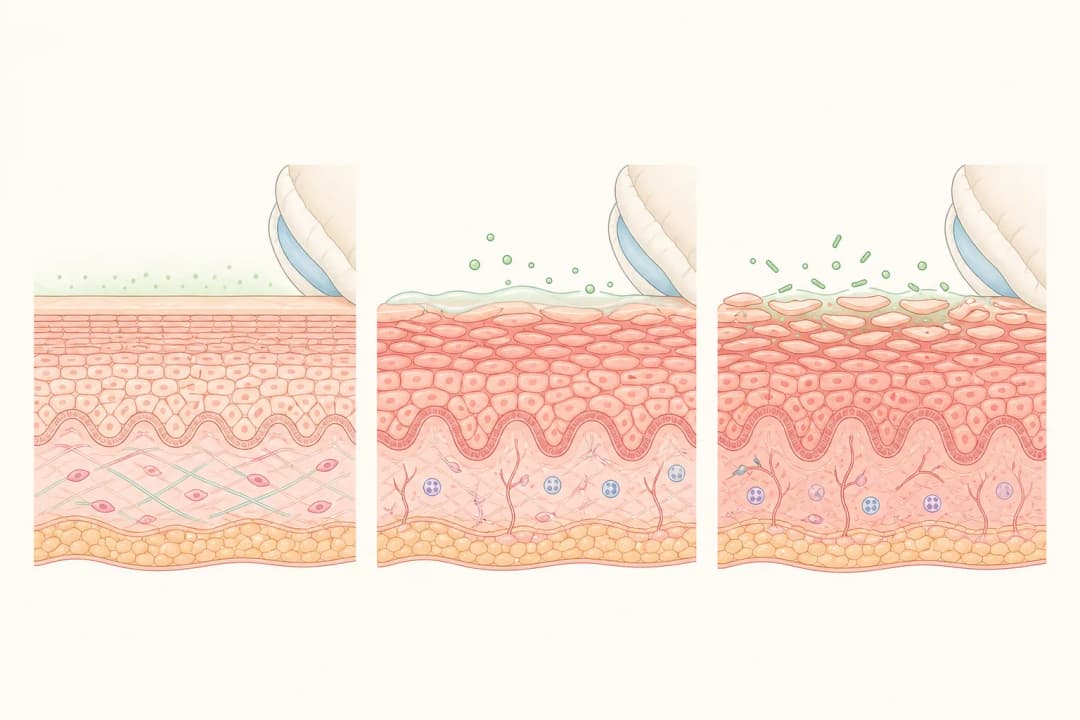
Nappy rash is a general term for inflammation beneath a nappy. Irritant dermatitis can follow prolonged contact with urine or stool, rubbing, heat, or fragranced products. Eczema may make the skin barrier more sensitive, so redness and dryness can extend beyond the areas in direct contact with the nappy.
Look for red or darker discoloured skin, dryness, scaling, soreness, or small cracks. A yeast infection can also affect a nappy rash, particularly when the rash is persistent, involves the skin folds, or has small nearby spots. These appearances overlap, so a clinician may need to examine the skin before recommending a medicated cream.
What you can do
Change nappies promptly and rinse the area gently with lukewarm water or use a fragrance-free cleanser. Pat rather than rub, and allow the skin to air-dry before putting on a clean nappy. Avoid fragranced wipes, bubble bath, talcum powder, and products that sting.
Apply a simple protective barrier recommended for babies, especially after cleaning and before sleep. An emollient can support dry, eczema-prone skin; see the guidance on [Emollient Therapy](/treatments/medical-dermatology/emollient-therapy/). Do not use steroid, antibiotic, or antifungal creams unless a healthcare professional has advised which product and how to apply it.
When to seek care
Arrange medical advice if the rash is spreading, very sore, cracked, weeping, crusted, blistered, or not settling with gentle care. Seek prompt help if your child has a fever, seems unusually sleepy or unwell, is feeding poorly, or passes much less urine. A clinician can check for eczema, yeast, bacterial infection, or another cause and may recommend [Topical Antifungal Treatment](/treatments/medical-dermatology/topical-antifungal-therapy/) when appropriate.
Questions for your doctor
Ask whether the pattern fits irritant dermatitis, eczema, yeast, or infection; which cleanser, barrier, or emollient is suitable; how often to apply it; and what changes should prompt a follow-up visit. Mention any recent antibiotics, new wipes, nappies, creams, or laundry products.
Find care
General Clinics & Polyclinics in Abu Dhabi
That answer is general. If you want it applied to your own case, these are licensed general clinics & polyclinics listed in Abu Dhabi.
27 Ar Ruwwad St - Shakhbout City - MSH4 - Abu Dhabi - United Arab Emirates
Accepts: Daman, Thiqa, Cigna, MetLife +20 more
Al Ruwais, Al Dhafrah
Accepts: Daman, Thiqa, AXA, Cigna +16 more
Al Bahyah - Al Bahyah Old - Abu Dhabi - United Arab Emirates
Accepts: Daman, Thiqa, Cigna, Allianz Care +18 more
Abu Dhabi
Accepts: Daman, Thiqa, AXA, Cigna +27 more
Ordered by verification status and how complete each clinic's public record is, then alphabetically. This is a directory listing, not a ranking — Zavis does not rate or recommend providers.
A factual listing drawn from the DHA, DOH and MOHAP licence registers. It is not a referral, an endorsement, or advice that any of these providers is right for you.
Questions people ask
Is every nappy rash eczema?
No. Irritation from moisture and contact is common, while eczema, yeast, infection, and other skin conditions can look similar. Examination helps guide treatment.
Can I use an antifungal cream on my baby's rash?
Only use one if a clinician or pharmacist has advised it for the suspected cause and explained how to apply it. A protective barrier and gentle nappy care may be needed as well.
Related
Related reading
Keep reading
Medical disclaimer. This page is general health information, not medical advice, and it cannot diagnose you. Always consult a licensed healthcare provider about your own symptoms and treatment. In an emergency in the UAE, call 998 for an ambulance.