
Dust mite allergy hives: what should you know?
Short answer
Dust mite allergy hives are possible but not the only explanation; raised itchy welts need assessment alongside the timing and exposure pattern.
This answers one question. It is not a diagnosis and does not replace an assessment by a licensed doctor.
At a glance
- Hives look like
- Raised itchy welts that may move or fade
- Track
- Exposure timing, medicines, foods, cleaning, and breathing symptoms
- Emergency signs
- Breathing trouble or swelling of the mouth, tongue, or throat
Understanding the pattern
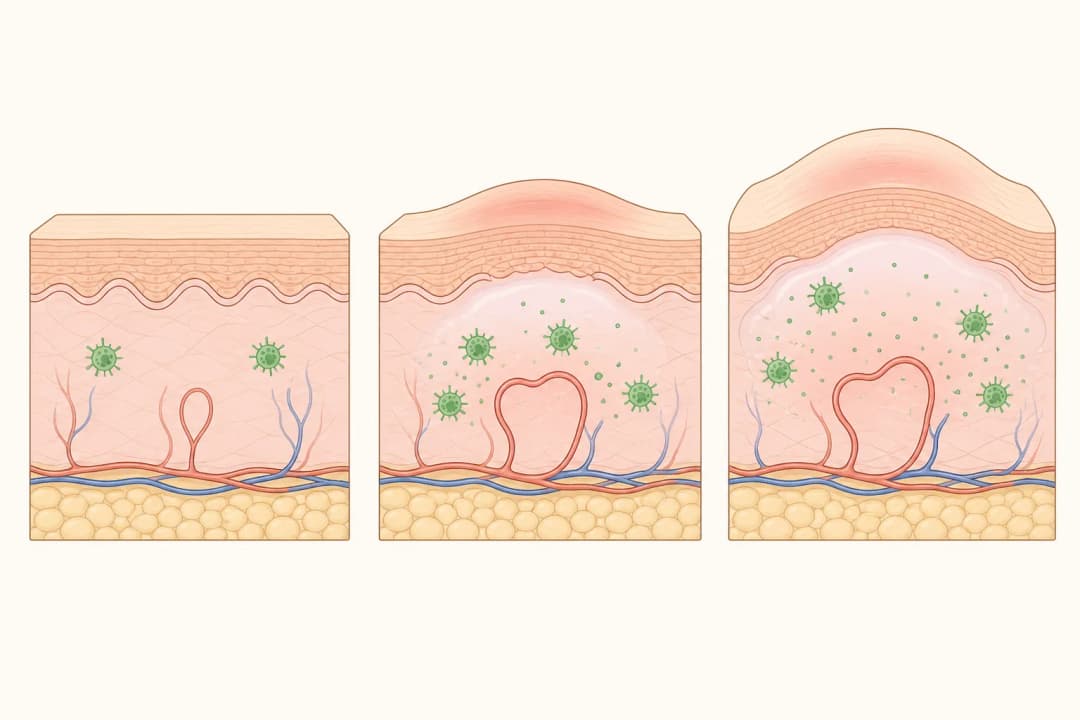
Hives are raised, itchy welts that can appear suddenly and fade from one area while appearing elsewhere. Dust mite allergy more often causes sneezing, a blocked nose, itchy eyes, or asthma symptoms; a hive-like eruption may follow another trigger, including infection, food, medicine, heat, pressure, or contact. Swelling deeper under the skin can occur with Angioedema. Photograph changing welts and record bedding changes, cleaning, symptoms, medicines, and how quickly the skin reacted.
What may help
Use cool compresses, avoid hot showers and tight clothing, and try not to scratch. Reduce dust exposure by washing bedding regularly according to its care instructions, keeping the sleeping area well ventilated, and using suitable allergen-control measures. A clinician or pharmacist can advise whether Antihistamine Treatment fits your symptoms and health history. Do not assume every rash after cleaning is caused by dust mites.
Urgent warning signs
Call emergency services for hives with trouble breathing, wheezing, throat tightness, faintness, or swelling of the lips, tongue, or face. Seek urgent medical advice for rapidly spreading welts, significant skin swelling, repeated episodes, or symptoms after a new medicine or food. A clinician should review hives that persist, recur, or leave bruising rather than fading normally.
Questions for your doctor
Ask whether the appearance fits Hives, whether allergy testing would change management, and whether an antihistamine is appropriate. Share photographs, respiratory symptoms, suspected exposures, and all medicines or supplements.
Find care
General Clinics & Polyclinics in Abu Dhabi
That answer is general. If you want it applied to your own case, these are licensed general clinics & polyclinics listed in Abu Dhabi.
27 Ar Ruwwad St - Shakhbout City - MSH4 - Abu Dhabi - United Arab Emirates
Accepts: Daman, Thiqa, Cigna, MetLife +20 more
Al Ruwais, Al Dhafrah
Accepts: Daman, Thiqa, AXA, Cigna +16 more
Al Bahyah - Al Bahyah Old - Abu Dhabi - United Arab Emirates
Accepts: Daman, Thiqa, Cigna, Allianz Care +18 more
Abu Dhabi
Accepts: Daman, Thiqa, AXA, Cigna +27 more
Ordered by verification status and how complete each clinic's public record is, then alphabetically. This is a directory listing, not a ranking — Zavis does not rate or recommend providers.
A factual listing drawn from the DHA, DOH and MOHAP licence registers. It is not a referral, an endorsement, or advice that any of these providers is right for you.
Questions people ask
Do dust mites always cause hives in an allergic person?
No. Dust mite allergy commonly affects the nose, eyes, and airways, and hives can have many other triggers.
Can I treat suspected dust mite hives at home?
Cool compresses and trigger avoidance may ease symptoms, but a pharmacist or clinician should confirm medicine suitability and review recurrent or severe episodes.
Related
Related reading
Keep reading
Medical disclaimer. This page is general health information, not medical advice, and it cannot diagnose you. Always consult a licensed healthcare provider about your own symptoms and treatment. In an emergency in the UAE, call 998 for an ambulance.