
What should you know about dt swiss ceramic bearings?
Short answer
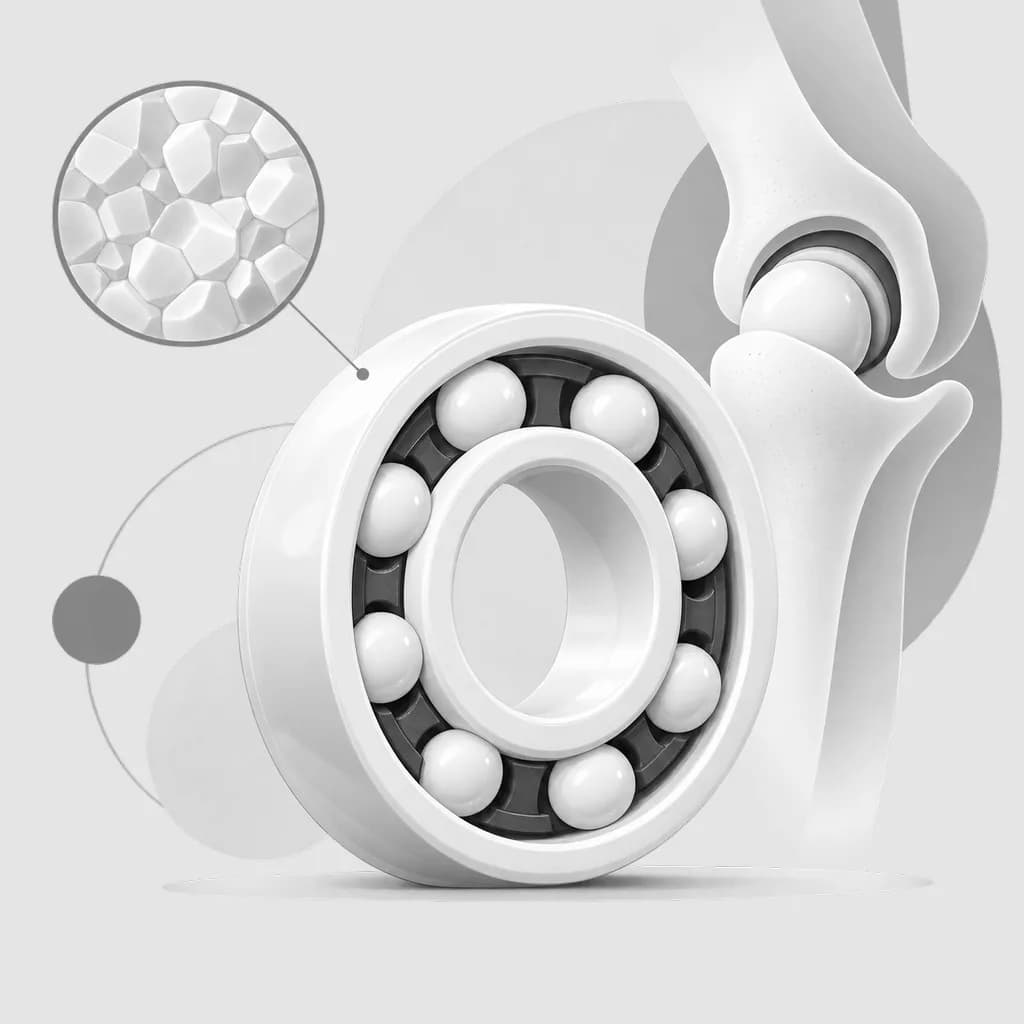
DT Swiss ceramic bearings refer to ceramic bearing components used in some joint replacements to allow smooth motion between implant surfaces.
This answers one question. It is not a diagnosis and does not replace an assessment by a licensed doctor.
At a glance
- Location
- The bearing is the moving interface inside an artificial joint
- Material choice
- Depends on implant design, anatomy, activity, and clinical assessment
- Recovery focus
- Follow weight-bearing, wound, exercise, and movement instructions
What a ceramic bearing does
A bearing is the moving interface inside an artificial joint. In a hip replacement, a rounded head moves inside a cup. Ceramic is a hard, smooth material that can be selected for the bearing pair based on implant design, anatomy, activity, and the surgeon's assessment. The brand or product name does not by itself determine whether the implant suits you.
[Ceramic Bearing](/materials/ceramic-bearing/) describes the material, while [Total Hip Replacement](/treatments/joint-replacement/total-hip-replacement/) explains the operation in which a bearing may be used.
Before and after a replacement
Ask which components are planned, how they are fixed, and why that bearing combination is suitable for your bone quality, activity, and medical history. Tell the surgical team about previous hip operations, allergies, infections, and medicines. After surgery, follow weight-bearing, wound, exercise, and movement precautions exactly as prescribed. Use walking aids until your rehabilitation team changes the plan.
Keep your implant information and operation details available for future clinicians. New pain after a period of improvement, a change in leg function, or a clicking sensation that concerns you deserves a review rather than self-directed changes to activity.
When to seek care
Contact your surgical team for increasing wound redness, drainage, fever, persistent wound opening, or pain that is not settling as expected. Seek urgent care after a fall with inability to bear weight, a visibly shortened or rotated leg, sudden severe hip pain, chest pain, or breathlessness. These symptoms can indicate a complication or another urgent condition and need examination.
Questions for your surgeon
Which bearing surfaces are planned and why? Is the component a standard part of my proposed system? What movements and loads should I avoid during recovery? How will you monitor the implant, and who should I contact about new noises or pain?
Find care
General Clinics & Polyclinics in Abu Dhabi
That answer is general. If you want it applied to your own case, these are licensed general clinics & polyclinics listed in Abu Dhabi.
27 Ar Ruwwad St - Shakhbout City - MSH4 - Abu Dhabi - United Arab Emirates
Accepts: Daman, Thiqa, Cigna, MetLife +20 more
Al Ruwais, Al Dhafrah
Accepts: Daman, Thiqa, AXA, Cigna +16 more
Al Bahyah - Al Bahyah Old - Abu Dhabi - United Arab Emirates
Accepts: Daman, Thiqa, Cigna, Allianz Care +18 more
Abu Dhabi
Accepts: Daman, Thiqa, AXA, Cigna +27 more
Ordered by verification status and how complete each clinic's public record is, then alphabetically. This is a directory listing, not a ranking — Zavis does not rate or recommend providers.
A factual listing drawn from the DHA, DOH and MOHAP licence registers. It is not a referral, an endorsement, or advice that any of these providers is right for you.
Questions people ask
Does a ceramic bearing mean the whole implant is ceramic?
No. A replacement has several components, and only the bearing surfaces may use ceramic.
Can I choose a bearing from its brand name alone?
No. The surgeon matches components to your anatomy, implant system, bone, and treatment goals.
Related
Related reading
Keep reading
Medical disclaimer. This page is general health information, not medical advice, and it cannot diagnose you. Always consult a licensed healthcare provider about your own symptoms and treatment. In an emergency in the UAE, call 998 for an ambulance.