
Does targeted therapy treat myeloproliferative neoplasms?
Short answer
Targeted therapy can be used for some myeloproliferative neoplasms, but treatment depends on the specific disorder and its features.
This answers one question. It is not a diagnosis and does not replace an assessment by a licensed doctor.
At a glance
- First question
- The exact myeloproliferative neoplasm guides treatment
- Monitoring
- Blood counts, symptoms, spleen changes, and clotting history may guide follow-up
What this means
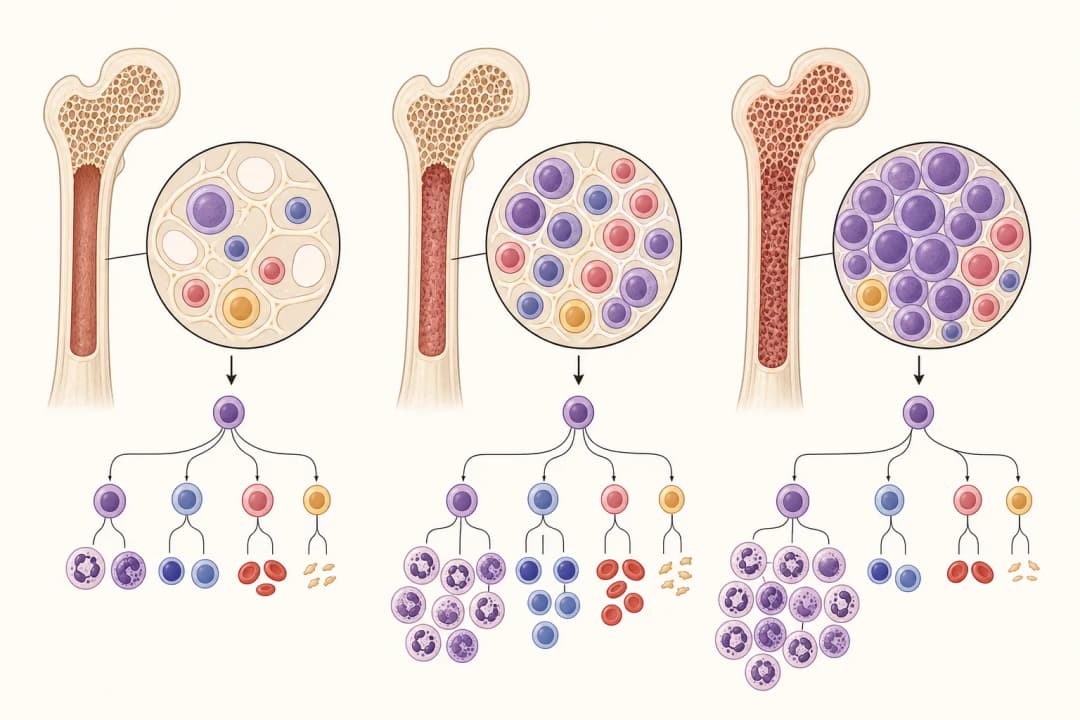
Myeloproliferative neoplasms are a group of blood disorders in which the bone marrow makes too many blood cells or related cells. The group includes different conditions, so one medicine is not appropriate for everyone. Targeted treatment may block a disease-driving signal, lower excessive cell production, reduce symptoms, or lower a particular complication risk. The plan depends on the diagnosis, molecular findings, blood counts, clotting or bleeding history, spleen changes, and other health conditions.
What to do next
Ask which myeloproliferative neoplasm you have and what the treatment is meant to change. Review molecular testing, current medicines, pregnancy plans, smoking, and any history of clots or bleeding with the haematology team. Keep scheduled blood-count checks and report headaches, visual changes, itching, night sweats, abdominal fullness, or unusual bruising so the plan can be reviewed.
When to seek care
Seek emergency help for sudden weakness, facial drooping, trouble speaking, severe chest pain, or new severe breathlessness, as these can be signs of a clot or another emergency. Contact the care team promptly for unusual bleeding, persistent fever, or rapidly worsening abdominal pain or fullness.
Questions for your doctor
Which condition in this group do I have? What target is this medicine acting on? Which blood-count or clotting changes are you watching? How should I handle a missed dose, new medicine, or planned procedure?
Questions people ask
Are all myeloproliferative neoplasms treated with targeted therapy?
No. Treatment varies by the specific disorder, symptoms, blood results, molecular findings, and personal risks.
Why does the exact diagnosis matter?
Different disorders within this group produce different blood-cell patterns and complications, so the medicine and monitoring plan can differ.
Keep reading
Cancer care in the UAE
Hospitals & Medical Centers in Abu Dhabi
Most UAE cancer care is delivered inside hospital services rather than by standalone oncology clinics, so these are licensed hospitals & medical centers listed in Abu Dhabi. Confirm the specific cancer service exists before you travel, and know that asking for a second opinion is routine.
Ahalia Hospital Musaffah Building - Musaffah - Musaffah Industrial - Abu Dhabi - United Arab Emirates
Accepts: Daman, Thiqa, AXA, Cigna +26 more
Al Ruwais Industrial City - Abu Dhabi - United Arab Emirates
Accepts: Daman, Thiqa, AXA, Cigna +30 more
Abu Dhabi, Abu Dhabi
Accepts: Daman, Thiqa, AXA, Cigna +30 more
Second opinions are routine in cancer care and asking for one does not affect your treatment. How to arrange a second opinion in the UAE.
Ordered by verification status and how complete each clinic's public record is, then alphabetically. This is a directory listing, not a ranking — Zavis does not rate or recommend providers.
A factual listing drawn from the DHA, DOH and MOHAP licence registers. It is not a referral, an endorsement, or advice that any of these providers is right for you.
Medical disclaimer. This page is general health information, not medical advice, and it cannot diagnose you. Always consult a licensed healthcare provider about your own symptoms and treatment. In an emergency in the UAE, call 998 for an ambulance.