
Does shockwave therapy treat rotator cuff tendinitis?
Short answer
Shockwave therapy may help some people with persistent rotator cuff tendinitis, but it is not suitable for every shoulder problem and works best as part of rehabilitation.
This answers one question. It is not a diagnosis and does not replace an assessment by a licensed doctor.
At a glance
- Treatment role
- Usually considered alongside exercise and load management
- Expected timing
- Changes may be gradual
- Assessment
- The painful tendon and other shoulder causes should be checked
What this means for your shoulder
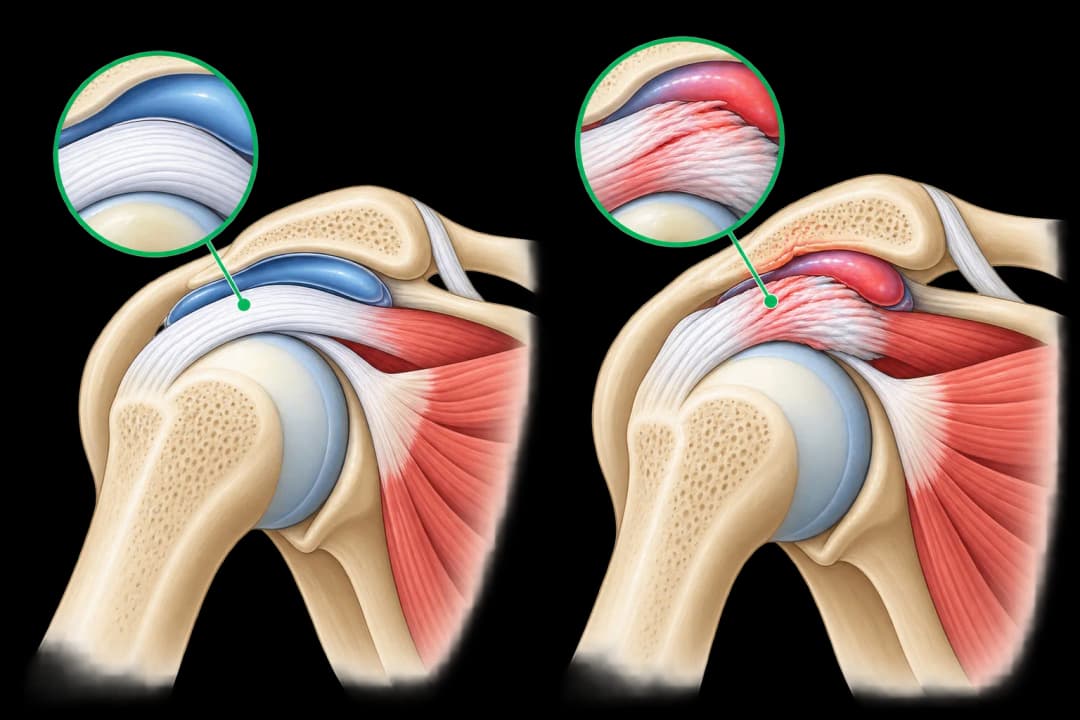
Rotator cuff tendinitis affects the tendons that help centre and move the shoulder. Pain can appear when reaching overhead, lifting, dressing, or lying on the affected side. Shockwave therapy delivers mechanical pulses to a selected area; it does not repair every possible cause of shoulder pain. A clinician first checks whether the symptoms fit a tendon problem rather than a major tear, stiff shoulder, neck-related pain, or another condition.
The response can vary. Treatment may briefly make the area more tender, and improvement may develop gradually rather than immediately. Exercise remains useful because shoulder strength, movement control, and load tolerance are central to recovery.
What to do next
Arrange an assessment if shoulder pain has continued despite sensible activity changes. Bring details about the movements that trigger pain, night symptoms, weakness, previous injuries, and medicines. If shockwave therapy is offered, ask which tendon is being targeted, how it will fit with exercises, and what activity should be limited afterward. Do not stop all shoulder movement unless advised; gentle, comfortable motion is often part of a graded plan.
When to seek care
Seek prompt medical assessment after a significant injury, sudden loss of shoulder strength, a visibly deformed shoulder, fever with a hot or swollen joint, or new numbness in the arm. Arrange a routine review when pain is worsening, sleep is repeatedly disturbed, or progress has stalled despite treatment.
Questions for your doctor
Ask whether the examination supports rotator cuff tendinitis, whether imaging is needed, what improvement would be a reasonable goal, and how the rehabilitation exercises should progress.
Find care
General Clinics & Polyclinics in Abu Dhabi
That answer is general. If you want it applied to your own case, these are licensed general clinics & polyclinics listed in Abu Dhabi.
27 Ar Ruwwad St - Shakhbout City - MSH4 - Abu Dhabi - United Arab Emirates
Accepts: Daman, Thiqa, Cigna, MetLife +20 more
Al Ruwais, Al Dhafrah
Accepts: Daman, Thiqa, AXA, Cigna +16 more
Al Bahyah - Al Bahyah Old - Abu Dhabi - United Arab Emirates
Accepts: Daman, Thiqa, Cigna, Allianz Care +18 more
Abu Dhabi
Accepts: Daman, Thiqa, AXA, Cigna +27 more
Ordered by verification status and how complete each clinic's public record is, then alphabetically. This is a directory listing, not a ranking — Zavis does not rate or recommend providers.
A factual listing drawn from the DHA, DOH and MOHAP licence registers. It is not a referral, an endorsement, or advice that any of these providers is right for you.
Questions people ask
Can shockwave therapy replace shoulder exercises?
Usually it is used with a tailored exercise programme, because strengthening and movement control help the tendon tolerate load.
Is shoulder soreness after treatment possible?
Temporary tenderness can occur; follow the treating clinician’s advice about activity and contact them if symptoms are severe or unusual.
Related
Related reading
Keep reading
Medical disclaimer. This page is general health information, not medical advice, and it cannot diagnose you. Always consult a licensed healthcare provider about your own symptoms and treatment. In an emergency in the UAE, call 998 for an ambulance.